
How the 2019 Lexus UX 250h Redefined the Luxury Compact Crossover
A New Kind of Luxury
The year 2018 marked a pivotal moment in the automotive landscape. The crossover craze was in full swing, yet the luxury compact segment remained curiously underserved. Young urban professionals, empty nesters, and first-time luxury buyers were clamoring for something different—a vehicle that offered premium refinement without excessive bulk, sophisticated design without ostentation, and efficiency without compromise. Into this space stepped the Lexus UX, a vehicle whose very name embodied its mission: Urban + X-over (crossover) = UX.
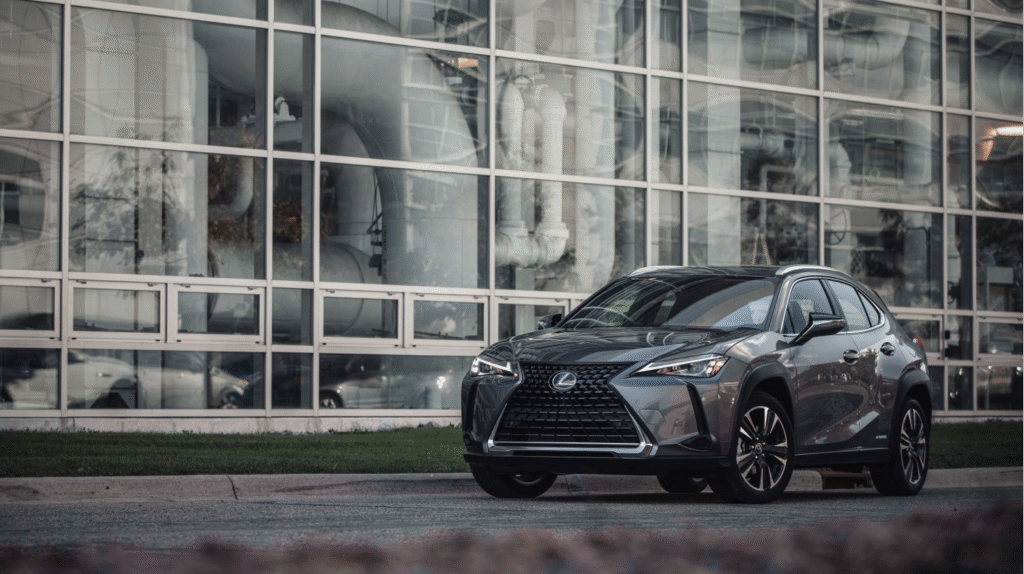
For the Lexus brand—long associated with serene luxury and meticulous craftsmanship—the UX represented something entirely new. It was not merely another addition to an expanding lineup; it was a gateway. For many customers, the UX would be their first Lexus, and for many of those, their very first luxury vehicle. This was a deliberate strategic move by Lexus to capture a younger, more urban-centric demographic—buyers in their 30s who sought not only what was new and exciting, but what was genuinely relevant to their modern lifestyles.
But the UX was more than just a smaller, more affordable Lexus. It was a technical tour de force, built upon an entirely new platform, powered by a fourth-generation hybrid system, and infused with a driving philosophy that deliberately overturned conventional expectations of what a crossover should be. This two-part series explores the 2019 Lexus UX 250h in depth. In this first episode, we examine the vehicle’s genesis, its groundbreaking GA-C platform, the visionary design philosophy that shaped it, and the profound significance of bringing a self-charging hybrid luxury crossover to a world hungry for sustainable mobility.
The GA-C Foundation — A Platform Like No Other
Every great vehicle begins with its foundation, and for the 2019 UX, that foundation was the new Global Architecture Compact platform, designated GA-C. This was a landmark moment for Lexus: the UX was the first Lexus constructed on the GA-C architecture, a platform that would go on to underpin several Toyota and Lexus compact models in subsequent years.
What made GA-C so revolutionary? The engineering brief was deceptively simple yet extraordinarily ambitious: create a lightweight yet super-rigid structure with an extremely low center of gravity, then pair it with refined suspension tuning to deliver exemplary handling agility and ride comfort, along with a distinctive driving personality. In practice, this translated into a driving experience that felt less like a tall, top-heavy crossover and more like a nimble, planted hatchback.
Chika Kako, Executive Vice President of Lexus International and Chief Engineer of the UX, articulated this vision with striking clarity: “I wanted to positively overturn the image of a crossover and offer a car with nimble performance and excellent maneuverability that makes it as easy to drive as a sedan”. This was not hyperbole. The GA-C platform delivered the lowest center of gravity in its class, a feat made possible not only by the platform’s inherent design but also by the ingenious placement of key components—including, as we will explore in Episode II, the nickel-metal hydride battery pack beneath the rear seats.
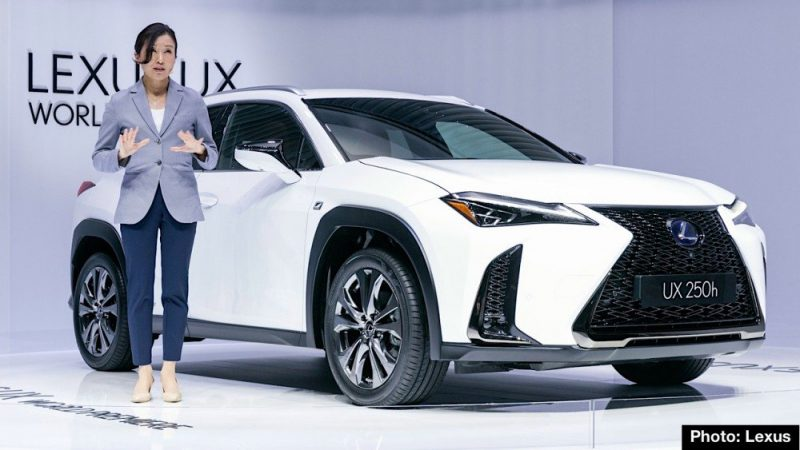
The platform’s structural rigidity was equally impressive. By employing high-tensile steel in strategic locations and utilizing advanced laser screw welding techniques, Lexus engineers achieved a torsional stiffness that provided a rock-solid foundation for the suspension to work its magic. The result was a vehicle that tracked confidently through corners, absorbed road imperfections with Lexus’s signature composure, and communicated a sense of solidity and quality that belied its entry-level positioning.
This focus on dynamic performance was a deliberate departure from the traditional crossover formula. Many vehicles in the segment prioritized utility and space above all else, often at the expense of driving enjoyment. The UX, by contrast, placed driving dynamics at the very heart of its mission. It was engineered to deliver quick and engaging driving with a Lexus-smooth demeanor, making it a unique entry in the luxury compact crossover segment.
The Art of Creative Urban Exploration — Design Philosophy
If the GA-C platform provided the UX’s backbone, its exterior design provided its soul. The design theme, known as “Creative Urban Explorer,” was not merely a marketing tagline but a genuine guiding philosophy that shaped every curve, every line, and every surface of the vehicle.
At first glance, the UX was unmistakably a Lexus. The signature spindle grille dominated the front fascia, but with a twist unique to this model. Instead of the mesh patterns seen on larger Lexus vehicles, the UX featured a new block-shape mesh pattern with individual elements that gradually changed in shape as they radiated outward from the central Lexus emblem. This created an intriguing three-dimensional appearance that shifted and transformed depending on the viewing angle.
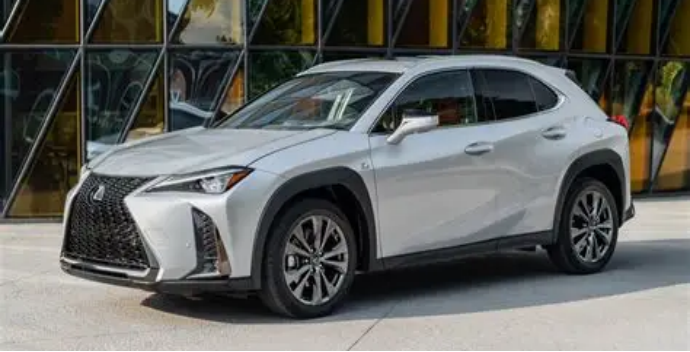
The headlamp design completed the UX’s assertive face. LED daytime running lights arranged in an arrowhead motif above the headlights complemented the Lexus L-shaped lighting signature, appearing like determined brows above the standard single-projector dual-beam LED headlights. This gave the UX a confident, almost aggressive gaze that conveyed a sense of purpose and modernity.
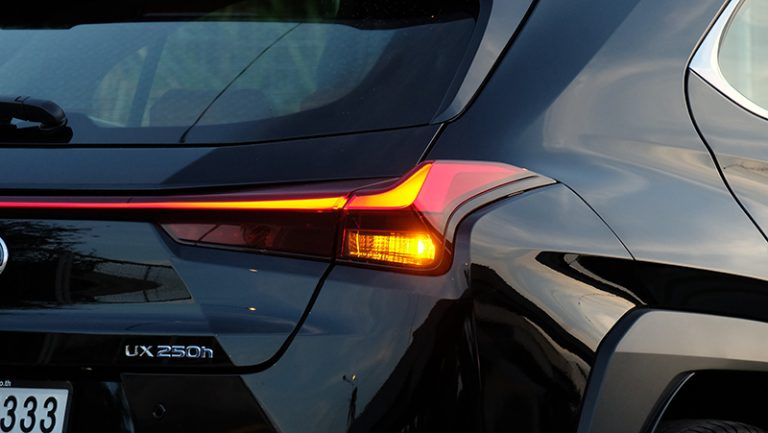
Perhaps the most striking visual element of the UX was its rear lighting treatment. The full-width rear lights projected a distinctive nighttime signature formed by a sequence of 120 LEDs tapering toward the center, measuring just one-eighth of an inch at its narrowest point. This continuous light bar, reminiscent of high-end luxury vehicles from far more expensive segments, became an instant signature of the UX and helped establish a new design language for Lexus’s smaller offerings.
The vehicle’s proportions were equally noteworthy. With a coupe-like roofline, dramatically flared wheel arches, and intricately sculpted bodywork that played with light and shadow, the UX looked like nothing else in its segment. It was bold without being brash, distinctive without being divisive—a delicate balance that Lexus navigated with considerable skill.
But the UX’s design was not merely about aesthetics. Every exterior element was carefully shaped to optimize aerodynamic performance. Underbody panels, active grille shutters, and carefully managed airflow around the wheel arches all contributed to a drag coefficient that minimized fuel consumption and reduced wind noise at highway speeds. This marriage of form and function was quintessential Lexus—beauty that served a purpose.
The Heart of the Matter: Fourth-Generation Self-Charging Hybrid
Of course, for all its platform sophistication and design artistry, the UX 250h was defined most fundamentally by what lay under the hood—or more accurately, what lay beneath the rear seat. The UX 250h was powered by a fourth-generation Lexus Self-Charging Hybrid powertrain, a system that represented the cumulative knowledge of two decades of hybrid development.
The system paired an even higher-efficiency version of the 2.0-liter four-cylinder petrol engine with a compact new transaxle, a power control unit, and the nickel-metal hydride battery pack that would become the focus of our second episode. Combined system output was rated at 131kW (approximately 175 horsepower), making the UX 250h the leader in both performance and fuel efficiency within its competitive set.
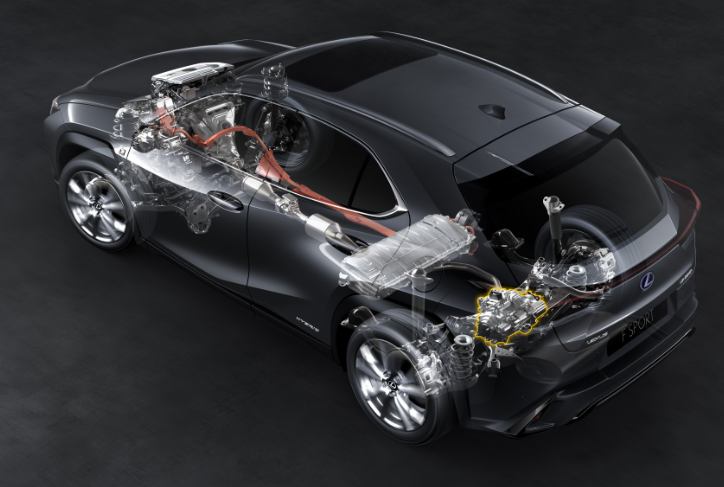
But raw numbers told only part of the story. The true genius of the fourth-generation hybrid system lay in its seamless integration. Unlike many competing hybrid systems that delivered a disjointed, sometimes jerky transition between electric and petrol power, the Lexus system operated with near-invisible fluidity. The Atkinson-cycle petrol engine, specially tuned for thermal efficiency rather than peak power, worked in concert with one or two electric motors (depending on whether the vehicle was specified with front-wheel drive or E-Four all-wheel drive) to deliver smooth, linear acceleration that felt entirely natural to the driver.
Perhaps the most remarkable capability of the UX 250h’s hybrid system was its ability to operate on electric power alone for extended periods. In real-world city driving conditions, the UX could run purely on electric power—with zero fuel consumption, zero emissions, and near-silent operation—for up to 50 percent of the average urban journey. This was not a plug-in hybrid; the UX 250h never needed to be plugged into an external power source. Instead, its battery was replenished through regenerative braking, which captured kinetic energy that would otherwise be lost as heat, and through power generated by the petrol engine during normal driving conditions.
The implications of this technology were profound. For urban dwellers navigating crowded city streets, sitting in stop-start traffic, and making short trips, the UX 250h effectively operated as an electric vehicle for a significant portion of their daily driving. This translated into dramatically reduced fuel consumption, lower CO2 emissions, near-zero NOx and particulate emissions, and a driving experience that was whisper-quiet and utterly refined.
Why the UX 250h Mattered — A Vehicle for Its Time
To understand the significance of the UX 250h, one must understand the automotive context of 2018 and 2019. The industry was in the early stages of a seismic shift toward electrification, but the path forward was anything but clear. Pure electric vehicles remained expensive, hampered by range anxiety, and constrained by inadequate charging infrastructure. Plug-in hybrids offered a bridge solution but required owners to remember to plug in—a behavioral change that many consumers were unwilling to make.
Against this backdrop, Lexus’s self-charging hybrid technology offered an elegant alternative. It delivered many of the benefits of electrification—excellent fuel economy, low emissions, quiet operation—without imposing any behavioral demands on the driver. You drove the UX 250h exactly as you would any conventional vehicle, and the hybrid system worked its magic silently in the background. This was electrification for everyone, not just early adopters.
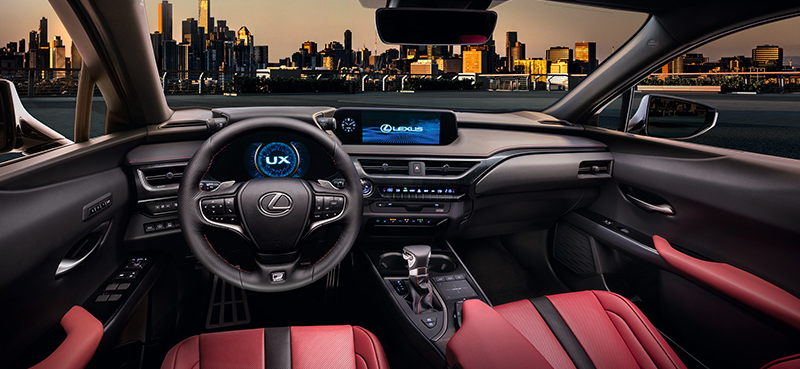
But the UX 250h’s significance extended beyond its powertrain. It was a vehicle that deliberately targeted a demographic that luxury automakers had long struggled to reach: young professionals who valued sustainability, technology, and design, but who were not yet ready—or willing—to make the compromises associated with full electrification. By offering a compelling package of style, efficiency, and Lexus reliability at a starting price of just $34,000, the UX 250h made luxury hybrid ownership accessible to an entirely new audience.
The European market, in particular, proved receptive to the UX’s proposition. As customers increasingly moved away from diesel power to embrace alternative, electrified powertrains, Lexus’s self-charging hybrid technology gained growing appeal. The UX was positioned not merely as a vehicle but as a gateway model for the brand, playing a key role in Lexus’s ambitious target of 100,000 annual sales in Europe by 2020.
For families with young children who wanted the flexibility of a crossover but the agility of a hatchback for urban maneuvering, the UX was the ideal partner. For empty nesters downsizing from larger vehicles, the UX offered luxury without excess. And for first-time luxury buyers, the UX provided an entry point into a brand renowned for quality, reliability, and ownership experience.
The Numbers That Matter — Efficiency and Value
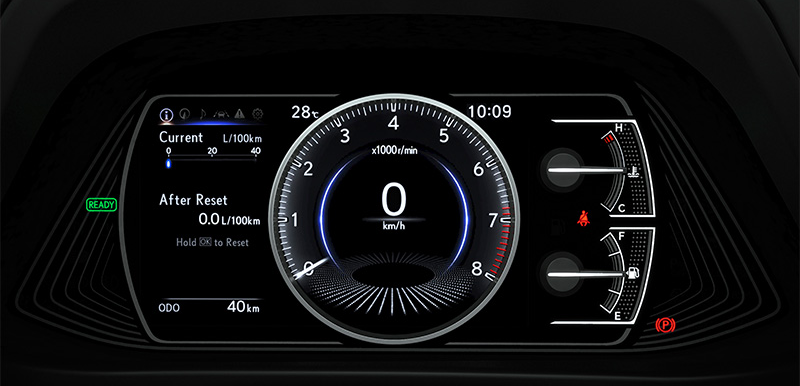
Beyond its philosophical significance, the UX 250h delivered concrete, measurable benefits that made a tangible difference to owners. The EPA fuel economy ratings were nothing short of remarkable: 41 MPG in the city, 38 MPG on the highway, and a combined 39 MPG. For a luxury vehicle with all-wheel drive capability, these figures were virtually unprecedented.
The cost-of-ownership advantages extended well beyond the fuel pump. Lexus’s extensive experience in hybrid engineering yielded batteries designed to last as long as the vehicle itself, while the inherently low wear and tear of the hybrid powertrain reduced maintenance requirements. There was no conventional starter motor or alternator to service or replace, no clutch to wear out, and no timing belt to change—the hybrid system integrated these functions seamlessly.
The regenerative braking system, which delivered the first half of all braking force, significantly reduced brake pad and disc wear. Over the course of 56,000 miles, a Lexus hybrid typically required no disc replacement and just one set of replacement brake pads. This translated into substantial savings on routine maintenance and contributed to the UX 250h’s low total cost of ownership.
For business and company car drivers, the benefits were even more pronounced. In the UK market, for instance, the UX 250h offered a first-year benefit-in-kind tax rate significantly below rival diesel-powered models from BMW, Audi, Mercedes-Benz, and Volvo. Over three years of ownership, the tax savings could amount to nearly £5,000. Factoring in depreciation, fuel, servicing, maintenance, and other costs, UX drivers could enjoy total ownership savings of up to approximately £8,000 compared to key competitor models over a similar period.