
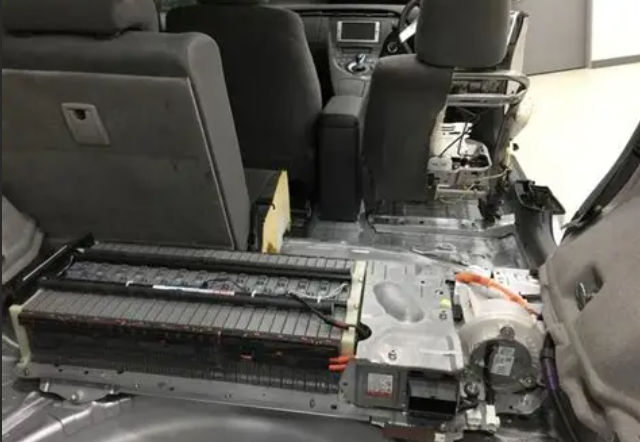
As we discussed in Pt. 1, Toyota’s 7.2V NiMH (Nickel-Metal Hydride) battery was a crucial component in the development of the Prius, which became the world’s first mass-produced hybrid vehicle. But as the years passed, the automotive landscape and consumer needs continued to evolve. To meet these growing demands for better performance, longer battery life, and more efficient fuel economy, Toyota had to continually innovate and refine its hybrid technology. In this second installment, we explore the key innovations that helped shape the future of Toyota’s 7.2V battery, the challenges Toyota faced, and the changing market conditions that influenced the evolution of the battery and hybrid technology in general.
The Challenges of Growth
In the early 2000s, hybrid vehicles were still a relatively niche market, and the Prius was one of the few cars on the road that offered the combination of gasoline and electric power. However, as fuel prices spiked and environmental awareness grew, demand for hybrids surged. The Prius, which had been somewhat of a technological oddity when it first debuted, quickly became a symbol of eco-conscious driving. By 2003, Toyota had sold more than 100,000 units of the Prius worldwide, proving that the hybrid market was no longer just a passing trend. But as sales increased, so did the expectations of consumers and critics alike.
Consumers wanted more than just a fuel-efficient vehicle—they wanted a hybrid that could perform better, go further on electric power, and offer advanced features. Toyota understood that to meet these demands, it needed to improve the performance of its hybrid system. This put immense pressure on the company’s battery technology, particularly the 7.2V NiMH battery, which was a key component of the Prius’s powertrain.
While the 7.2V battery had proven itself reliable and efficient in the first-generation Prius, it had limitations that became increasingly apparent as the hybrid market grew. One of the primary concerns was the battery’s limited energy capacity. The 7.2V battery, while effective for the small electric motor in the Prius, couldn’t provide enough power to meet the growing expectations of consumers. Hybrid owners wanted vehicles that could travel further on electricity alone, especially in stop-and-go traffic. The small 7.2V battery couldn’t offer the range that more powerful batteries, such as lithium-ion (Li-ion) batteries, could provide.
Battery Management and Innovation
In response to these challenges, Toyota focused on improving its battery management system (BMS), which regulates the battery’s charge and discharge cycles. The BMS is an essential component of any hybrid vehicle, as it ensures the battery remains within its optimal charge range and prevents overcharging or deep discharging, both of which can significantly shorten a battery’s lifespan.
For the second-generation Prius, which launched in 2003, Toyota introduced several improvements to its BMS. The new system allowed the 7.2V NiMH battery to operate more efficiently, improving fuel economy and extending the battery’s life. One of the key advancements was better thermal management. NiMH batteries, while more efficient than their lead-acid counterparts, are sensitive to temperature changes. If a battery gets too hot or too cold, it can lose capacity and degrade faster. The updated BMS in the second-generation Prius included advanced cooling systems to maintain the optimal temperature of the battery, improving its overall performance and lifespan.
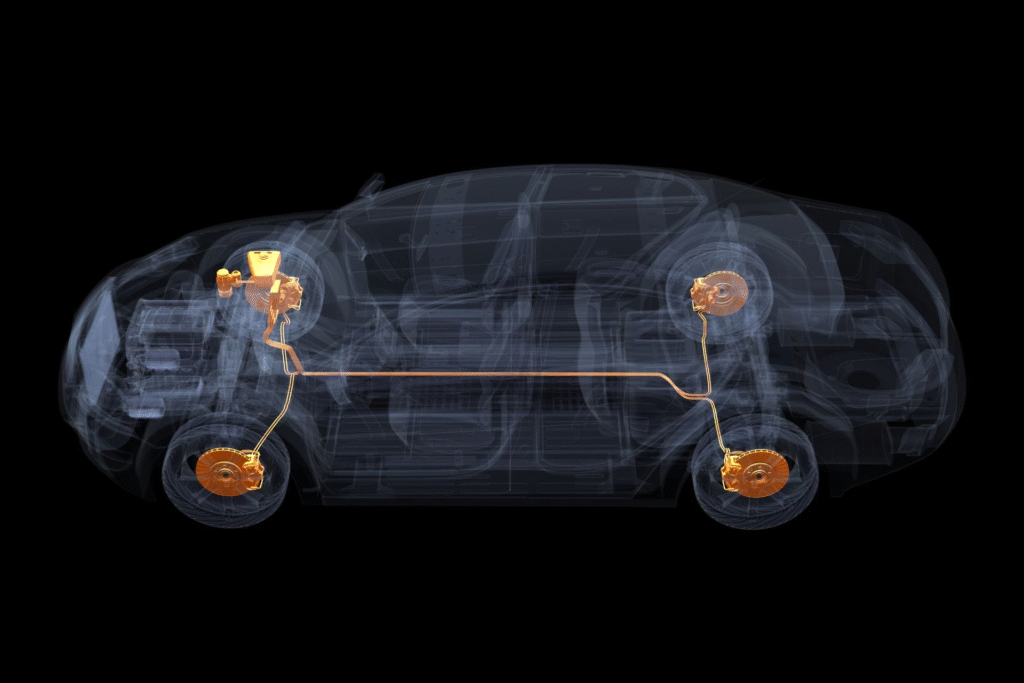
Another innovation that came with the second-generation Prius was the improved regenerative braking system. Regenerative braking allows the hybrid system to recapture energy during braking and store it back in the battery. In the earlier Prius models, regenerative braking was a relatively simple system that allowed the car to recapture some of the energy lost during braking. However, in the second-generation Prius, Toyota refined this system to capture more energy, which was then fed into the 7.2V battery for later use.
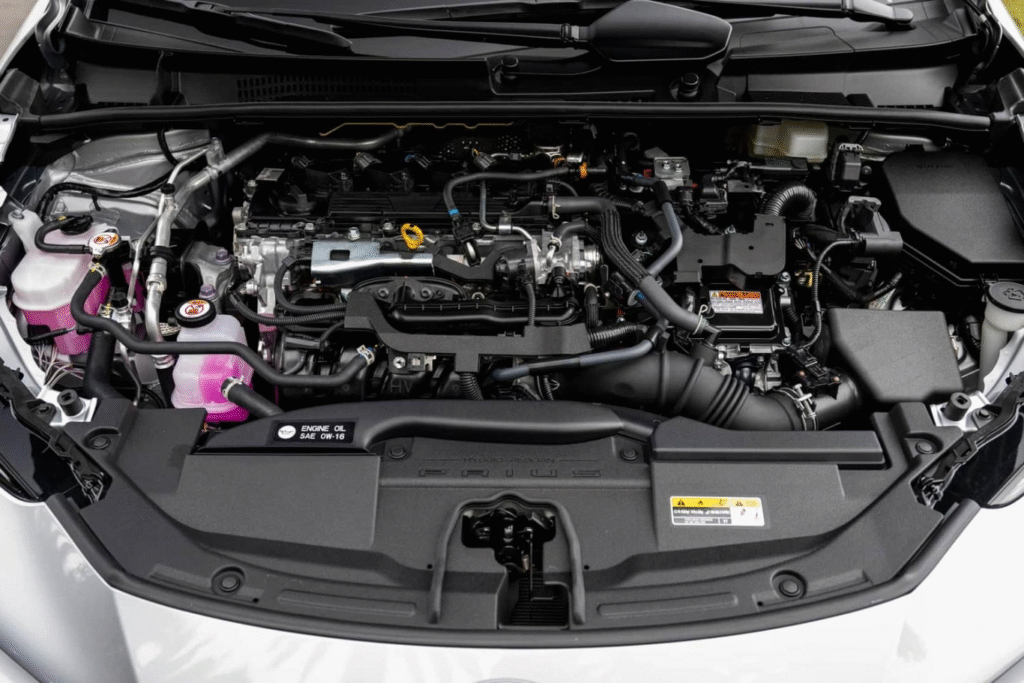
With the enhancements to both the BMS and regenerative braking, the 7.2V battery was able to operate more efficiently and provide better fuel economy. As a result, the second-generation Prius achieved an EPA rating of 60 miles per gallon in the city and 51 miles per gallon on the highway—impressive numbers for a mass-market vehicle at the time.
The Market Responds: Growth of Hybrid Vehicles
The success of the second-generation Prius did not go unnoticed. By 2005, hybrid vehicles were becoming increasingly popular, and Toyota was leading the charge. Other automakers began to follow suit, releasing their own hybrid models, such as the Honda Civic Hybrid, the Ford Escape Hybrid, and the Lexus RX 400h. These vehicles were designed to appeal to a wider audience, and many of them used a similar hybrid powertrain system to that of the Prius.
However, Toyota’s 7.2V battery remained one of the most efficient and reliable options on the market. Other automakers were still experimenting with different battery technologies, and while many of them used NiMH batteries in their early hybrids, none of them could match the performance of Toyota’s system. The 7.2V NiMH battery, combined with Toyota’s advanced hybrid powertrain, made the Prius one of the most fuel-efficient vehicles on the road.
By the late 2000s, hybrid vehicles were no longer just a niche market—they had become mainstream. Toyota’s Prius, now in its third generation, continued to dominate the hybrid segment, thanks in part to the reliability and efficiency of its 7.2V battery. The Prius was not just a car—it was a statement of environmental responsibility, and its success helped to change the automotive industry forever.
Challenges from Competition: The Rise of Lithium-Ion Batteries
However, as hybrid technology continued to evolve, so did the competition. The Prius’s success encouraged other automakers to invest heavily in hybrid and electric vehicle technologies. One of the biggest challenges Toyota faced in the late 2000s was the rise of lithium-ion (Li-ion) batteries. These batteries, which were already used in consumer electronics, were beginning to gain traction in the automotive industry. Unlike NiMH batteries, Li-ion batteries offered higher energy density, which meant they could store more power in a smaller and lighter package. This made them ideal for electric vehicles and hybrids that required longer driving ranges and higher performance.
Toyota recognized the potential of Li-ion batteries and began working on incorporating them into its hybrid models. However, it wasn’t until the launch of the Toyota Prius Plug-in Hybrid (PHEV) in 2012 that the company began to transition away from the 7.2V NiMH battery. The Prius Plug-in Hybrid used a larger lithium-ion battery to offer the ability to drive longer distances on electricity alone.
The shift to lithium-ion batteries marked the beginning of the end for the 7.2V NiMH battery in Toyota’s hybrid lineup. While NiMH batteries were still used in some models for a few more years, it was clear that the future of Toyota’s hybrid technology lay with lithium-ion batteries, which offered better performance, lighter weight, and longer range.
The End of the Road for the 7.2V Battery
By the mid-2010s, Toyota had phased out the 7.2V battery in most of its hybrid models. The Prius, once the flagship of Toyota’s hybrid lineup, was now equipped with a larger lithium-ion battery. The company had also introduced new hybrid models, such as the Toyota Yaris Hybrid and the Toyota Corolla Hybrid, which all used lithium-ion batteries to deliver better performance and longer driving ranges.
While the 7.2V NiMH battery had served its purpose and helped Toyota revolutionize the hybrid vehicle market, it was now being replaced by newer, more efficient battery technologies. The shift to lithium-ion batteries was not just a technological upgrade—it was a recognition that the automotive industry was changing, and Toyota needed to adapt to stay ahead.

Despite the 7.2V battery’s retirement, its legacy lives on. Without it, the hybrid revolution may not have taken off as quickly as it did. The Prius’s success, powered by the 7.2V battery, helped to establish hybrid vehicles as a viable alternative to traditional gasoline-powered cars. And while the technology has evolved, the impact of that small, humble battery can still be felt in the millions of hybrid vehicles on the road today.
To be continued in Pt. 3…