
So there you are, cruising down the highway, maybe humming along to your favorite playlist, when—bam—that little orange engine-shaped icon lights up your dashboard like a disapproving parent. You plug in your scanner, hold your breath, and there it is: P3065.
It sounds like something R2-D2 would beep about after a bad day. But what does it actually mean? And more importantly, is your hybrid about to ghost you?
Breathe. Let’s talk.

The Short Version (For the Impatient)
P3065 (often logged as P3065-123) is your hybrid vehicle’s way of saying: “Hey, I’m having a disagreement with one of my battery temperature sensors.”
More specifically, it means the Hybrid Battery Temperature Sensor “A” is either:
– Stuck in one position (giving the same reading no matter what)
– Sending readings that are way outside the normal range
– Being downright dramatic about the whole situation
In plain English? Your car’s battery management system can’t trust what Sensor “A” is telling it. And when a system can’t trust its sensors, it does what any sensible system would do: it flashes a warning light and throws a code so you’ll pay attention.
What’s Actually Happening Under the Hood?
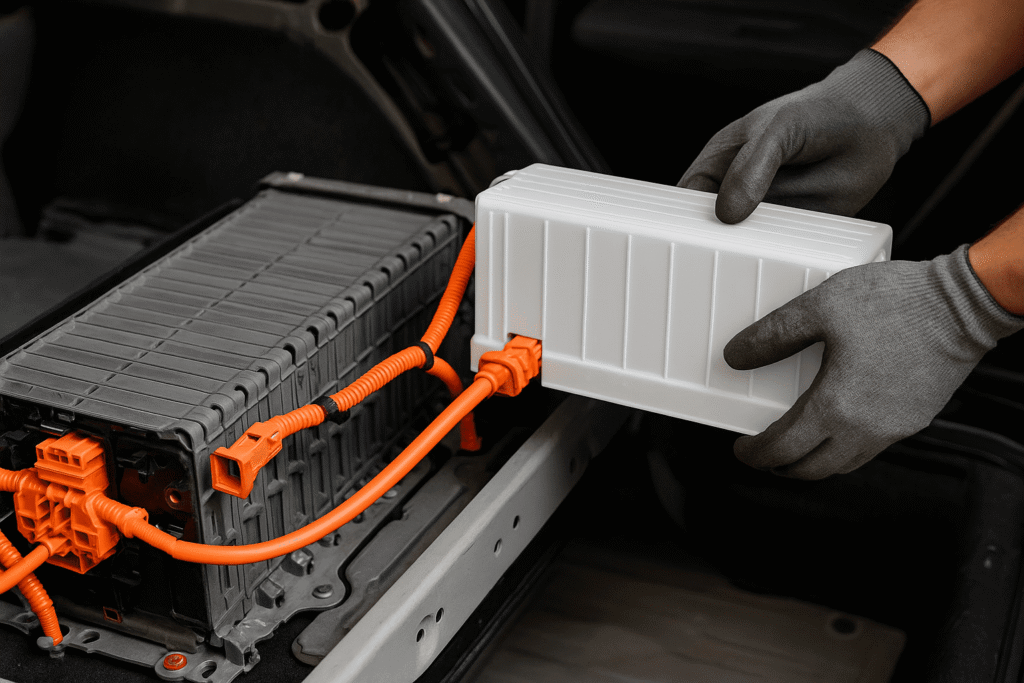
Your hybrid’s high-voltage (HV) battery isn’t just one big block of cells—it’s a carefully managed ecosystem. And like any ecosystem, temperature matters. A lot.
Scattered around your HV battery are multiple temperature sensors—typically three to four of them, depending on your model. These little guys use something called a thermistor: a component whose electrical resistance changes with temperature. The battery smart unit reads these resistance values, converts them into temperatures, and sends that data to the power management control ECU.
The ECU then uses this information to decide when to kick on the blower fan and cool things down. Think of it as your battery’s personal HVAC system.
Sensor “A” (also known as battery temperature sensor No. 0) is one of the key players in this operation. When P3065 pops up, it means the ECU has detected that Sensor “A” is performing abnormally—either stuck on a value that doesn’t change, or reporting temperatures that are physiologically impossible for a battery to experience.
The Usual Suspects
So who’s to blame for this digital drama? Here’s your lineup of potential culprits:
1. The Sensor Itself – Sometimes, sensors just get old, tired, or cranky. The thermistor inside Sensor “A” may have degraded, or the sensor may have physically failed.
2. The Wiring Harness – Somewhere between the sensor and the battery smart unit, there’s a bundle of wires. If a connector is loose, corroded, or damaged, the signal gets garbled—and the ECU notices.
3. The Battery Smart Unit – This is the “brain” that interprets sensor signals. If it’s malfunctioning, it might misinterpret perfectly good data as garbage.
4. The HV Battery Itself – In rare cases, an actual battery issue can cause temperature readings to go haywire. But most of the time, it’s a sensor problem, not a battery problem.
What NOT to Do (Please Read This)
Here’s where we put on our serious face for a moment.
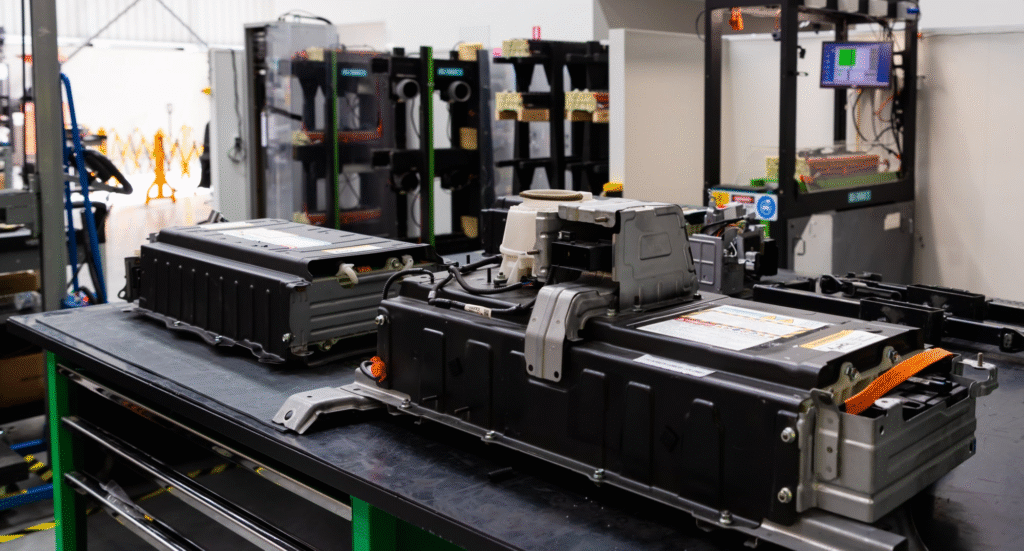
Your hybrid’s HV battery operates at lethal voltages. This is not a “pop the hood and poke around” situation.
If you’re tempted to DIY this one, don’t. Not without proper training, insulated gloves, and a thorough understanding of high-voltage safety procedures. The service manual specifically warns about removing the service plug grip and waiting at least 10 minutes for the high-voltage capacitor to discharge before touching anything. And even then, you should verify the voltage is 0V before beginning any work.
Leave the hands-on detective work to the professionals.
What a Pro Will Actually Do
A qualified technician with the right diagnostic tools (like Toyota/Lexus Techstream) will follow a systematic process:
1. Check for other codes – Sometimes P3065 brings friends. If codes like P0A1F-123 or P0AFC-123 are also present, that changes the diagnosis.
2. Clear the codes and test drive – The tech will clear the DTCs, then drive the vehicle under specific conditions—urban roads, at least 25 mph, for a total of 10 minutes or more.
3. Monitor sensor temperatures – Using the diagnostic tool, they’ll check the live readings from all battery temperature sensors. If Sensor “A” is the odd one out, that’s your smoking gun.
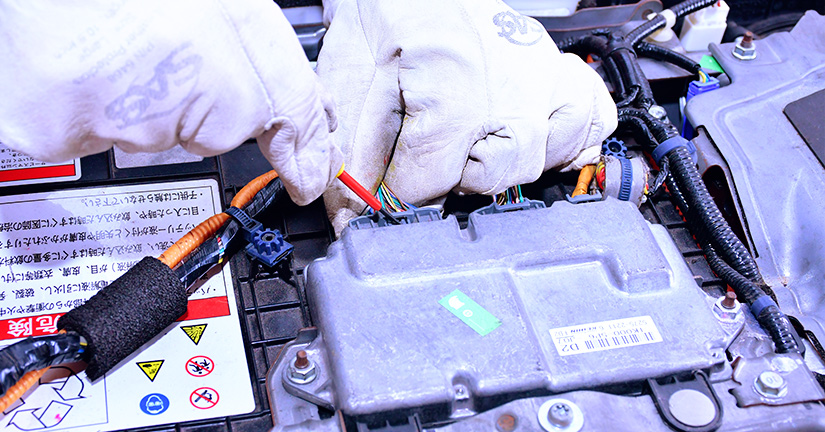
4. Inspect the sensor and wiring – This is where the physical inspection happens (safely, with proper precautions). They’ll check for loose connections, corrosion, or physical damage.
5. Replace or repair as needed – Depending on what they find, it might be as simple as reseating a connector or as involved as replacing the sensor or wiring harness.
The Good News
Here’s the silver lining: P3065 is rarely a death sentence for your hybrid battery. In most cases, it’s a sensor issue, not a battery replacement issue. The fix is usually far less expensive than you might fear.
That said, don’t ignore it. A malfunctioning temperature sensor means your battery management system is flying blind. If the system can’t accurately monitor battery temperature, it can’t properly manage cooling—and that could lead to bigger problems down the road.
The Bottom Line
P3065 sounds technical, intimidating, and vaguely sci-fi. But at its heart, it’s just your hybrid saying: “Hey, one of my thermometers is acting up. Can you get someone to check it out?”
Bring it to a qualified hybrid technician. Let them run the diagnostics, track down the culprit, and get your battery temperature sensor back in line. Your hybrid will thank you—probably with better fuel economy and a dashboard that stays nice and quiet.
And hey, at least now when someone asks what P3065 means, you can tell them it’s not a droid. It’s just a sensor having a bad day.
Have questions about P3065 or other hybrid trouble codes? Drop by our service department—we speak fluent “check engine light” and we’re always happy to translate.