
Your Car Just Called You Stupid (And It’s Not Wrong)
Picture this: You’re cruising down the highway, feeling smug about your 47 MPG and your contribution to saving the polar bears. Your hybrid is humming along like a well-oiled sewing machine. Then BAM — that little amber demon on your dashboard starts glowing like a radioactive warning from God himself.
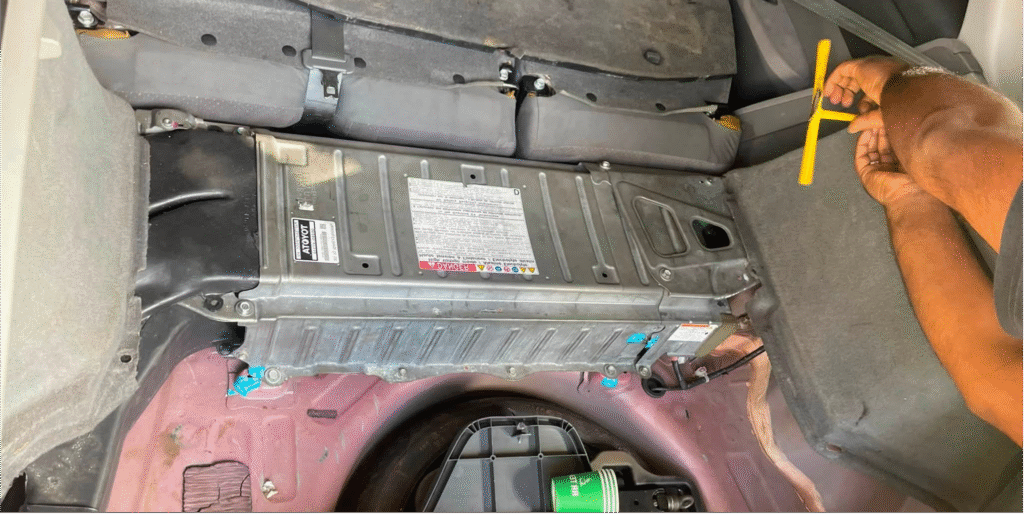
You pull out your OBD-II scanner (because you’re a responsible adult who owns one, right? RIGHT?), and it spits back: P0ACC.
Congratulations. Your car just diagnosed you with a problem.
What The Hell Is P0ACC?
Let’s cut the corporate BS. P0ACC is the automotive equivalent of your car saying “I’m feeling a bit under the weather, and by ‘under the weather’ I mean one of my battery temperature sensors is throwing a hissy fit because it thinks it’s getting paid minimum wage.”
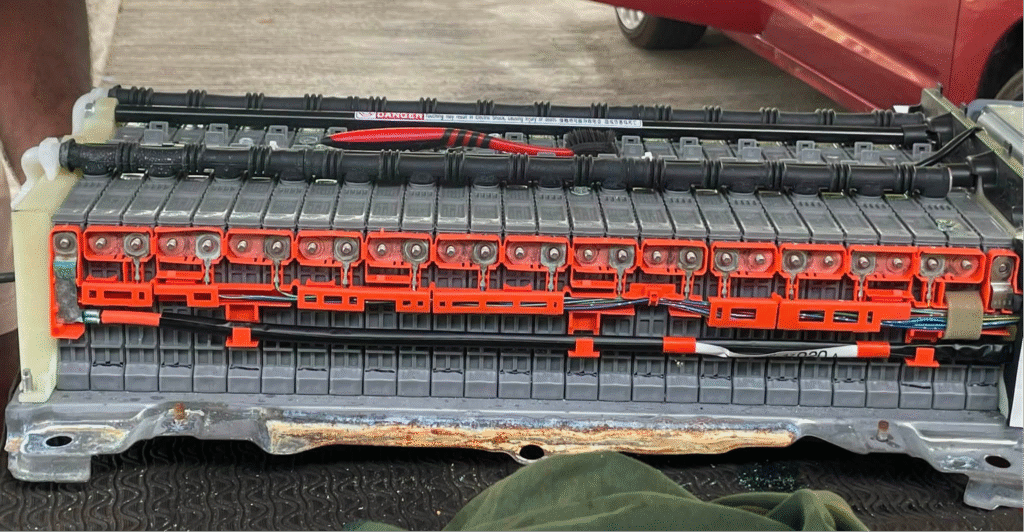
More technically — and I use that word loosely — P0ACC stands for Hybrid Battery Temperature Sensor “C” Circuit Low. There are multiple temperature sensors scattered around your hybrid battery like little nervous nannies, and Sensor “C” (specifically Sensor #3, because apparently your car can’t count past three) is reporting a voltage so low it might as well be underground.

The Battery Energy Control Module (BECM) — which is basically your car’s brain having a panic attack — detects that this sensor is either open-circuited or shorted to ground. In plain English? Your sensor is broken, your wiring is fried, or your car’s computer is gaslighting you.
Symptoms: How To Know Your Car Hates You
Your hybrid isn’t subtle about its disdain. Here’s what happens when P0ACC decides to ruin your Tuesday:
The Check Engine Light turns on — because of course it does. That light has been waiting for this moment its whole life.
Your fuel efficiency takes a nosedive — suddenly your 47 MPG looks more like 27 MPG, and you start questioning every life choice that led you to buy a hybrid in the first place.
The battery charges like a hungover teenager — inconsistent, unpredictable, and completely useless when you need it most.
Your battery might actually overheat — because without accurate temperature readings, your car has no idea if its battery is about to melt into a puddle of expensive goo.
Regenerative braking goes on vacation — say goodbye to that sweet, sweet energy recapture. You’re now braking like a caveman.
And if more than two of these sensors fail? Your hybrid system just shuts down entirely. That’s right — your car will literally ground itself like a misbehaving child until you fix it.
Why Did This Happen? (Because You Exist, Probably)
The universe doesn’t have a personal vendetta against you. But your car? Different story. Here are the usual suspects:
A faulty temperature sensor — the most common culprit. These little bastards just give up one day like a retired office worker.
Wiring or connector damage — rodents, corrosion, or just plain old “your car is falling apart” syndrome.
Battery management system malfunction — your car’s computer is having an existential crisis and taking it out on you.
A faulty HV battery assembly — this is the expensive one. The one that makes you question whether you should have just bought a Corolla.
A short to ground — which is exactly as bad as it sounds.
Extreme temperatures — because apparently your car is as dramatic as a reality TV star and can’t handle a little weather.
Can You Still Drive It?
Short answer: Technically yes. Long answer: You really, really shouldn’t.
If the check engine light is just on (solid, not flashing), you can probably limp to a mechanic like a wounded gazelle. But if that light is flashing? Pull over. Now. Your car is basically screaming at you in Morse code and the message is “TURN ME OFF BEFORE I EXPLODE.”
The severity rating for P0ACC is URGENT (3/3) and the repair difficulty is ADVANCED (3/3). Translation: This isn’t a “watch a YouTube video and fix it in your driveway” situation unless you enjoy the taste of 270 volts of DC current. And I don’t recommend that — it’s not a flavor anyone likes.
What’s This Going To Cost You? (More Than You Want To Spend)
Let’s talk about the part that actually matters: money.
Diagnosing this code typically requires about 1 hour of labor, which will run you anywhere from $80 to $150 per hour depending on whether you go to a dealership (prepare your wallet) or an independent shop (slightly less painful).
For the actual repair:
- Sensor replacement and minor wiring fixes: $200 to $500 all-in.
- Parts alone for the sensor: $100 to $200
- Labor: Another $100 to $300
If you own a Toyota? Buckle up — total cost can hit $300 to $700
If you own a Lexus? Same pain, just with nicer coffee in the waiting room.
And that’s assuming it’s just the sensor. If your entire HV battery assembly is toast? Add a zero. Multiple zeros. Possibly a comma. You might need to take out a second mortgage.
What Should You Actually Do?
Don’t panic. Panicking is free, but it doesn’t fix anything.
Don’t just clear the code and pretend it didn’t happen. That’s like putting a Band-Aid on a bullet wound and calling it a day. The code will come back. It always comes back.
Do NOT just disconnect the 12V battery to “reset” things. This isn’t a Nintendo 64. Blowing on the cartridge won’t help either.
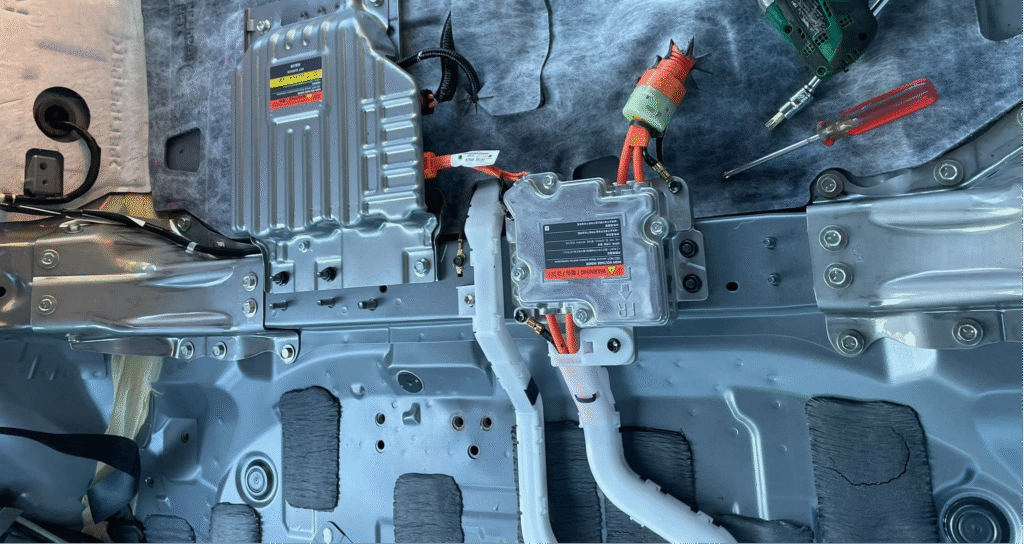
Visually inspect the wiring harness and connectors — look for broken, bent, pushed-out, or corroded pins. Sometimes it’s just a loose connection. Sometimes it’s a rat that decided your wiring looked delicious.
Take it to a professional. Unless you have a death wish and a very good life insurance policy, don’t mess with high-voltage hybrid systems.
Check your cooling system — blocked cooling fan ducts can cause temperature sensors to go haywire.
The Silver Lining (Yes, There Is One)
Here’s the thing about P0ACC: it’s fixable. It’s not a death sentence for your hybrid. It’s not even a life sentence. It’s more like a parking ticket — annoying, expensive, and completely avoidable if you’d just paid attention.
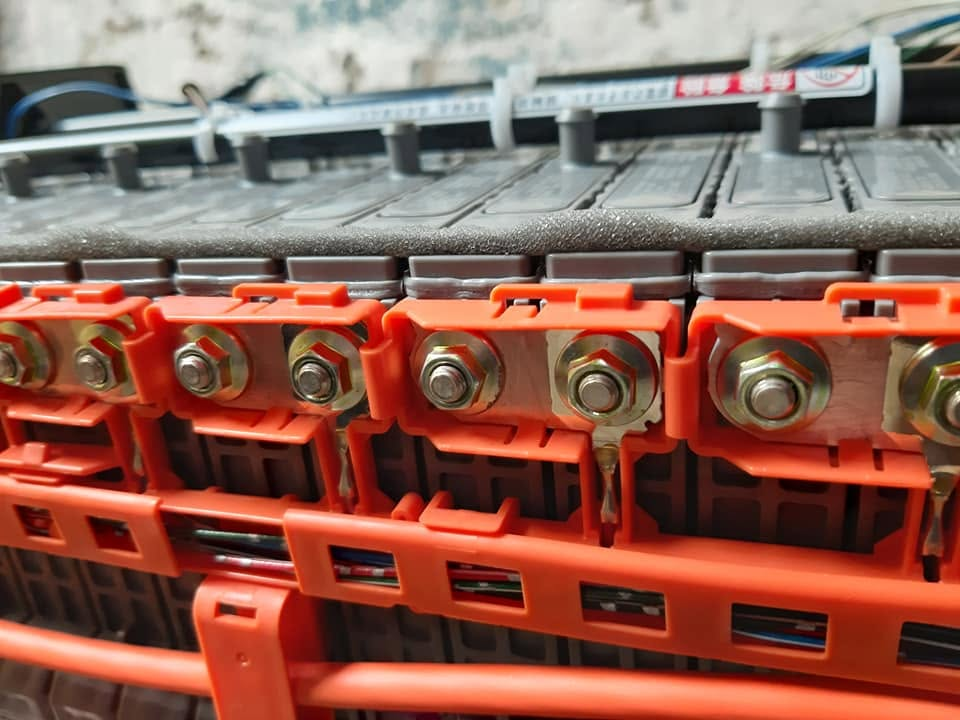
Your battery temperature sensors are there to protect you. They’re the nervous nellies of the automotive world, constantly worrying about whether your battery is too hot, too cold, or just right. When one of them fails, it’s not trying to ruin your day — it’s trying to prevent your battery from turning into a lithium-ion bonfire.
FINAL VERDICT: P0ACC is a pain in the ass. It’ll cost you a few hundred bucks, a few hours of your time, and possibly your remaining faith in modern technology. But fix it now, and your hybrid will go back to being the fuel-sipping, guilt-reducing companion you always wanted.
Ignore it? Well, let’s just say your car has a very short fuse — and that fuse is connected to a very expensive battery pack.