
Amid the acclaim that greeted the Lexus LS600h — the world’s first V8 hybrid luxury sedan, the technological tour de force that conquered Japan’s ultra-luxury segment — one component remained curiously overlooked. Critics praised the 5.0-liter V8’s seamless integration with electric motors. Journalists marveled at the quiet cabin and the responsive all-wheel-drive system. But the component that made all of it possible, the device that stored and delivered the electrical energy enabling every hybrid function, received comparatively little attention. That component was the nickel-metal-hydride battery pack — a 240-cell, 288-volt marvel of electrochemical engineering that redefined what automotive batteries could achieve in terms of power density, longevity, safety and environmental responsibility.
To appreciate the NiMH battery’s significance, one must first understand the unique demands placed upon it within the LS600h’s Hybrid Synergy Drive system. Unlike the 12-volt auxiliary battery that powered the vehicle’s audio, navigation and lighting systems, the hybrid battery — sometimes called the traction battery — faced a far more rigorous duty cycle. It needed to deliver bursts of high current to the electric motor during acceleration, absorb regenerated energy during braking, maintain stable voltage across a wide range of temperatures, withstand thousands of partial charge-discharge cycles without degradation, and do all of this while mounted discreetly behind the rear seats in a package that intruded minimally on passenger or cargo space.
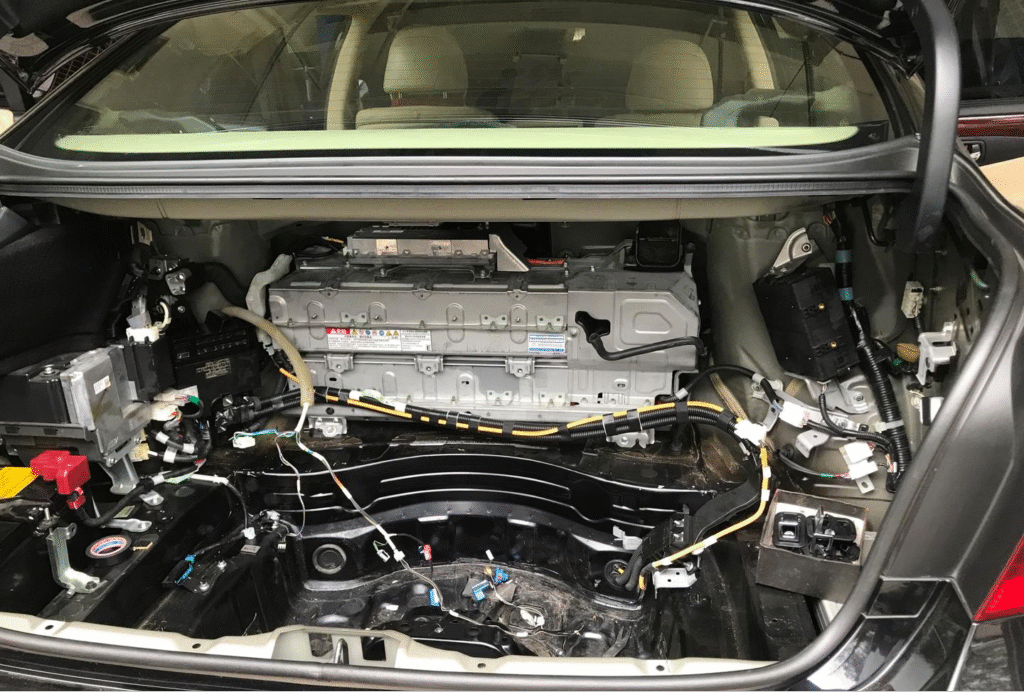
The NiMH battery met these demands with elegance. Composed of 240 individual cells arranged into 20 modules, each module delivering 14.4 volts, the battery pack produced a nominal 288 volts DC — a voltage subsequently stepped up by a boost converter to a maximum of 650 volts DC before being converted to alternating current by an inverter to power the drive motor. The battery’s chemistry was fundamentally different from the lead-acid units found in conventional automobiles or the lithium-ion packs that would later become common in electric vehicles. Nickel-metal-hydride chemistry offered exceptional tolerance for partial charging, outstanding cycle life, remarkable thermal stability and a level of safety that made it ideally suited for automotive applications — especially those, like the LS600h, where the battery was located within the passenger compartment.
Perhaps the most remarkable aspect of the LS600h’s NiMH battery was its durability. Where conventional car batteries might last three to five years under normal use, Toyota designed its hybrid batteries to survive the entire operational life of the vehicle. The battery management system carefully controlled charging parameters to prevent overcharging or deep discharge, maintaining the state-of-charge within an optimal window that maximized both performance and longevity. Real-world experience would later confirm that many LS600h batteries remained fully functional well beyond 200,000 kilometers of driving — a testament to the robustness of NiMH chemistry and the sophistication of Toyota’s battery management algorithms.
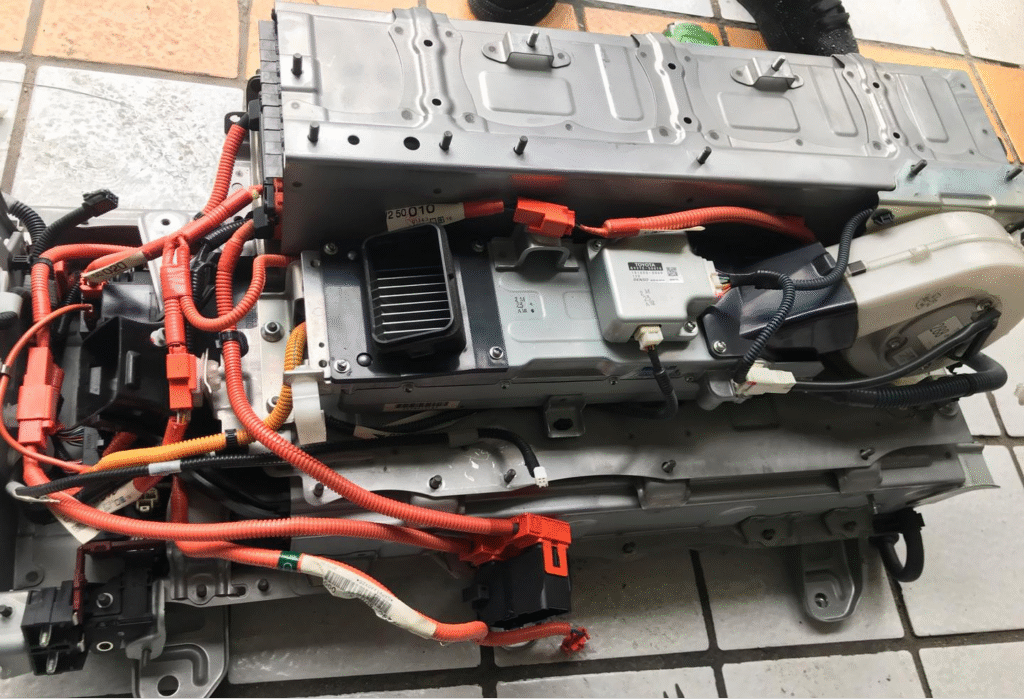
The placement of the battery pack behind the rear seats was itself an engineering triumph. Lexus engineers managed to package the 240-cell assembly into a relatively compact vertical slab that occupied space which would otherwise have been wasted, leaving the trunk largely unobstructed. The battery’s cooling system drew air from the cabin, with additional cooling provided by the rear air conditioning unit’s chilled air output — an ingenious solution that ensured the battery operated at optimal temperatures even in Japan’s hot and humid summers. The entire assembly was sealed, requiring no maintenance from the owner beyond normal operation, and the vehicle’s owner’s manual contained specific warnings about the battery’s sealed construction — underscoring that this was not a serviceable component but rather a fundamental structural element of the hybrid system.
The NiMH battery’s role extended far beyond simple energy storage. It was the key enabler of the LS600h’s “full hybrid” operation — the ability to run on electric power alone under certain low-speed conditions. When the vehicle crept through Tokyo’s congested streets or maneuvered through a parking garage, the V8 engine could remain completely off, with the electric motor drawing power solely from the NiMH battery. This not only saved fuel and eliminated emissions in those driving conditions but also contributed to the LS600h’s legendary cabin quietness — a characteristic that Japanese buyers valued enormously. The battery also powered the regenerative braking system, capturing kinetic energy that would otherwise be lost as heat and converting it back into stored electrical energy for later use.
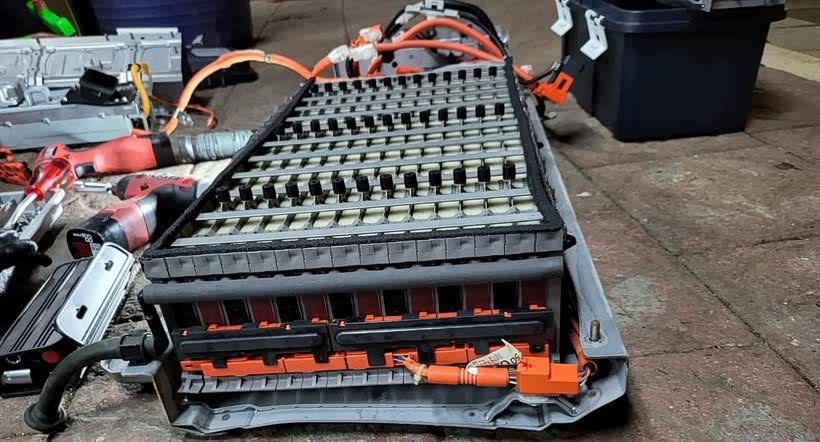
Yet the LS600h’s NiMH battery was remarkable for reasons that extended beyond its technical specifications. Toyota had recognized from the earliest days of hybrid development that the environmental benefits of electrified vehicles would be severely undermined if their batteries could not be responsibly recycled at the end of their useful lives. Consequently, the company established what would become one of the automotive industry’s most comprehensive battery stewardship programs — a system centered on the LS600h’s home market of Japan.
Beginning in the early 2000s, Toyota developed a nickel-metal-hydride battery collection network that leveraged existing logistics — using the return journeys of spare parts delivery vehicles and Toyota Tsusho’s catalyst collection network to gather used batteries with minimal additional carbon emissions. The company established the Toyota HV Call Centre specifically to facilitate battery recovery and constructed advanced mass-production recycling facilities in cooperation with Toyota Chemical Engineering. These efforts culminated in October 2010 with the announcement of the world’s first business dedicated to recycling nickel from used hybrid-vehicle NiMH batteries for reuse in new NiMH batteries — a true closed-loop system.
Sumitomo Metal Mining joined the effort, providing expertise in nickel refining for battery applications. The initiative represented a level of vertical integration and environmental foresight that few automakers could match. Rather than treating used hybrid batteries as waste to be disposed of, Toyota recognized them as valuable sources of refined nickel that could be returned directly to the battery manufacturing supply chain. This not only reduced the environmental footprint of hybrid vehicle production but also insulated the company from fluctuations in global nickel commodity markets — a strategic advantage that competitors lacking such recycling infrastructure could not replicate.
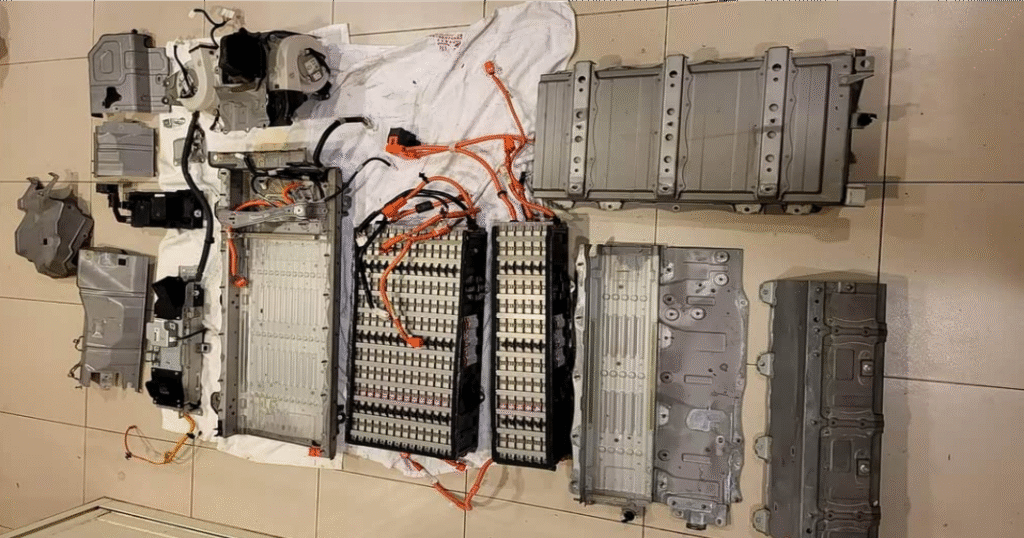
The story of the LS600h’s battery did not end with nickel recovery, however. Toyota pioneered the concept of “second-life” applications for hybrid batteries — using them in less demanding stationary roles after their performance had degraded below automotive standards. In January 2013, Toyota announced that it would begin selling an electricity management system incorporating recycled NiMH batteries from hybrid vehicles to Toyota dealers throughout Japan. These systems stored energy during periods of low demand and released it during peak periods, reducing electricity costs and contributing to grid stability. The LS600h’s battery modules, with their proven reliability and remaining capacity even after automotive service, proved ideally suited for such applications.
The Japanese context made these battery stewardship efforts particularly meaningful. Japan is a country with limited natural resources and a deeply ingrained cultural commitment to minimizing waste — what is often called mottainai, a sense of regret over wastefulness. Toyota’s battery recycling and second-life programs resonated powerfully with Japanese consumers who had purchased the LS600h partly out of environmental concern. These owners could take genuine pride in knowing that their vehicles were not only reducing emissions in operation but were also part of a circular economy where valuable materials would be recovered and reused rather than discarded.
The engineering decisions behind the LS600h’s NiMH battery also had profound implications for Toyota’s broader corporate strategy. By 2016, Toyota had sold over one million Lexus hybrid vehicles globally since the brand’s first hybrid introduction in 2005. Behind each of those million vehicles was a NiMH battery — and behind each battery was the supply chain, manufacturing expertise and recycling infrastructure that Toyota had painstakingly built over more than a decade. The LS600h, as the flagship of the Lexus hybrid lineup, served as the ultimate proof of what NiMH technology could achieve at the highest levels of performance, luxury and reliability.
Critics sometimes questioned why Lexus continued using NiMH chemistry in the LS600h while competitors experimented with lithium-ion batteries. The answer revealed Toyota’s distinctive engineering philosophy: reliability and safety above all else. Li-ion batteries offered higher energy density but came with thermal management challenges that NiMH simply did not face. In a flagship vehicle like the LS600h — especially one sold in Japan, where ownership periods tend to be long and used vehicles remain on the road for many years — the proven durability and inherent safety of NiMH were decisive advantages. Toyota’s meticulous 10-year or 250,000-kilometer battery warranty reflected the company’s confidence in NiMH technology, and real-world performance justified that confidence time and again.
As the automotive industry pivoted toward lithium-ion and solid-state batteries in subsequent years, the LS600h’s NiMH battery stood as a monument to a different era — one in which engineering choices were driven not by marketing hype or range anxiety but by sober assessment of what would work best over the vehicle’s entire lifespan. The NiMH battery was not the flashiest component of the LS600h, but it was arguably the most important. Without it, the V8 could not have been hybridized, the all-wheel-drive system could not have been electrified, the regenerative braking could not have been realized, and the LS600h’s revolutionary blend of performance and efficiency would have remained impossible.
Looking back from the perspective of today, the LS600h’s nickel-metal-hydride battery has earned a place in automotive history as one of the most successful and influential energy storage systems ever deployed in a production vehicle. Its combination of power density, cycle life, safety, recyclability and second-life utility established a template that continues to influence hybrid and electric vehicle battery development to this day. For Lexus and Toyota, the lessons learned from the LS600h’s battery program informed every subsequent hybrid product, from the CT 200h and ES 300h to the most recent generations of the Lexus RX and NX hybrids.
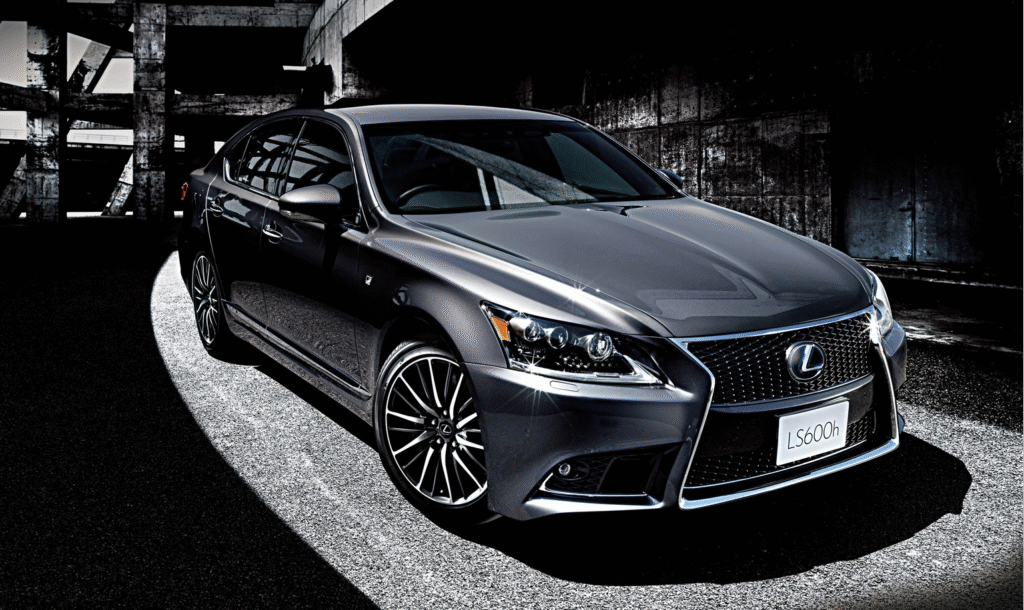
In Japan, where the LS600h achieved its greatest commercial success, the legacy of its NiMH battery endures in the country’s sophisticated battery recycling infrastructure and in the regulatory framework that encourages responsible end-of-life handling for all automotive traction batteries. The 25,400 Japanese LS600h and LS600hL units sold between 2007 and 2014 contributed more than sales revenue and market share — they contributed to a knowledge base and an industrial ecosystem that continues to serve Japan’s automotive industry well into the era of electrification.
The LS600h was never merely a car. It was a statement of technological ambition, a demonstration of environmental leadership and a testament to the possibilities that emerge when engineering excellence is combined with thoughtful stewardship of resources. And at the heart of it all — silent, reliable, endlessly capable — was the nickel-metal-hydride battery, the unsung hero of Japan’s hybrid flagship.
If you want to buy hybrid car battery, you can contact us directly.