
Between 2003 and 2011, Honda’s Civic Hybrid became a rolling laboratory for nickel metal hydride battery technology. These two generations of the hybrid Civic—based on the seventh and eighth generation platforms—carried a chemistry that most drivers never thought about, yet it defined the hybrid driving experience. NiMH packs offered safety, cycle life, and cost advantages that lithium ion could not match at the time. But they also revealed real world challenges: premature failure in hot climates, software updates that reduced assist power, and replacement bills that shocked some owners. This period was not perfect, but it was essential. The lessons learned from those nickel metal hydride packs—how to cool them, charge them, and coax longevity from them—paved the way for every modern hybrid that followed.
The First Generation (2003–2005): Proving the Concept
Honda timed the introduction of the first-generation Civic Hybrid perfectly. By early 2003, fuel prices had begun their steady climb, regulations in California and other proactive markets were tightening, and consumers were becoming receptive to the idea of electrified transportation. The Toyota Prius had been on sale since 1997, but its space-age styling and dashboard-mounted gear selector remained polarizing. The Civic Hybrid offered an alternative value proposition: hybrid efficiency wrapped in a conventional, reassuringly normal sedan. You could pull into a parent-teacher conference or a business meeting without announcing your environmental politics to the whole parking lot. This subtlety proved to a powerful selling point. Over 2003 and 2004, the Civic Hybrid‘s 1.3 liter i DSI engine—featuring four spark plugs per cylinder for ultra-lean combustion—won the International Engine of the Year award in the 1 liter to 1.4 liter category for three consecutive years, a testament to the sophistication of Honda’s internal-combustion engineering.
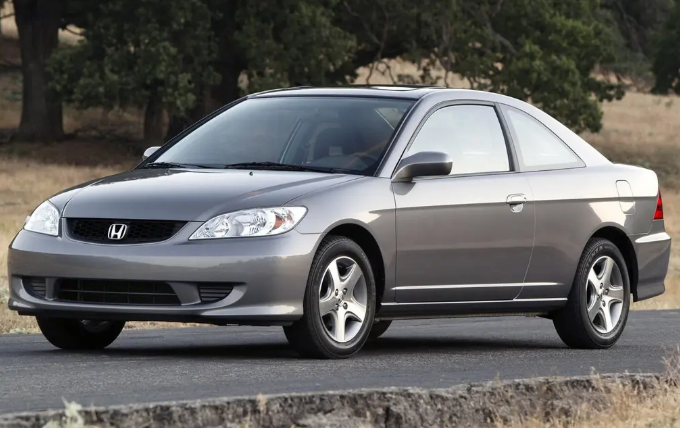
The 1.3 liter engine itself was a marvel of early 21st century design. Normally aspirated and operating with a wide throttle opening to minimize pumping losses, it featured dual spark plugs per cylinder, which allowed the fuel air mixture to be made significantly leaner than conventional engines permitted. This i DSI (Direct and Sequential Ignition) system improved combustion stability under lean conditions. Three of the four cylinders could be deactivated during deceleration—a capability Honda achieved by adapting VTEC valve control hardware to hold valves closed, sealing off those cylinders entirely. The reduction in engine pumping losses amounted to an impressive 50 percent over the previous IMA system, substantially improving regenerative braking efficiency. When the car came to a complete stop, the idle stop function automatically turned off the engine; stepping on the accelerator triggered the NiMH powered electric motor to restart the engine almost instantly—all seamlessly, without clunks or hesitations.
The batteries that made all this possible were a 144 volt nickel metal hydride pack—a 6.0 Ah, 120V configuration in the first generation car—consisting of a number of individual cells wired in series within the IPU. The total weight of the battery pack, including its cooling system and control electronics, was carefully managed to avoid adding excessive mass to the Civic‘s lightweight chassis. By placing the IPU behind the rear seat, Honda preserved most of the trunk space; the Hybrid offered 10.1 cubic feet of cargo volume compared to 12.9 cubic feet in the conventional sedan—a completely acceptable trade off for owners who valued a 500 mile driving range.
The Challenges of Early NiMH Deployment
Despite the engineering brilliance, the first generation Civic Hybrid encountered real world problems that would teach the industry valuable lessons about nickel metal hydride battery management. The most vexing issue was premature battery failure. Unlike the NiMH packs in the Toyota Prius, which proved exceptionally durable and trouble free, some Civic Hybrid batteries began losing capacity after as little as five to seven years of service. Investigative reporting from the Los Angeles Times revealed that over four percent of hybrid batteries in California Civics had to be replaced for various reasons—a failure rate that regulators considered unacceptable. Honda‘s internal analysis traced the cause to undercharging. Frequent stop and go city driving, particularly with the air conditioning running during warm weather, could leave the NiMH pack in a chronically low state of charge. Over time, lingering at low charge states accelerated degradation, harming the battery’s ability to accept and deliver current. For maximum service life, Honda engineers determined that the NiMH battery needed to be maintained at 50 60 percent of its full charge, requiring regular use (at least once per month) to prevent self discharge from pulling the pack into dangerously depleted territory. Extreme heat accelerated the damage; customers who left their hybrids parked in hot garages for extended periods were more likely to experience failure.
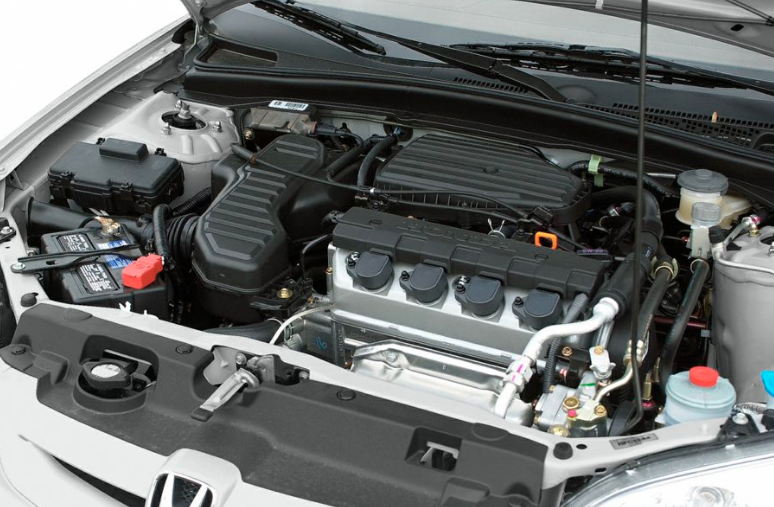
Honda responded with a two pronged strategy. First, they issued a voluntary software update (covered under TSBs 09 058 and 10 034) that reprogrammed the IMA battery controller, the PGM FI engine controller, and the CVT transmission controller. The updated logic reduced the frequency and duration of electric motor assist, thereby lowering the load and stress on the NiMH pack. The trade off was perceptible: many owners complained that their cars no longer accelerated as quickly and that fuel economy had modestly decreased. Nonetheless, the update genuinely reduced the risk of battery failure and extended pack longevity for those who applied it. Second, Honda began a quiet campaign to educate owners about optimal NiMH care: driving the car regularly to keep the battery charged, avoiding prolonged storage in hot environments, and scheduling periodic dealership inspections if the car was used exclusively for short urban trips.
Replacement costs for failed NiMH packs in the 2003 2005 Civic Hybrid were substantial. A new OEM pack installed at a dealer could cost between $2,500 and $4,200, while rebuilt or aftermarket options ranged from $900 for low tier refurbished packs to $3,600 for quality new aftermarket units. The arrival of third party rebuilders created an ecosystem for NiMH battery refurbishment: technicians replaced degraded cells, rebalanced the pack, and offered limited warranties that made extending the life of an older Civic Hybrid economically feasible. Because the core NiMH chemistry was stable and rechargeable cells were widely available, the aftermarket remained active for years, keeping many first generation Civic Hybrids on the road long after their original battery warranties had expired.
The Second Generation (2006 2011): Refining the NiMH Formula
For the 2006 model year, Honda unveiled the eighth-generation Civic alongside a thoroughly revised Civic Hybrid. The exterior styling adopted a bold, one motion form design with a stretched wheelbase (2,700 mm) and an advanced multi tiered dashboard that placed the speedometer on an upper tier near the driver‘s line of sight—reducing eye movement and improving safety. The cabin grew significantly: a 1,750 mm wide body provided genuinely spacious accommodation for five adults, the flat rear floor remained, and the quality of materials finally matched what European competitors had offered for years. Under the sexier sheet metal, the second generation Civic Hybrid received a more powerful 158.4 volt NiMH battery pack, an upgraded 1.3 liter engine with a high profile camshaft that increased output to 93 horsepower, and the fourth generation IMA system. Variable Cylinder Management (VCM) now permitted deactivation of all four cylinders during deceleration and steady state cruising, allowing the car to run on electric power alone for the first time—a significant milestone for the IMA architecture, which previously had relied on electric assist only during acceleration.
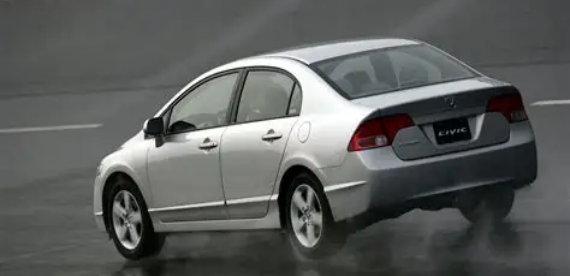
The improvements in battery technology were not merely incremental. The 158.4 volt NiMH pack featured reduced internal resistance and lower energy losses, contributing to a 23 percent improvement in output density compared to the first generation pack. Honda engineers refined the internal cell design, adding more welding points between pole plates and current collector plates to improve electrical conductivity and durability. The IPU cooling system was redesigned to combine two fans into one while consuming 85 percent less energy, resulting in a 32 percent weight reduction and a 20 percent volume reduction for the cooling system. The inverter received high density silicon wafers that cut heat loss by 25 percent. Combined, these refinements made the second generation Civic Hybrid more efficient, more reliable, and more thermally stable than its predecessor.
Understanding the NiMH Chemistry
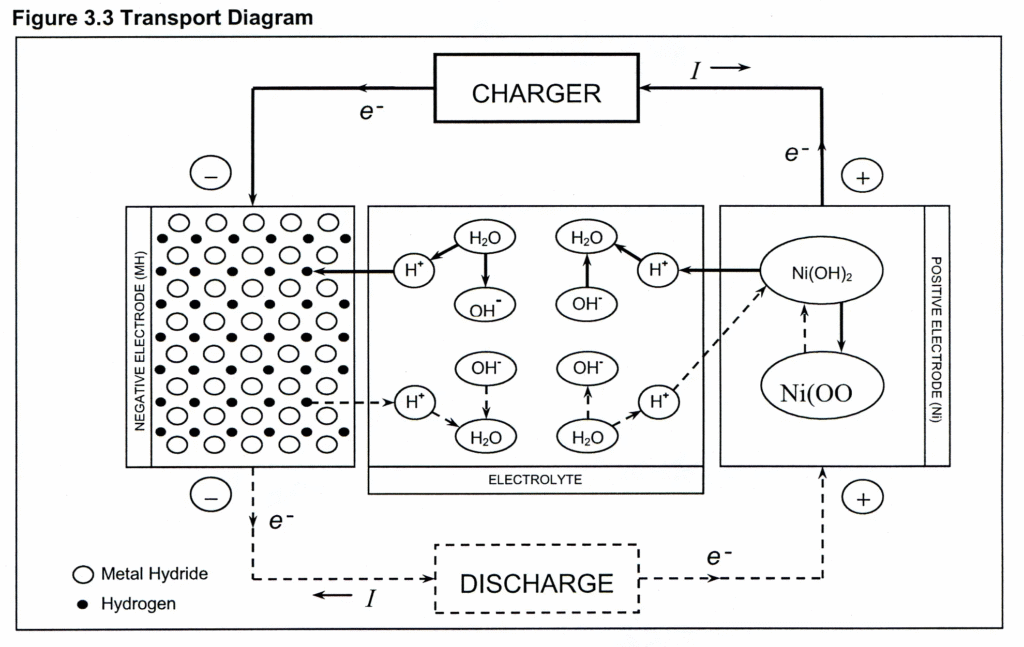
To fully appreciate why Honda relied on nickel metal hydride batteries throughout the 2003 2011 period, it helps to understand precisely how NiMH chemistry works. A typical NiMH cell consists of a positive electrode made of nickel oxyhydroxide (NiOOH), a negative electrode composed of a hydrogen absorbing metal alloy (typically a rare earth nickel formulation), and an alkaline electrolyte—usually potassium hydroxide (KOH). During charging, the alloy structure absorbs hydrogen ions; during discharge, the reaction reverses, releasing electrons through the external circuit. The overall charge equation is Ni(OH)₂ + M → NiOOH + MH, where M represents the metal alloy and MH represents the alloy after absorbing hydrogen atoms. This reversible hydrogen absorption mechanism is what differentiates NiMH from older nickel cadmium (NiCd) systems, which used toxic cadmium and suffered from severe memory effects.
For hybrid vehicle applications, the NiMH chemistry proved exceptionally robust. The open circuit voltage of a NiMH cell sits at approximately 1.2 volts near 50 percent state of charge. Specific power ratings can reach as high as 1,300 watts per kilogram, while specific energy typically ranges from 46 to 66 watt hours per kilogram depending on the optimization between power and energy. The cycle life of NiMH cells significantly exceeds that of lead acid batteries, and for hybrid applications—where the state of charge swing is less than five percent—NiMH batteries can continue for over 300,000 cycles while maintaining sufficient performance for the hybrid application. Even at 80 percent depth of discharge, cycle life exceeding 2,000 cycles is achievable. This durability made NiMH ideally suited for the partial hybrid (or “mild hybrid”) architecture of the IMA system, where the battery was never fully discharged and never fully charged, but rather operated continuously in a happy middle band that maximized longevity.
The Civic Hybrid in Context
The second generation Civic Hybrid‘s EPA ratings of 40 mpg city and 45 mpg highway (first generation achieved 46/51 on the older testing cycle) placed it competitively among early hybrids. But the true innovation was packaging: the IPU and NiMH pack occupied minimal trunk space, the curb weight increase over a conventional Civic was modest, and the driving experience remained recognizably Civic—responsive, composed, and fun. The car earned Motor Trend Car of the Year honors for 2006 alongside the rest of the Civic lineup, a validation of Honda’s integrated approach to hybrid development. Honda continued to refine the second generation NiMH pack throughout the model’s lifecycle, addressing early battery failure complaints through improved cell chemistry, better thermal management, and more intelligent control algorithms. While the Civic Hybrid never outsold the Prius, it succeeded in a more important mission: proving to a skeptical automotive industry that hybrid technology could be normalized.

By 2011, as the ninth-generation Civic loomed on the horizon, Honda made a momentous decision. The Civic Hybrid would be the first Honda hybrid to transition from nickel metal hydride to lithium ion batteries. The NiMH era—spanning the 2003 2011 Civic Hybrid generations—had generated invaluable field data, manufacturing expertise, and customer acceptance that made the lithium ion transition possible. The humble nickel metal hydride pack, often overlooked and underappreciated, had served its purpose magnificently. Without it, the modern electrified vehicle revolution might never have reached the mainstream.