
The Quiet Sunset of an Engineering Icon
For all its technical brilliance and market success, the Cadillac Escalade Hybrid’s production run was surprisingly short. After the 2013 model year, Cadillac quietly discontinued the hybrid variant, leaving the conventional Escalade — and eventually the all-electric Escalade IQ — to carry the brand’s large luxury SUV torch into the future. The reasons for the discontinuation were complex and reflected broader trends in the automotive industry: changing consumer preferences, shifting regulatory priorities, and the rapid evolution of alternative powertrain technologies.
Throughout its production run from 2008 to 2013, the Escalade Hybrid achieved cumulative global sales that contributed to the Escalade family’s remarkable success. By 2018, total Escalade sales — including ESV, EXT, and Hybrid models — had topped three-quarters of a million units in the United States alone, with 836,000 cumulative global sales. Consumers had spent approximately $3 billion or more on the model over its two decades on the market. The hybrid, while never the volume leader, played an important role in this success story by demonstrating Cadillac’s technological leadership and appealing to environmentally-conscious luxury buyers.
The Escalade Hybrid’s discontinuation in 2013 coincided with broader changes at General Motors. The company was shifting its hybrid strategy away from the Two-Mode system — which was expensive to manufacture and complex to integrate — and toward more conventional hybrid architectures that could be deployed across a wider range of vehicles. Simultaneously, GM was investing heavily in the development of the Chevrolet Volt extended-range electric vehicle and eventually the all-electric Bolt EV, signaling a strategic pivot toward plug-in hybrid and battery-electric technologies.
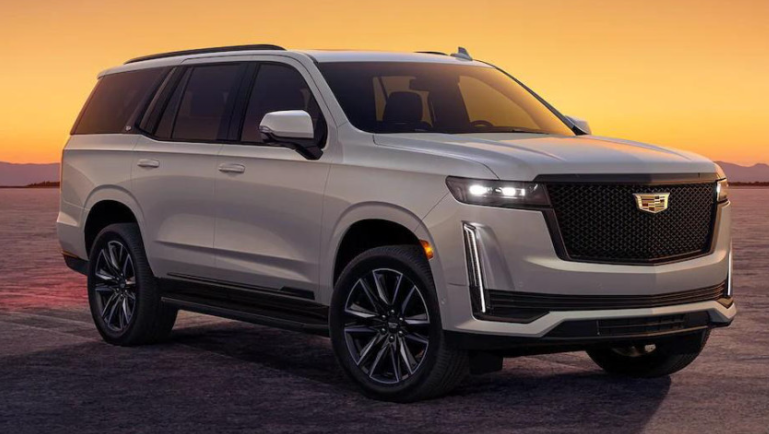
For enthusiasts and collectors, the Escalade Hybrid’s brief production run has made it something of a cult classic. Used prices for the vehicle today range dramatically, from as low as $5,424 to as high as $20,985 depending on condition, mileage, and specification. Well-maintained examples, particularly the rare Platinum Hybrid models, have begun to attract interest from collectors who recognize the vehicle’s historical significance as the world’s first hybrid full-size luxury SUV.
The vehicle’s legacy, however, extends far beyond its sales figures or collector appeal. The Escalade Hybrid proved that large, capable, luxurious vehicles could be engineered to deliver meaningful fuel economy improvements without sacrificing the attributes that customers valued most. It demonstrated that hybrid technology was not limited to small, lightweight vehicles but could be scaled up to accommodate the demands of full-size SUVs, pickup trucks, and even commercial vehicles. And it paved the way for the even more ambitious electrified vehicles that would follow, including the recently launched Cadillac Escalade IQ — a fully electric version of the iconic SUV that delivers up to 750 horsepower and an estimated range of 460 miles from its massive 205-kilowatt-hour battery pack.
But to fully appreciate the Escalade Hybrid’s technical achievement — and to understand why its discontinuation was met with genuine disappointment by those who had experienced its capabilities — we must turn our attention to the heart of the vehicle’s hybrid system: the battery pack, the energy management systems, and the intricate engineering that allowed this three-ton giant to sip fuel rather than guzzle it.
Deep Dive: The Nickel-Metal Hydride Battery System
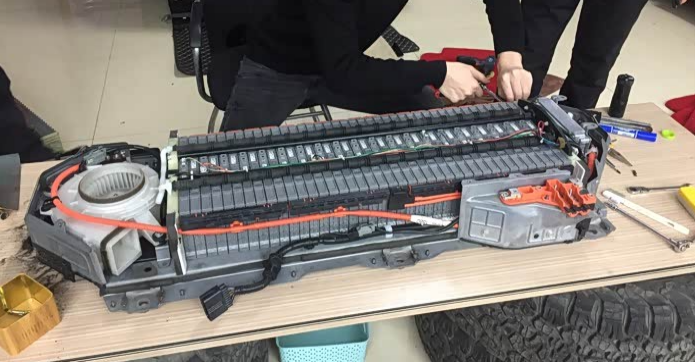
At the core of the Escalade Hybrid’s Two-Mode system lay a 300-volt nickel-metal hydride Energy Storage System — a battery pack that represented the state of the art in automotive hybrid technology at the time of the vehicle’s development. Unlike the lithium-ion batteries that would come to dominate the automotive industry in subsequent years, nickel-metal hydride (NiMH) chemistry was mature, proven, and well-understood, having been deployed in millions of hybrid vehicles worldwide, most notably the Toyota Prius.
The Escalade Hybrid’s battery pack was engineered to deliver 300 volts of electrical potential, with an ampere-hour capacity of approximately 6.5 Ah — specifications that placed it firmly in the mainstream of automotive hybrid batteries of its era. The pack consisted of multiple individual cells connected in series and parallel configurations to achieve the desired voltage and capacity. Each cell was carefully managed by the battery control system to ensure optimal charging and discharging, temperature regulation, and long-term durability.
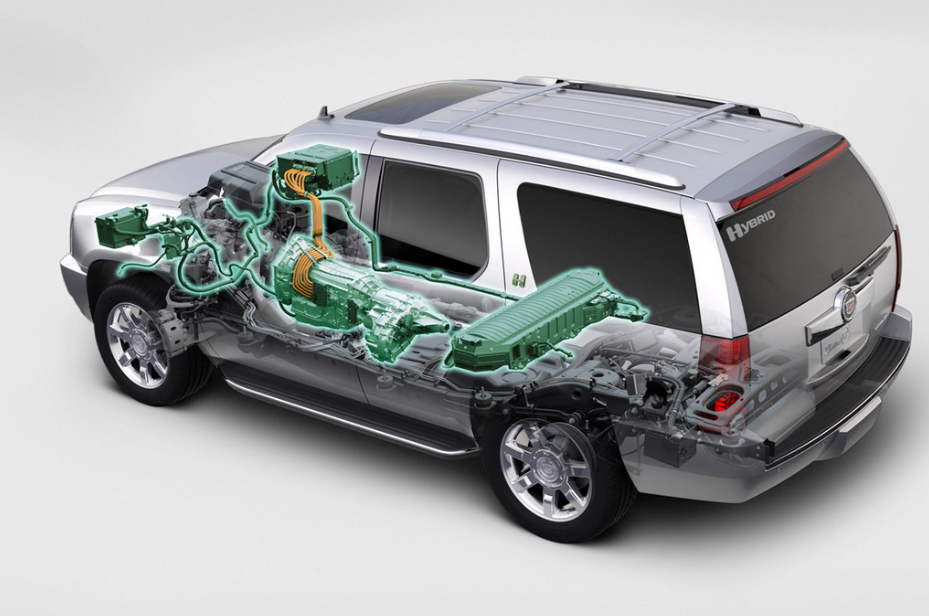
The decision to locate the battery pack underneath the second-row seats was a masterstroke of vehicle packaging. By placing the 300-pound battery in this location — rather than under the hood, in the cargo area, or anywhere else that would compromise passenger or cargo space — Cadillac’s engineers ensured that the Escalade Hybrid retained virtually all of the interior roominess that made the standard Escalade so desirable. The battery took up “virtually no additional space” according to Cadillac’s official documentation, and it did not interfere with second- or third-row ingress and egress.
This packaging decision was critical to the Escalade Hybrid’s market appeal. Luxury SUV buyers in 2008 were uncompromising about interior space and comfort, and any intrusion into passenger or cargo areas would have been met with immediate rejection. By hiding the battery pack under the seats where it was completely invisible to occupants, Cadillac preserved the Escalade’s fundamental utility while still delivering hybrid functionality.
The battery pack’s nickel-metal hydride chemistry offered several advantages over alternative technologies. NiMH batteries were exceptionally durable, with many early hybrid vehicles still operating on their original battery packs after 15 years or more on the road. They were also relatively tolerant of temperature variations and could operate effectively in both extreme cold and extreme heat — an important consideration for a vehicle sold across the diverse climates of North America, the Middle East, and Asia. Additionally, NiMH batteries did not suffer from the thermal runaway risks associated with early lithium-ion chemistries, making them inherently safer in the event of a crash or other damage.
To ensure long-term reliability, Cadillac backed the Escalade Hybrid’s nickel-metal hydride battery with an eight-year, 100,000-mile warranty. This coverage, which applied to the hybrid drive line components and the energy storage system as well as the battery pack itself, provided buyers with confidence that the complex and expensive hybrid components would not become a financial burden after only a few years of ownership. For many luxury buyers who were accustomed to trading in their vehicles every two to three years, the warranty length was largely irrelevant — but for those who planned to keep the Escalade Hybrid for the long term, it was an important reassurance.
The Regenerative Braking Cycle and Energy Management
The Escalade Hybrid’s battery did not need to be plugged in to recharge. Instead, the vehicle relied entirely on its own operation to keep the battery charged — a characteristic of conventional (non-plug-in) hybrid vehicles. The key to this self-charging capability was the regenerative braking system, which captured energy that would otherwise be lost as heat during braking and deceleration and converted it into electricity for storage in the battery pack.
The process worked as follows: whenever the driver applied the brakes or allowed the vehicle to coast, the two electric motors within the electrically variable transmission switched from motor mode to generator mode. Instead of drawing electricity from the battery to propel the vehicle, the motors now used the vehicle’s forward momentum to spin generators, producing electrical current that was routed back to the battery pack for storage. This cycle — accelerate on electrical and gasoline power, brake to regenerate electricity, store that electricity in the battery, then use it to accelerate again — repeated itself continuously throughout the vehicle’s operation, creating a virtuous cycle that dramatically improved overall fuel efficiency.
The Escalade Hybrid’s regenerative braking system was described as “fully blended,” meaning that the transitions between regenerative braking and the traditional hydraulic friction brakes were completely seamless and imperceptible to the driver. This was no small engineering feat. The regenerative braking system had to provide consistent, predictable deceleration regardless of battery state of charge, temperature, or other variables. It had to work in harmony with the vehicle’s anti-lock braking system, stability control system, and rollover mitigation technology. And it had to feel natural to drivers who might never have experienced regenerative braking before.
Countless hours of development time went into calibrating the regenerative braking system, and the results were impressive. According to the engineers who worked on the Two-Mode system, the transitions between regenerative and friction braking were “indistinguishable” to drivers — a level of refinement that was essential for a luxury vehicle where smoothness and predictability were paramount.
The battery management system played a crucial role in optimizing the regenerative braking cycle. The system constantly monitored the battery’s state of charge, temperature, and health, and it adjusted the amount of regenerative braking force accordingly. If the battery was fully charged, the system would reduce or eliminate regenerative braking to avoid overcharging and potential damage to the battery cells. If the battery was cold, the system would limit charging current until the battery warmed up to its optimal operating temperature. These adjustments happened automatically and imperceptibly, ensuring that the battery always operated within its safe limits.
The 6.0-Liter V8 and Its Hybrid Integration
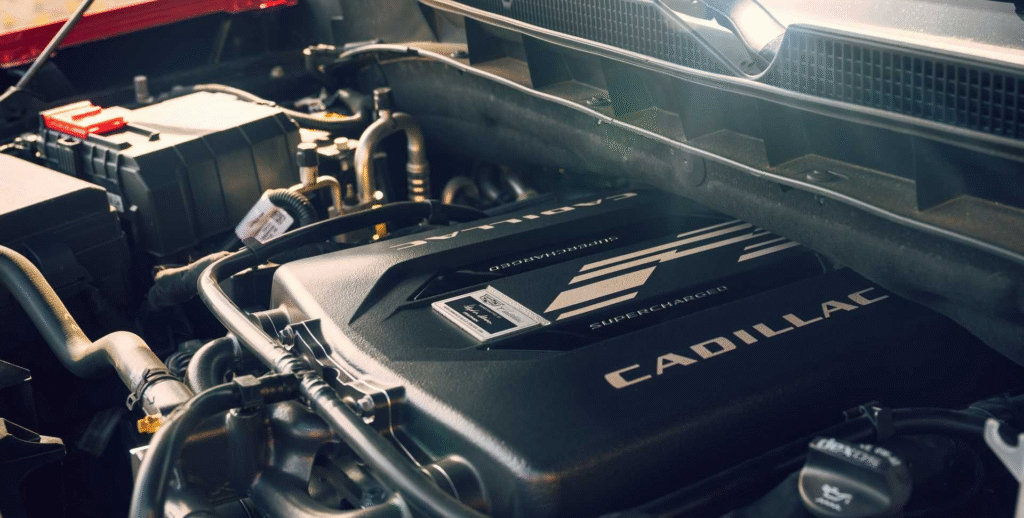
No discussion of the Escalade Hybrid’s battery technology would be complete without addressing the gasoline engine that worked in concert with the electric motors. The 6.0-liter Vortec V8 under the hood was no ordinary engine. It was specifically designed and calibrated for hybrid operation, incorporating several features that would have been unnecessary in a conventional vehicle.
The most significant of these features was Active Fuel Management technology, which allowed the V8 engine to seamlessly shut off half of its cylinders when less power was needed, effectively operating as a fuel-sipping V4. During highway cruising, light acceleration, or steady-speed driving, the engine could run on just four cylinders for extended periods, dramatically reducing fuel consumption without the driver ever noticing the transition. When additional power was required — for passing, merging, or climbing a steep grade — the engine would instantly revert to V8 operation, delivering the full 332 horsepower and 367 pound-feet of torque that drivers expected.
The engine also incorporated late-intake valve closing technology, which modified the engine’s combustion cycle to more closely approximate the Atkinson cycle commonly used in dedicated hybrid engines. In a conventional Otto-cycle engine, the intake valve closes near the bottom of the piston’s intake stroke, trapping a full cylinder of air for compression and combustion. In the Atkinson cycle, the intake valve remains open longer, allowing some of the intake charge to be pushed back out of the cylinder before the valve closes. This reduces pumping losses and improves thermal efficiency at the expense of peak power output — a tradeoff that made perfect sense in a hybrid application where the electric motors could compensate for the reduced low-end torque.
The combination of Active Fuel Management, late-intake valve closing, and the electric motors’ instant torque delivery created a powertrain that was far more efficient than the sum of its parts. The electric motors — each rated at 80 horsepower — provided immediate torque off the line, allowing the gasoline engine to operate in its most efficient range for longer periods. The transmission’s four fixed gear ratios and two continuously variable modes ensured that the engine and motors were always operating at their optimal speeds, regardless of vehicle speed or load condition.
Perhaps most impressively, the Escalade Hybrid maintained the capability that defined the Escalade brand: towing. The two-wheel-drive hybrid could tow up to 5,800 pounds, while the four-wheel-drive version could handle 5,600 pounds — figures that were virtually identical to the conventional Escalade’s towing capacity. This was a direct result of the Two-Mode system’s design philosophy: deliver fuel economy improvements without compromising the vehicle’s fundamental utility.
Thermal Management and Battery Longevity
The Escalade Hybrid’s nickel-metal hydride battery pack was equipped with a sophisticated cooling system that was essential for maintaining battery performance and longevity. NiMH batteries, like all electrochemical energy storage devices, generate heat during charging and discharging. If that heat is allowed to accumulate unchecked, it can accelerate battery degradation, reduce capacity, and in extreme cases, lead to premature failure.
To prevent this, the battery pack was equipped with an internal cooling fan that drew air from the passenger compartment and circulated it through the battery case. This cooling approach — using conditioned cabin air rather than outside air — ensured that the battery was always exposed to temperatures within its optimal operating range, regardless of external weather conditions. In hot climates, the vehicle’s air conditioning system would keep the cabin — and therefore the battery — cool. In cold climates, the cabin heater would prevent the battery from becoming too cold to operate efficiently.
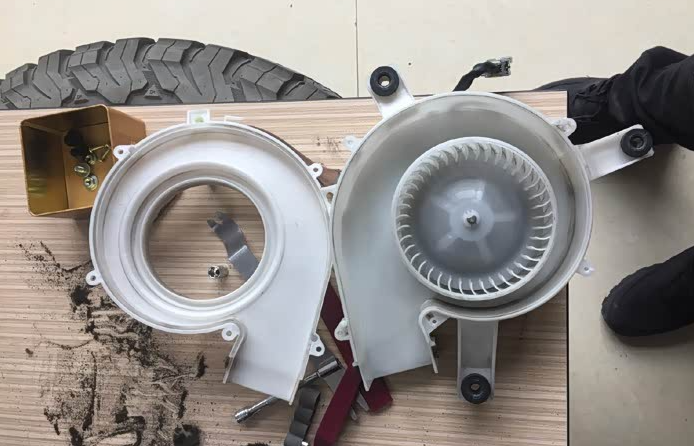
The cooling fan itself was specially tuned to be as quiet as possible at low vehicle speeds, when occupants would be most likely to hear it. This attention to acoustic refinement was typical of Cadillac’s approach to the Escalade Hybrid. The vehicle was engineered to deliver hybrid functionality without any of the compromises — whether in performance, comfort, luxury, or noise levels — that early adopters of hybrid technology had come to accept as inevitable.
In addition to the cooling system, the battery management system optimized charge and discharge cycles to maximize battery life. The system prevented the battery from being fully discharged or overcharged, both of which can accelerate degradation in NiMH batteries. By maintaining the battery within a relatively narrow state-of-charge window — typically between 40 and 60 percent of capacity — the system ensured that the battery would last for hundreds of thousands of miles without significant capacity loss. The eight-year, 100,000-mile warranty on hybrid components was a testament to Cadillac’s confidence in the durability of this battery system.
The Transition to Electrification: A Legacy Continued
While the Escalade Hybrid’s production ended in 2013, its technological legacy lived on. The Two-Mode hybrid system continued to be used in various General Motors vehicles for several more years, and the engineering lessons learned during the Escalade Hybrid’s development informed the company’s subsequent electrification efforts. Perhaps most importantly, the Escalade Hybrid proved that large, heavy vehicles could benefit from electrification — a lesson that General Motors would apply to its development of the Chevrolet Volt, the Bolt EV, and eventually the all-new Cadillac Escalade IQ.
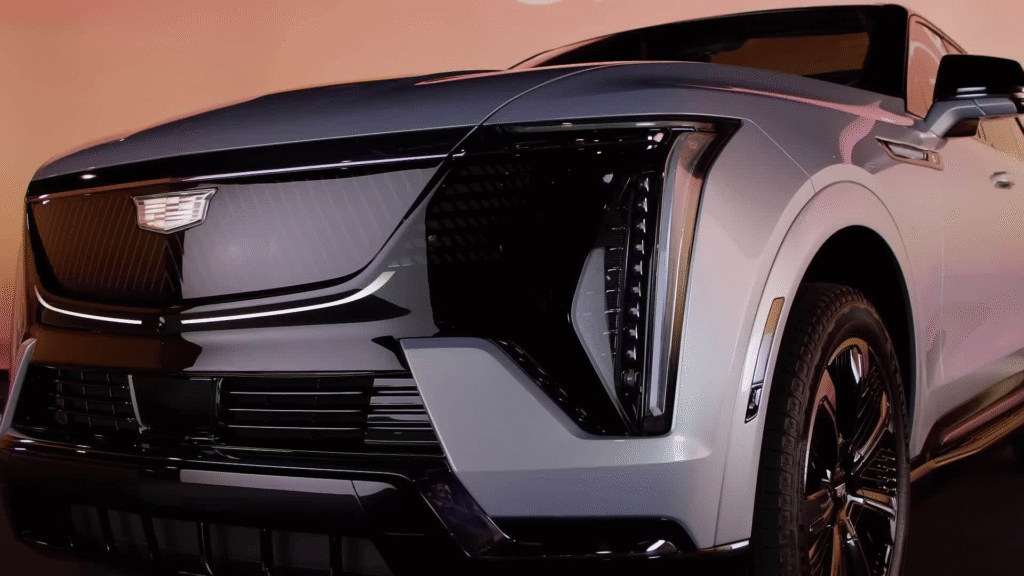
The Escalade IQ, launched in 2026, represents the ultimate expression of the hybrid’s original vision. Where the Escalade Hybrid achieved 20 miles per gallon in the city, the Escalade IQ delivers zero tailpipe emissions and an estimated range of up to 460 miles on a single charge from its massive 205-kilowatt-hour battery pack. Where the Escalade Hybrid produced 332 horsepower, the Escalade IQ’s dual-motor all-wheel-drive system delivers up to 750 horsepower and 785 pound-feet of torque in Velocity Max mode. Where the Escalade Hybrid carried a $71,685 price tag, the Escalade IQ starts at approximately $130,000 — a reflection of how far battery technology has come in the intervening years.
The journey from the Escalade Hybrid’s nickel-metal hydride battery to the Escalade IQ’s 205-kilowatt-hour lithium-ion pack encapsulates the rapid evolution of automotive battery technology over the past two decades. The NiMH battery in the Escalade Hybrid stored approximately 1.8 kilowatt-hours of usable energy — enough to propel the vehicle on electric power alone for perhaps a mile or two at low speeds. The lithium-ion battery in the Escalade IQ stores more than 100 times that amount of energy, enabling all-electric driving for hundreds of miles.
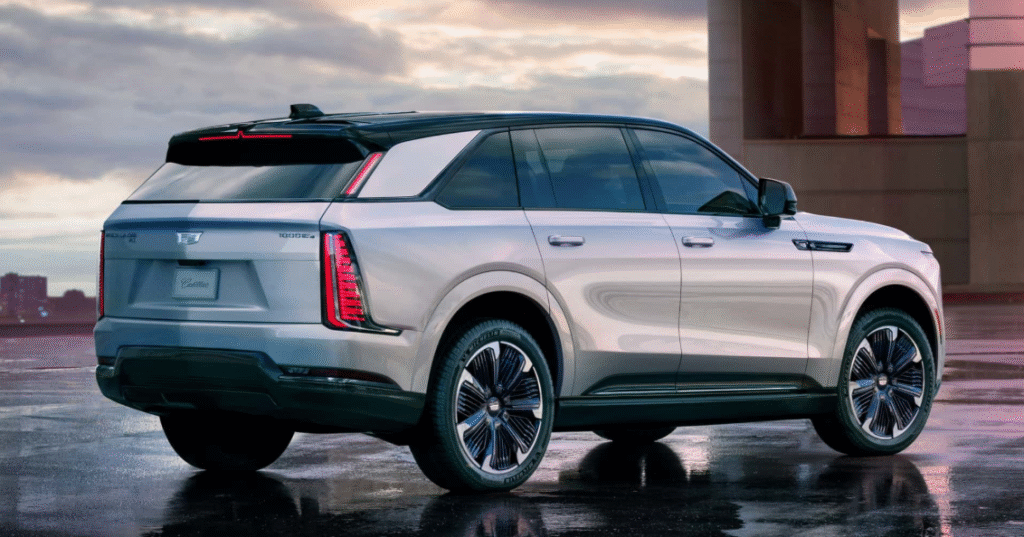
Yet for all the advances in battery chemistry and energy density, the fundamental principles that made the Escalade Hybrid work remain relevant today. Regenerative braking, intelligent energy management, seamless transitions between power sources, and the integration of electrification into a package that preserves the vehicle’s core utility — these concepts were pioneered or perfected in vehicles like the Escalade Hybrid, and they continue to underpin the most advanced electric and hybrid vehicles on the road today.
A Vehicle Ahead of Its Time
The Cadillac Escalade Hybrid occupies a unique place in automotive history. It was neither the most fuel-efficient vehicle of its era nor the most powerful. It was not a commercial blockbuster, nor was it an obscure footnote. Instead, it was a proof of concept — a demonstration that the worlds of luxury SUVs and fuel-efficient vehicles need not be mutually exclusive.
For the buyers who owned Escalade Hybrids during their production years, the vehicle delivered on its promises. They enjoyed the same commanding driving position, the same capacious interior, the same towing capability, and the same dramatic presence as conventional Escalade owners — but they did so while consuming significantly less fuel and emitting fewer greenhouse gases. They made a statement about their values without sacrificing their preferences.
For the engineers who designed and built the Escalade Hybrid, the vehicle represented years of dedication, countless technical challenges overcome, and the satisfaction of creating something that had never existed before. The Two-Mode system, with its electrically variable transmission, its 300-volt nickel-metal hydride battery, its regenerative braking, and its sophisticated control software, was a masterpiece of automotive engineering — complex, elegant, and effective.
And for the automotive industry as a whole, the Escalade Hybrid was an important milestone on the long road toward electrification. It proved that even the largest, heaviest, most traditionally fuel-hungry vehicles could be electrified without compromising their fundamental character. It showed that luxury buyers would embrace hybrid technology when it was packaged in a vehicle that met all of their other needs. And it helped pave the way for the fully electric vehicles that are now beginning to transform the automotive landscape.
The Cadillac Escalade Hybrid may be gone, but its influence endures. Every time a large luxury SUV or pickup truck incorporates hybrid technology, every time a manufacturer demonstrates that efficiency and capability can coexist, and every time a driver experiences the seamless integration of electric and gasoline power, the legacy of the Escalade Hybrid lives on. It was a vehicle born at a moment of crisis — high gas prices, economic uncertainty, and a rapidly changing automotive market — but it proved that American engineering could rise to meet even the most daunting challenges.
For collectors and enthusiasts, the Escalade Hybrid remains a fascinating artifact — a reminder of a time when hybrid technology was still novel, when nickel-metal hydride batteries were the state of the art, and when the world’s largest luxury SUV became one of the world’s most unexpected green machines. For everyone else, the Escalade Hybrid serves as a reminder that progress is rarely linear, that innovation often comes from unexpected places, and that even the most unlikely vehicles can help shape the future of transportation.
The three-ton hybrid that could match a Mini Cooper’s city fuel economy, that seated eight in leather-appointed luxury, that towed boats and trailers without breaking a sweat, and that did it all with a 300-volt nickel-metal hydride battery hidden under the second-row seats — that was the Cadillac Escalade Hybrid. And it was, by any measure, a remarkable achievement.