
For wholesale distributors, independent workshop operators and auto-parts importers across North America and Europe, sample evaluation constitutes one of the most critical decision-making steps before committing to large-volume orders of hybrid Ni-MH replacement batteries for Japanese and American hybrid fleets. Many market participants treat sample procurement as a simple low-cost preliminary check, yet countless business disputes, inventory losses and downstream customer-relationship damages originate from poorly managed sample workflows. Too many buyers rely purely on surface-level appearance, short-term visual inspection or supplier-provided marketing materials, without building structured business-oriented evaluation standards. This oversight creates gaps between sample performance and mass-delivered product consistency, directly eroding profit margins and market reputation for aftermarket automotive businesses.
It is essential to clarify the core commercial purpose behind ordering hybrid-battery samples. Samples are not merely physical demonstration units for internal reference. They serve as the baseline benchmark for compatibility validation, commercial-term confirmation, cross-batch consistency expectation and real-world market adaptability testing. Many buyers fall into the first common trap: treating sample procurement only as a product-validation exercise, while decoupling sample-stage communication from formal bulk-order commercial agreements. Suppliers may deliver well-prepared individual sample units, yet subsequent mass-production lots deviate from sample-observed standards. Without documenting agreed-upon benchmarks at the sample phase, importers possess limited leverage when inconsistencies emerge after full-container shipments arrive at destination warehouses. This scenario occurs frequently within the competitive hybrid-battery aftermarket, where multiple tiers of refurbished, salvaged and brand-new replacement options co-exist within the same market space.
Another widespread pitfall involves ambiguous definition of sample specifications. Many purchasing teams only reference vehicle model names when requesting samples for Japanese and American hybrid applications. Identical vehicle model designations can correspond to multiple variant battery part numbers across different production years, regional market configurations and factory trim levels. Visual similarity between two battery assemblies does not guarantee functional interchangeability. When submitting sample requests, buyers must clearly list corresponding OEM part numbers alongside vehicle-application information, rather than depending solely on generic vehicle descriptions. Omitting this step often results in receiving physically-mismatched samples, wasting lead-time, logistics expense and evaluation cycles before any real business progress can take place.
Logistics and compliance management for battery samples also demand deliberate attention. Ni-MH hybrid replacement batteries belong to regulated cargo categories for cross-border transportation. Many first-time buyers underestimate sample-shipping complexity, assuming small-quantity sample parcels escape formal transport-documentation requirements. In reality, incomplete documentation can trigger customs detention, unexpected clearance fees or returned shipments even for single-unit sample consignments. Experienced B2B purchasers confirm shipping terms, required compliance certificates, packaging standards and responsibility for freight, duty and customs clearance before sample dispatch. Clarity on these points prevents unexpected out-of-pocket costs and sets consistent expectations for future bulk-order logistics arrangements.
Buyers should also establish clear evaluation boundaries for sample units. Samples offer insights into physical fit, packaging quality, documentation completeness and supplier responsiveness. However, short-term sample testing cannot fully replicate long-term in-service lifecycle behaviour under varied local-market operating conditions. Intelligent buyers avoid over-extrapolating sample-level observations to multi-year mass-stock performance guarantees. Instead, they build progressive-order strategies: validate samples, proceed with modest trial bulk lots, gather real-world downstream feedback, and only then scale-up ordering volumes. This phased approach distributes commercial risk instead of concentrating exposure within one large-scale purchase decision.
Commercial terms surrounding samples deserve careful negotiation as well. Market practice varies widely: some suppliers offer fully-free samples with freight collected, others charge full product pricing for sample units with partial or full rebates applied upon subsequent bulk-order placement. Every buyer should formalise sample-related clauses within written correspondence: sample pricing, refund or rebate triggers, lead-time commitments, return-policy for defective sample units, and whether sample-validated specifications will bind future mass-order deliveries. Verbal agreements create costly misunderstandings within cross-border auto-parts trade.
Finally, supplier responsiveness throughout the sample cycle delivers valuable business intelligence. Observe how quickly the supplier clarifies specification questions, provides requested paperwork, resolves sample-related issues and communicates potential delays. Sample-phase communication quality frequently predicts post-order support performance for large-volume accounts. For distributors building long-term supply-chain partnerships, sample-sourcing is not only about assessing hardware, but also evaluating the reliability of the business partner itself.
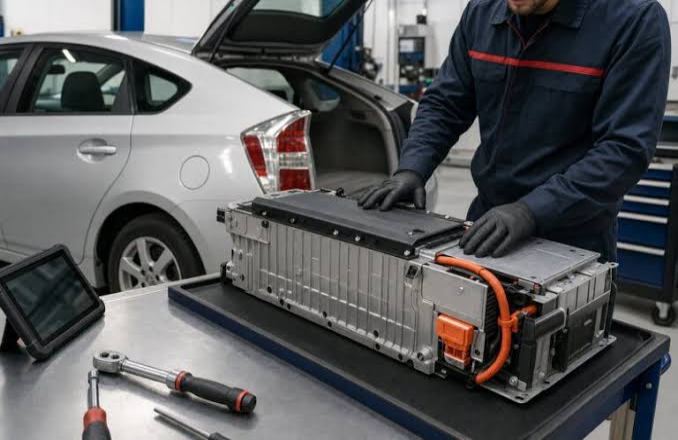
In summary, strategic sample procurement extends far beyond receiving a physical battery unit. By formalising specification documentation, clarifying logistics liabilities, defining evaluation limits, locking-in commercial terms and observing supplier business conduct, Western-market hybrid-parts buyers can substantially reduce avoidable downstream risks. Approaching sample ordering as a full-scale commercial pre-assessment protects inventory investment and strengthens long-term supply-chain resilience within the fast-growing hybrid-vehicle aftermarket.