
Your hybrid throws a P3000 code.
The dashboard lights up.
You search online.
Five minutes later, you’re convinced you need a $3,000 battery replacement.
Take a deep breath—not because everything is fine, but because P3000 doesn’t actually tell you what’s broken.
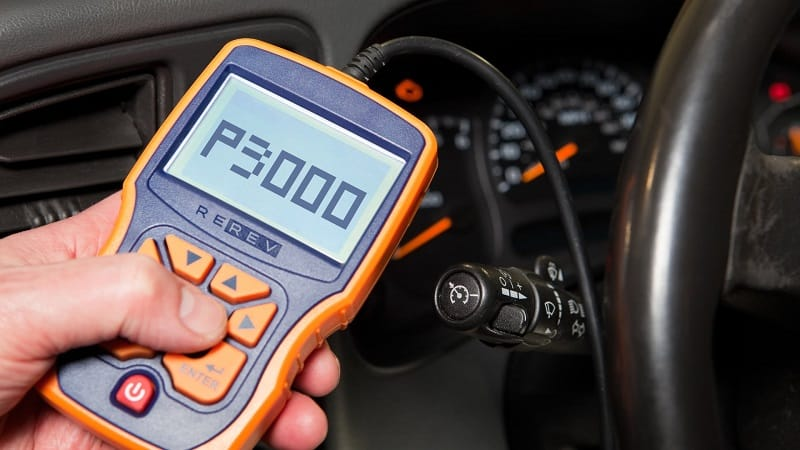
It’s one of the most misunderstood diagnostic codes in hybrid vehicles, and many owners end up spending money on repairs they didn’t need simply because they misunderstood what this code means.
Let’s break it down in plain English.
P3000 Is the Messenger, Not the Criminal
Think of P3000 like your smoke alarm.
When the alarm goes off, you know something needs attention.
But is dinner burning?
Did someone light a candle?
Or is there a real fire?
The alarm itself doesn’t know.
P3000 works the same way.
It tells you that the hybrid battery management system has detected a problem somewhere in the high-voltage battery system.
That’s all.
It doesn’t say:
“Replace the battery.”
“The battery is dead.”
“Stop driving immediately.”
It simply says, “Please investigate.”
Your Hybrid Battery Is a Team, Not One Giant Battery
Many people imagine a hybrid battery as one huge rechargeable battery.
Not quite.
Inside the battery pack are many smaller battery modules working together.
Imagine a rowing team.
If every rower pulls at the same speed, the boat moves smoothly.
If one or two rowers get tired, the whole team slows down.
Hybrid batteries work similarly.
The battery computer constantly watches every module to make sure they all perform evenly.
If something starts looking unusual, the computer records a warning—and P3000 may be one of the first codes you see.
P3000 Says, “Keep Looking”
Here’s the biggest mistake many repair shops—and plenty of DIY mechanics—make.
They scan the car.
They see P3000.
They recommend replacing the battery.
That’s like a doctor hearing you cough and immediately scheduling lung surgery.
Professional hybrid diagnosis never stops at P3000.
Instead, technicians look for additional manufacturer-specific codes and battery data that explain why the warning appeared.
Without those extra details, replacing parts is mostly guesswork.
The Most Expensive Four Words: “You Need A Battery”
Can a worn-out battery trigger P3000?
Absolutely.
Is it the only possibility?
Not even close.
Other causes can include:
- A weak battery module
- A battery cooling fan clogged with dust or pet hair
- Loose or corroded electrical connections
- A faulty battery sensor
- Communication problems between vehicle computers
In some cases, even a weak 12-volt battery causing confusing electrical issues
Notice something?
Several of these problems cost far less than replacing the entire hybrid battery.
That’s why good diagnosis often saves money.
Your Battery Likes Cool Air Too
Here’s something many owners never realize.
Hybrid batteries generate heat.
Lots of it.
That’s why hybrids use cooling fans and air ducts to keep the battery at a safe temperature.
If those vents become blocked by luggage, clothing, pet hair, or dust, the battery can overheat.
The computer notices the temperature rising.
Warning codes appear.
Sometimes cleaning the cooling system is part of the solution—not replacing thousands of dollars’ worth of parts.
“My Car Still Drives Fine!” Should I Ignore It?
Short answer?
No.
Some cars with P3000 continue driving almost normally.
Others lose fuel economy.
Some rely on the gasoline engine much more often.
Others feel slower during acceleration.
The warning doesn’t always mean you’re about to break down.
But it does mean the hybrid system has found something worth checking before it becomes a bigger—and more expensive—problem.
Ignoring it for months is rarely a good financial strategy.
A Cheap Scanner Doesn’t Tell the Whole Story
Many inexpensive code readers can display P3000.
That’s helpful.
But it’s only the first page of the story.
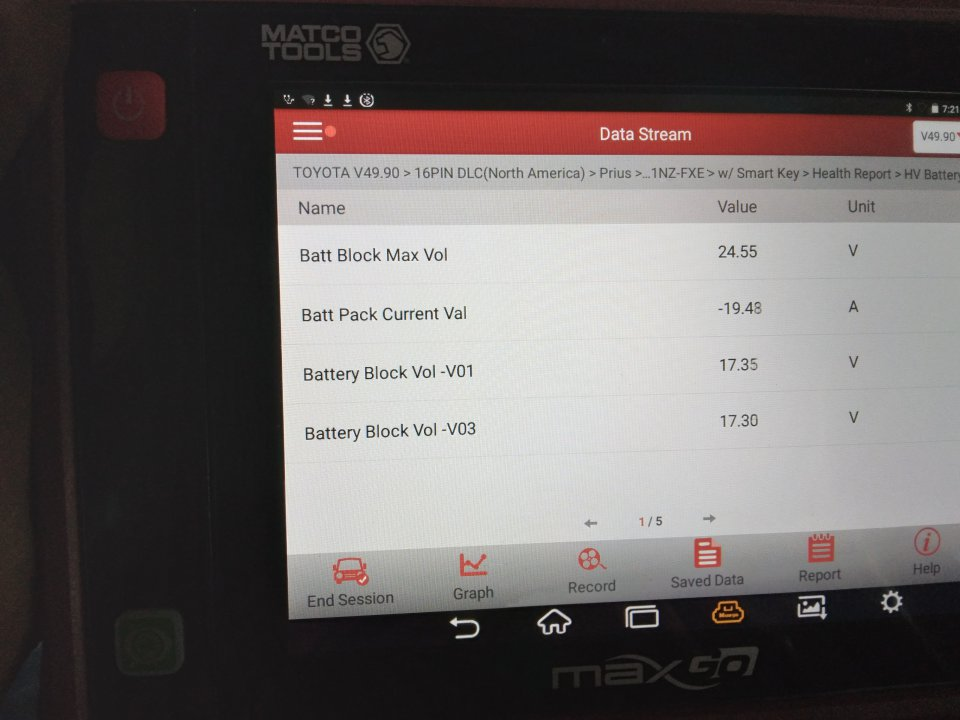
Professional hybrid scan tools can read:
- Battery module voltages
- Temperature readings
- State of charge
- Battery resistance
- Manufacturer-specific sub-codes
- Live battery performance data
These extra details are often what separate an accurate diagnosis from an expensive guess.
If your scanner only shows P3000, don’t assume you’ve found the real problem.
You’ve simply found the starting point.
Watch Out for These Repair Shop Red Flags
Not every repair recommendation deserves a “yes.”
Be cautious if someone immediately says:
“You definitely need a new battery.”
“We don’t need to perform any battery tests.”
“P3000 always means battery replacement.”
“There’s no need to check any additional codes.”
A trustworthy hybrid technician should explain:
- What additional codes were found
- What testing was performed
- Why they believe a certain component has failed
- Whether less expensive repairs have been ruled out
A few extra questions today could save you thousands tomorrow.
Can You Keep Driving?
That depends on what’s causing the code.
Some issues are minor.
Others indicate a battery that’s reaching the end of its life.
If the vehicle drives normally, many owners can safely drive it for a short time while arranging a proper diagnosis.
However, if you notice:
- Multiple warning lights
- Very poor acceleration
- Rapid battery charge swings
- Frequent engine operation
- Unusual warning messages
it’s best to have the vehicle inspected sooner rather than later.
The longer an underlying battery problem continues, the greater the chance that additional battery modules may become damaged.
The Smart Owner’s Game Plan
If your hybrid displays P3000, here’s the smartest approach:
- Don’t panic.
- Don’t immediately approve a battery replacement.
- Ask for the complete list of diagnostic codes.
- Request battery health testing.
- Understand the root cause before replacing expensive parts.
- Get a second opinion if the diagnosis seems rushed.
Knowledge is often the cheapest repair tool you’ll ever own.
Don’t Let Four Characters Empty Your Wallet
P3000 sounds intimidating because it appears next to bright warning lights and words like “Hybrid System.”
But remember what it really means.
It’s not a diagnosis.
It’s a request for one.
Think of P3000 as your hybrid raising its hand and saying, “Something doesn’t look right. Please check me.”
Sometimes the solution is a battery nearing the end of its life.
Sometimes it’s a cooling fan.
Sometimes it’s a sensor.
Sometimes it’s a simple electrical connection.
The only way to know is through proper testing—not assumptions.
The best hybrid owners aren’t the ones who know every technical detail.
They’re the ones who ask the right questions before spending money.
And when it comes to P3000, asking those questions could save you hundreds—or even thousands—of dollars.