
The Dashboard Suddenly Lights Up… Now What?
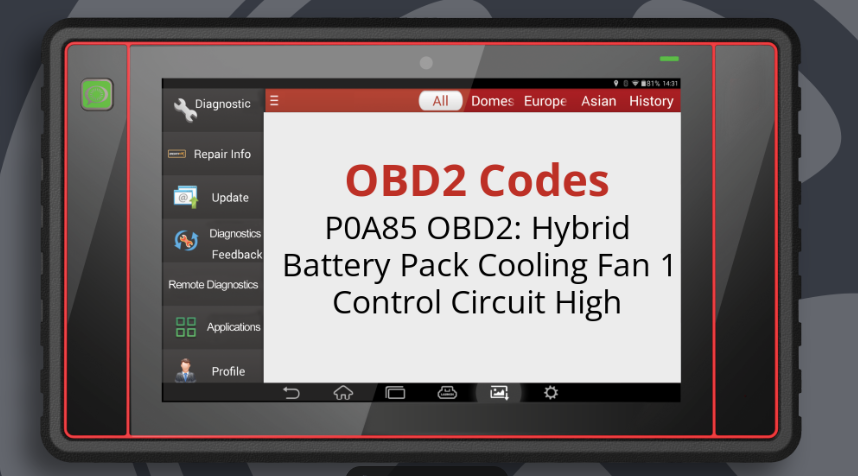
Seeing a Check Hybrid System warning can be stressful, especially if your Toyota has always been reliable. Then you plug in a scan tool and find the mysterious code P0A85.
Most people immediately think, “Is my hybrid battery dead?”
The good news is that, in many cases, the answer is no.
Let’s break this code down into simple, everyday language so you know exactly what’s happening and what your next step should be.
Think of Your Hybrid Battery Like a Laptop
Every battery creates heat when it’s working.
Your Toyota hybrid battery is no different—it just happens to be much bigger than the battery inside your laptop.
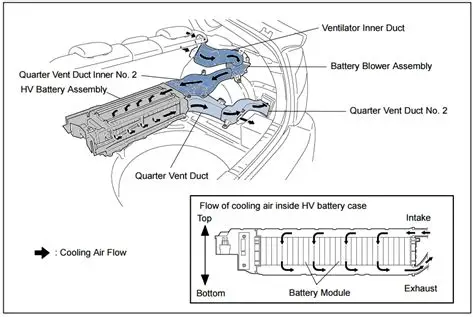
Just like a laptop uses a cooling fan to prevent overheating, your hybrid battery relies on its own cooling fan to keep temperatures under control.
The P0A85 code usually means the car believes there’s a problem with the system that controls this cooling fan.
It’s less about the battery itself and more about the battery staying cool.
Why Keeping the Battery Cool Matters More Than You Think
Heat is one of the biggest enemies of any battery.
When temperatures rise too high, the battery becomes less efficient. Fuel economy can drop, performance may suffer, and over time the battery’s lifespan can be reduced.
Toyota designed a dedicated cooling system for one simple reason: a cooler battery lasts longer and performs better.
Think of the cooling fan as the battery’s personal air conditioner.
So, What Usually Causes the P0A85 Code?
There isn’t just one possible cause, but most repairs fall into a few common categories.
Sometimes the Cooling Fan Simply Wears Out
Like any electric motor, the cooling fan doesn’t last forever.
After years of spinning thousands of hours, the motor may slow down or stop working completely.
When that happens, the vehicle’s computer notices the problem and stores the P0A85 code.
Believe It or Not, Dirt Can Be the Real Problem
This is one of the most common causes.
Dust, lint, carpet fibers, and especially pet hair slowly build up inside the cooling fan.
Imagine trying to breathe while someone covers your face with a thick blanket.
The fan has to work much harder, and eventually it may not move enough air to cool the battery properly.
Owners who regularly travel with dogs or cats often experience this issue sooner than expected.
A Small Electrical Problem Can Trigger a Big Warning
Not every repair involves replacing parts.
Sometimes a loose connector, damaged wire, or corrosion inside an electrical plug prevents the fan from communicating with the vehicle.
The computer doesn’t know why the fan stopped responding—it only knows something isn’t right.
Occasionally the Control Module Is to Blame
Some Toyota hybrid models use a separate controller to regulate fan speed.
If that controller fails, the fan may not operate correctly even though the fan motor itself is perfectly healthy.
Fortunately, this isn’t the most common cause.
What Will You Notice While Driving?
Interestingly, many drivers don’t feel anything unusual at first.
Your Toyota may continue driving almost normally.
The warning light might be the only sign that something needs attention.
As the problem continues, you may notice:
- Check Engine Light
- Check Hybrid System warning
- Lower fuel economy
- Reduced hybrid performance
- Cooling fan running louder than normal
- Higher battery temperatures
The earlier you address the problem, the easier—and often less expensive—the repair tends to be.
Can You Keep Driving?
This is probably the first question every owner asks.
If the cooling fan isn’t working properly, the battery can’t remove heat as efficiently as it should.
A short drive home is usually very different from ignoring the warning for several weeks.
Driving too long with an overheating battery can shorten its lifespan and eventually lead to much more expensive repairs.
That’s why this isn’t a code you should simply clear and forget.
Here’s How a Technician Finds the Real Cause
Good diagnosis isn’t about replacing random parts.
A qualified hybrid technician will first confirm the P0A85 code using a professional scan tool.
Next comes a careful inspection of the cooling fan.
If it’s packed with dust and pet hair, cleaning may solve the problem.
If the fan looks clean, the technician checks the wiring, connectors, electrical power supply, and fan operation before considering replacing any components.
A proper diagnosis saves both time and money.
Sometimes the Best Repair Is Also the Simplest
Many owners are surprised to learn that their cooling fan doesn’t actually need replacement.
It simply needs cleaning.
Over years of driving, debris gradually blocks airflow.
Once the fan is removed and thoroughly cleaned, it can often move air normally again.
It’s one of those repairs where a little maintenance can make a big difference.
When Replacement Is the Right Choice
Of course, not every fan can be saved.
If the electric motor has failed or internal components are damaged, replacing the cooling fan is usually the best long-term solution.
Compared with replacing an entire hybrid battery, a new cooling fan is a much smaller repair bill.
Fixing the issue early helps protect one of the most expensive components in your vehicle.
Is This a DIY Repair?
If you’re comfortable removing interior trim panels and have experience working on vehicles, cleaning the cooling fan may be possible.
However, hybrid vehicles contain high-voltage systems that require extra care.
If you’re unsure about the procedure, having a qualified technician perform the repair is the safest option.
A Little Prevention Goes a Long Way
The easiest way to avoid seeing the P0A85 code again is regular maintenance.
Keep the battery air intake free of dust.
Avoid blocking the intake vent with luggage, clothing, or other items.
If you own pets, inspect the cooling system more often since pet hair is one of the biggest contributors to clogged cooling fans.
A few minutes of preventive maintenance today can help prevent much larger repair costs tomorrow.
The Bottom Line
The Toyota Hybrid P0A85 code sounds intimidating, but it doesn’t automatically mean your hybrid battery has failed.
In many cases, the real problem is simply that the battery isn’t getting enough cooling.
Whether it’s a dirty fan, a worn-out motor, damaged wiring, or a faulty controller, identifying the issue early is the key to protecting your hybrid system.
Treat the warning as an early reminder—not a disaster.
With the right diagnosis and timely repair, your Toyota hybrid can continue delivering the reliability and fuel efficiency it’s known for for many years to come.