
When Lexus launched the LS600h in Japan in May 2007, the domestic automotive establishment scarcely knew what had struck it. For decades, Toyota’s home market had been a fiercely contested battlefield where Mercedes-Benz, BMW and Audi waged relentless campaigns for the hearts of Japan’s luxury buyers. Lexus, by contrast, was something of an outsider — a brand born in America and only brought back to its homeland in 2005. Yet within a single generation, the LS600h would accomplish something few thought possible: it transformed Japan’s luxury landscape, redefined what a flagship sedan could be, and cemented Lexus as a permanent force in its own home market.
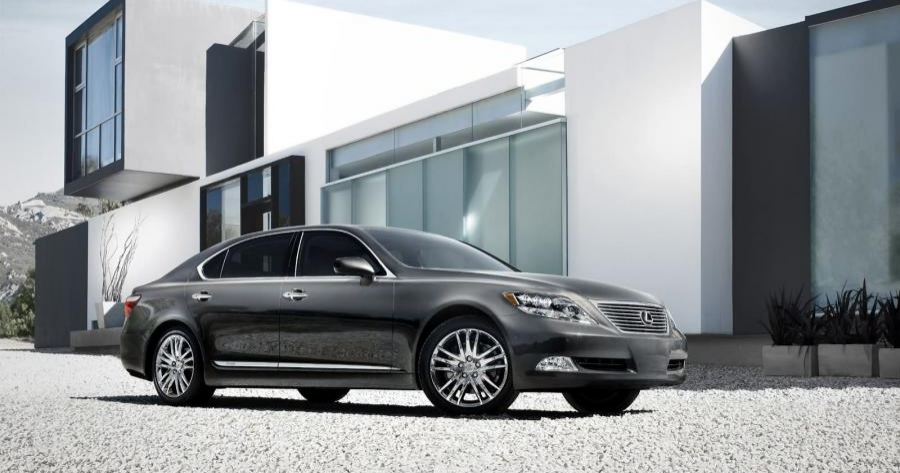
To understand the magnitude of this achievement, one must consider the context in which the LS600h arrived. Lexus had only been selling cars in Japan for two years when the LS600h debuted. The brand was still building its dealer network, still cultivating awareness among consumers who had long equated luxury with German provenance. Into this environment came a vehicle of breathtaking ambition — a V8 hybrid sedan priced from 9.7 million to over 15 million yen, depending on specification and trim. It was, at the time, the world’s most expensive hybrid passenger car. And yet, the market responded with extraordinary enthusiasm.
Within 40 days of opening the order books, Lexus dealers across Japan had received approximately 5,300 orders for the LS600h and its long-wheelbase LS600hL sibling. That figure was not merely strong — it was stunning, far exceeding the company’s initial monthly sales target of just 300 units. Roughly 55% of those orders were for the standard LS600h, while 45% were for the more opulent LS600hL, indicating that Japanese buyers were fully prepared to embrace the flagship’s top-tier offerings. Industry observers noted that consumers were overwhelmingly drawn to the unprecedented combination of a V8 gasoline engine, a sophisticated hybrid powertrain and a full-time all-wheel-drive system — a configuration no competitor could match.
The numbers that followed would only deepen the LS600h’s legend. Between its introduction in 2007 and the end of 2014, Lexus sold approximately 37,700 LS600h and LS600hL units globally. Of those, a remarkable 25,400 were sold in Japan alone. That meant Japan accounted for nearly 70% of the model’s global sales — an extraordinary concentration for any luxury vehicle, let alone one competing against the formidable German triumvirate in its own backyard. Over that eight-year period, the LS600h averaged 3,600 units per year in the Japanese market. For a six-figure hybrid flagship aimed at a relatively narrow segment of ultra-luxury buyers, this was nothing short of dominant.
To put those numbers in perspective, one need only examine the competitive landscape. In 2008, a particularly challenging year for global automakers in the wake of the Lehman Brothers collapse, Lexus LS sales — both conventional and hybrid combined — still registered 1,272 units in a single month. The brand as a whole posted cumulative Japanese sales of approximately 225,000 hybrid vehicles by 2016, a figure that placed Japan as the third-largest market for Lexus hybrids globally, trailing only North America and Europe. Within the luxury segment, Lexus consistently outsold Audi throughout this period and remained a genuine second-place contender to Mercedes-Benz, often trailing by margins of fewer than ten vehicles in monthly comparisons. The LS600h, as the halo model anchoring the entire lineup, carried much of that competitive weight on its shoulders.
Yet the LS600h’s significance transcended raw sales figures. It was, first and foremost, a technological statement — perhaps the most important technical achievement in Lexus’s history. The vehicle featured the world’s first hybrid system to combine a 5.0-liter V8 engine, a high-output electric motor and a full-time all-wheel-drive configuration. Lexus engineers had effectively created a powertrain that delivered the performance of a conventional 6-liter gasoline engine while achieving fuel consumption and CO₂ emissions dramatically lower than any comparable luxury sedan. The combined output of the system was rated at 438 horsepower, enough to propel the 2.5-ton flagship from zero to 60 miles per hour in just 5.5 seconds — a figure that silenced any remaining doubts about hybrid performance.
The engine at the heart of this system was a technological marvel in its own right. Code-named 2UR-FSE, the 4,968 cc V8 featured D-4S direct-injection technology, combining direct fuel injection with port fuel injection to optimize combustion across the entire rev range. Dual VVT-i variable valve timing was augmented by an electric motor-driven VVT-iE system on the intake side, representing the first time an electric intake cam control system had been deployed in a production Lexus V8. The result was not merely power but refinement — an engine that delivered 394 horsepower in its own right, complemented by an additional electric motor contributing a further 224 horsepower when full acceleration was demanded.
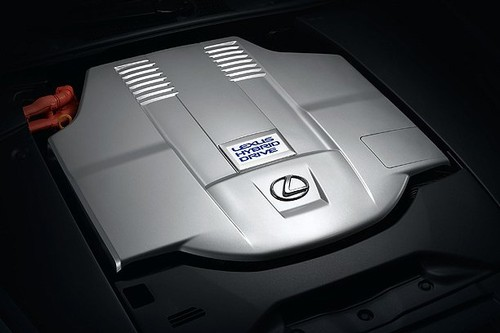
The transmission system was equally revolutionary. The LS600h employed a Hybrid Synergy Drive system with a two-stage motor speed reduction device, allowing the electric motors to operate efficiently across an unusually wide band of speeds. Two motor-generators were integrated into a planetary-gear continuously variable transmission, with MG1 serving as both starter motor and generator, while MG2 provided the primary motive force. The all-wheel-drive arrangement incorporated a Torsen center differential that delivered a default 40:60 front-to-rear torque split, endowing the LS600h with handling characteristics that belied its substantial curb weight.
For Japanese consumers accustomed to the brash V8 rumble of European rivals, the LS600h presented an entirely different sensory experience — one defined not by noise but by its absence. When the vehicle stopped at traffic lights, the V8 would automatically shut off, leaving the cabin in near-complete silence. Upon acceleration, the electric motor seamlessly filled in any gaps in the V8’s torque curve, creating a driving sensation that reviewers described as “strong yet oddly calm at the same time”. Vibration levels were so minimal that the LS600h earned a reputation as one of the quietest automobiles ever built — a characteristic particularly valued in Japan’s dense urban environments.
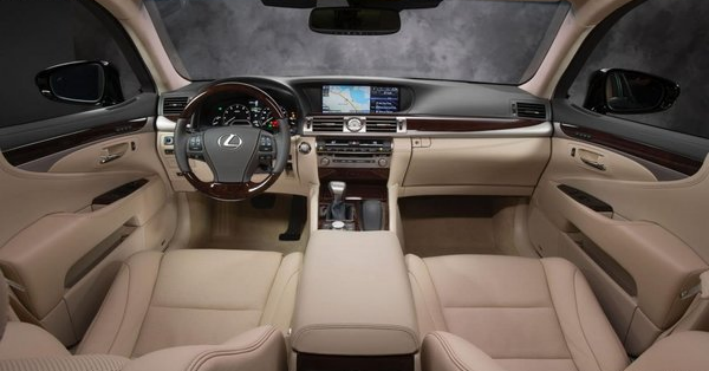
The vehicle’s appeal in Japan was further enhanced by an array of sophisticated features tailored to the domestic market. The LS600hL’s separate rear seat package, priced at 15.1 million yen, offered levels of comfort and accommodation that Japanese executives found irresistible. Advanced telematics systems, navigation with hard disk drive storage, semi-aniline leather upholstery and Alcantara headliners created an interior environment that rivaled — and in many respects exceeded — that of any competing European flagship. The rear air conditioning unit was ingeniously integrated to cool the hybrid battery pack, ensuring that passenger comfort was never compromised in the pursuit of thermal management for the electrical system.
The LS600h’s cultural impact in Japan should not be underestimated. The vehicle became more than a means of transportation; it was a visible statement of technological leadership and environmental consciousness among the country’s business and political elite. In a nation where status is often communicated through subtle signals rather than overt displays, the LS600h offered a uniquely Japanese form of prestige — one that combined world-class luxury with a demonstrable commitment to sustainability. Owners could feel justifiably proud that their vehicle not only provided superlative comfort and performance but also contributed to reducing CO₂ emissions through its regenerative braking and optimized hybrid operation.
The recognition the LS600h received confirmed its special status. The LS lineup, of which the LS600h was the pinnacle, won the Japan Car of the Year award in 2007. It also earned MotorWeek’s “Best Dream Machine” award in April 2008 and was named the “Best Luxury Car” in the Fleet World Honours for two consecutive years. The J.D. Power Initial Quality Study ranked the Lexus LS first among all segment winners in 2008, with an industry-leading 68 problems per 100 vehicles — an all-time low for any segment winner in the history of the study. For a vehicle that pushed the boundaries of automotive technology in so many directions simultaneously, such reliability was nothing short of astounding.
But the LS600h’s journey through the global financial crisis of 2008–2010 revealed not only its strengths but also the resilience of its customer base. While Lexus as a brand saw its Japanese registrations fall to between 25,000 and 30,000 units annually during those difficult years, the LS600h continued to command a devoted following among buyers for whom environmental responsibility and luxury were not mutually exclusive ideals. Indeed, some observers noted that for many Japanese owners, the LS600h represented more than hybrid efficiency — it was the world’s largest hybrid luxury sedan, and its presence on the road carried a message of conspicuous technological sophistication.
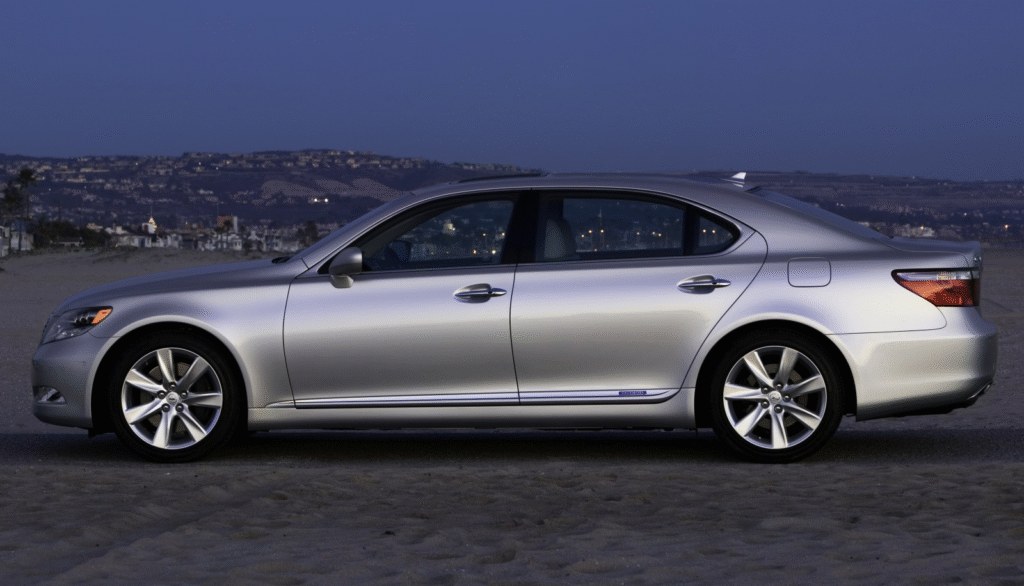
Throughout its production run from 2008 through 2016, the LS600h underwent thoughtful refinements while remaining fundamentally true to its original vision. The 2010 model year brought revised styling and updated telematics systems, though the core hybrid powertrain — and its signature 288-volt nickel-metal-hydride battery pack — remained unchanged, a testament to the rightness of the original engineering decisions. Lexus continued to offer the LS600hL with the long-wheelbase configuration that Japanese buyers particularly favored, ensuring that the vehicle remained at the forefront of the domestic luxury segment.
By the time production drew to a close in 2016, the LS600h had established a legacy that would shape Lexus’s strategy for years to come. The model demonstrated conclusively that Japanese luxury buyers would embrace hybrid technology at the highest price points, provided the execution was flawless. It proved that a domestic brand could compete successfully against entrenched German rivals in its home market, even in the most prestigious segments. And it laid the technical foundation for every hybrid and electrified Lexus that followed — from the GS 450h and RX 450h to the more recent generations of Lexus hybrids that continue to dominate their respective segments.
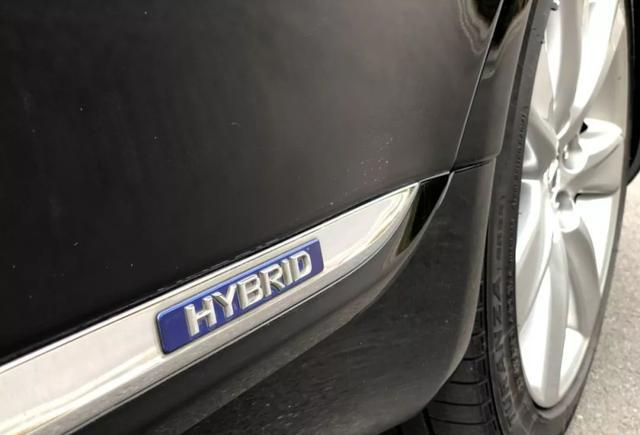
Yet for all the LS600h’s accomplishments in the marketplace and the engineering world, the story of its Japanese triumph is incomplete without examining the technology that made it all possible — the nickel-metal-hydride battery pack that served as the quiet heart of the entire operation. In Part Two of this series, we will explore in detail how that remarkable battery system functioned, why Lexus chose NiMH over other available technologies, and how Toyota’s pioneering approach to battery recycling and second-life applications created a closed-loop system that remains an industry benchmark. The LS600h’s nickel-metal-hydride battery was not merely a component; it was the silent enabler of everything the vehicle achieved — and its story is as fascinating as the car it powered.