
The Unexpected Romance Between a Small Hybrid and a Nation of Petrolheads
When Toyota launched the third‑generation Yaris in 2011, few observers predicted that this unassuming little hatchback would go on to become a defining automotive success story in Italy. This was a country famous for its love of style, performance, and—above all—diesel engines. Small city cars were everywhere, but gasoline‑electric hybrids were still viewed with scepticism. To win over Italian drivers, a vehicle needed more than clever technology. It needed character, economy, and an almost instinctive understanding of how Italians actually use their cars.
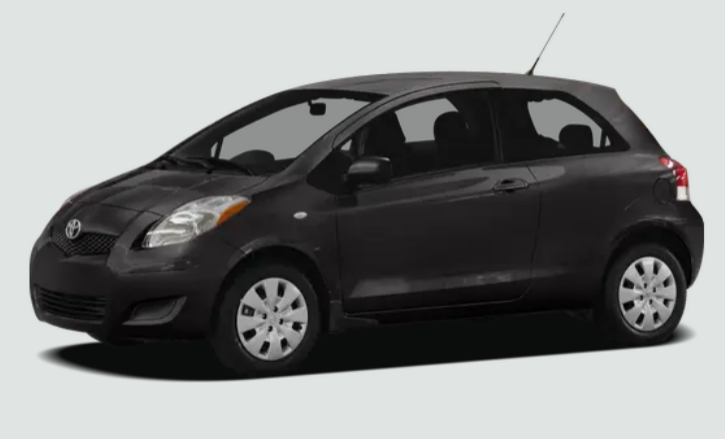
The Yaris Hybrid arrived at precisely the right moment. In 2012—when the hybrid variant first reached European showrooms—Europe was emerging from the depths of the financial crisis, fuel prices were punishing, and city authorities were tightening emissions restrictions. Suddenly, a supermini that promised low running costs, tax advantages, and genuine hybrid efficiency began to look very appealing indeed.
A Pioneer in the B–Segment
The significance of the Yaris Hybrid’s arrival cannot be overstated. When it launched, it became the first full‑hybrid vehicle ever offered in the European B‑segment—the highly competitive class of small, affordable city cars. Before 2012, hybrid technology was largely confined to larger, more expensive models like the Toyota Prius. A hybrid supermini was a revolutionary concept, and Toyota’s gamble paid off handsomely.
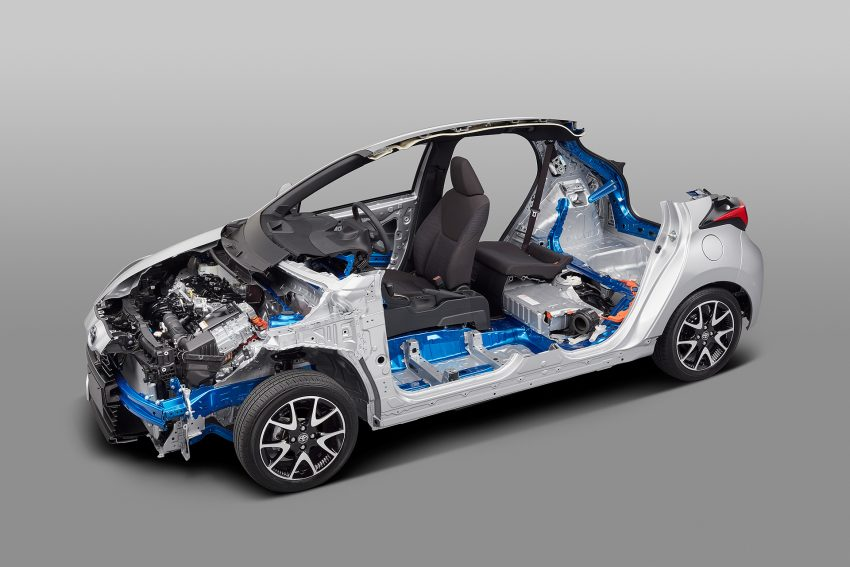
What made the Yaris Hybrid so groundbreaking was its full-hybrid architecture. Unlike mild hybrids that could only assist the engine, the Yaris Hybrid could drive on electric power alone at low speeds, seamlessly switching between petrol, electric, and combined modes without any driver intervention. For Italian motorists navigating narrow medieval streets, crowded roundabouts, and stop‑and‑go city traffic, this capability translated directly into measurable fuel savings.
The hybrid system itself was impressively compact. Toyota’s engineers downsized the entire hybrid powertrain—including the petrol engine, electric motor, transaxle, inverter, and battery pack—to fit within the Yaris’s modest footprint. The total system weight came to just 201 kilograms, a remarkable achievement that preserved the car’s nimble handling and interior space. At its heart was a 1.5‑litre VVT‑i petrol engine producing 73bhp (later increased to 110bhp in some markets for the facelifted model), paired with an electric motor that allowed the car to achieve system outputs of around 98‑100bhp. The continuously variable transmission (CVT) operated with the signature smoothness expected of a Toyota hybrid, creating a driving experience perfectly suited to urban environments.
The Numbers Tell a Remarkable Story
The Yaris Hybrid’s commercial success in Europe was nothing short of extraordinary. Within just a few years of its launch, the hybrid variant was accounting for more than 40% of all Yaris sales across the continent—a figure that exceeded Toyota’s own ambitious targets. As early as 2015, Toyota had sold over 170,000 Yaris Hybrid units since its European launch, a figure that surpassed 200,000 by the end of that year. The numbers only continued to climb. In 2015 alone, Yaris Hybrid sales reached 72,000, representing a 23% year‑on‑year increase. By 2016, the Yaris had become Europe’s best‑selling hybrid vehicle, with 67,000 units sold—ahead of the Auris (58,000), the RAV4 (28,000), and even the iconic Prius (21,000).
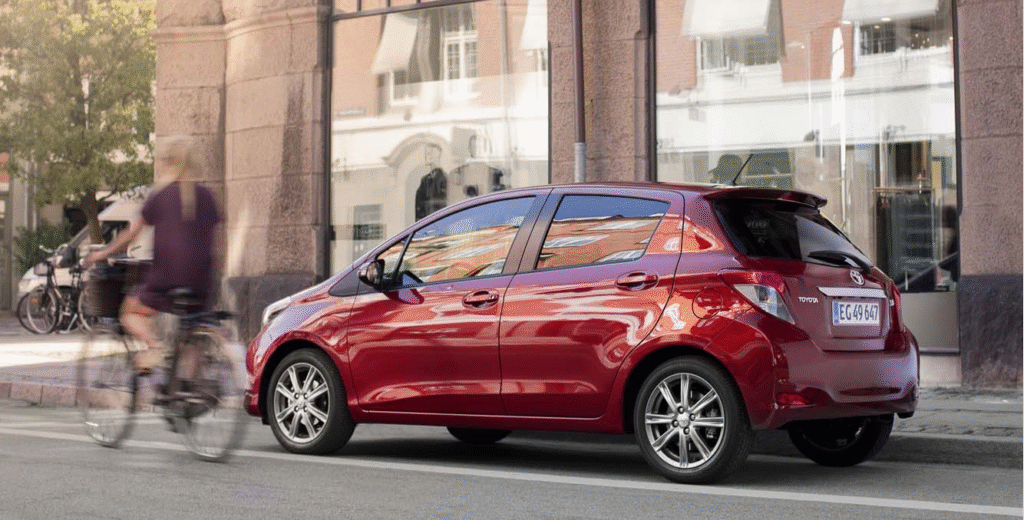
For Toyota Motor Europe as a whole, hybrids accounted for 40% of total sales in 2017, while in Western European markets that share reached an even more impressive 50%. The Yaris Hybrid was not merely a niche product for environmental purists—it had become a mainstream choice for ordinary European drivers.
Italy specifically embraced the Yaris Hybrid with particular enthusiasm. The reputation of Toyota’s Hybrid Synergy Drive technology—paired with its increasing affordability—translated directly into monthly sales gains. Italian buyers discovered that the Yaris Hybrid’s appeal went far beyond mere fuel economy. It offered lower annual ownership taxes compared to equivalent petrol or diesel models, access to restricted traffic zones in major cities without additional fees, and a level of refinement that made city driving genuinely pleasant.
Why the Yaris Hybrid Was Perfectly Suited to Italian Drivers
Understanding the Yaris Hybrid’s popularity in Italy requires looking beyond raw statistics. Several factors combined to make this small Japanese hatchback an unexpected Italian favourite.
First was the nature of Italian driving. Italy has one of the highest concentrations of urban driving in Europe, with millions of commuters navigating the congested streets of Rome, Milan, Naples, Turin, and Bologna daily. In such conditions, traditional internal‑combustion engines operate at their least efficient. The Yaris Hybrid, by contrast, thrives in stop‑start traffic. Its ability to run on electric power alone at speeds up to roughly 30mph meant that drivers could glide through city centres in near‑silence, using almost no fuel, while their diesel‑powered neighbours sat idling at traffic lights.
Second came the tax advantages. Italy’s vehicle taxation system has long favoured lower‑emission cars, and the Yaris Hybrid’s official CO₂ emissions of just 79g/km (for early models) placed it in an extremely favourable category. Owners benefited from significantly reduced annual ownership taxes, lower registration fees, and in many cities, exemption from congestion charges. For budget‑conscious Italian families, these savings added up quickly.
Third was the shifting attitude towards diesel. For decades, diesel had been the default choice for economy‑minded European drivers. But the Volkswagen “Dieselgate” scandal of 2015, combined with growing awareness of diesel particulates’ health impacts, prompted a dramatic change. Cities across northern Italy began announcing diesel bans and restricted zones. Suddenly, the hybrid alternative—once dismissed as expensive and unnecessary—became the sensible, future‑proof choice.
The Trend White Edition: Toyota’s Love Letter to Italy
Perhaps the clearest evidence of the Yaris Hybrid’s special relationship with Italy came in the form of dedicated special editions. In 2016, Toyota introduced the Yaris Trend White Edition, a striking variant created specifically for the Italian market. This was not a generic European model or a global special edition—it was produced exclusively for Italian customers.
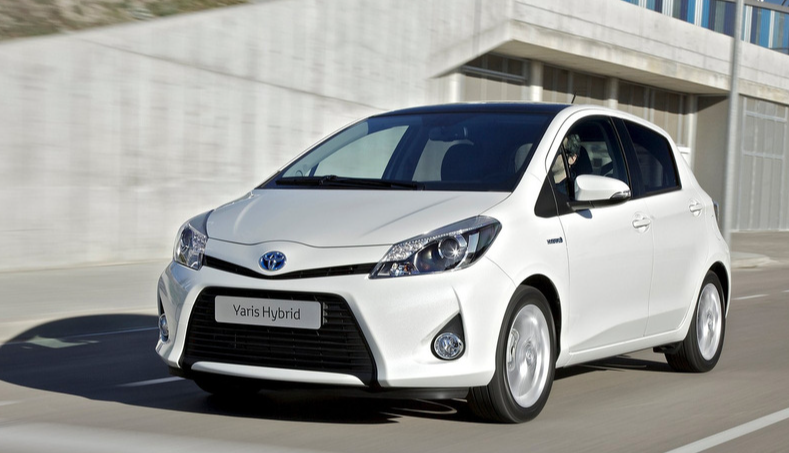
The Trend White Edition was based on the Yaris Trend trim and followed earlier Red and Platinum editions that had also been well received in Italy. Its distinctive styling combined a pearl white body with piano black accents on the roof, A/B/C pillars, mirrors, and front grille. The high‑contrast look—nicknamed the “panda edition” by some Italian motoring journalists—turned the unassuming Yaris into a genuine head‑turner.
Under the striking exterior, the Trend White Edition was equipped with LED daytime running lights, fog lamps, cruise control, and a comprehensively upgraded interior. Crucially for environmentally conscious Italian buyers, it was available exclusively with the hybrid powertrain—there was no petrol‑only version. This decision demonstrated Toyota’s confidence that Italian buyers had fully embraced the hybrid concept. The car’s promotional price of €18,600 (down from a list price of €23,100) made it an exceptionally attractive proposition for Italian drivers seeking style, economy, and advanced technology in a single package.
By creating a special edition just for Italy, Toyota was making a clear statement: the Yaris Hybrid had become so culturally significant in this market that it deserved its own unique expression. The White Edition was not just a car; it was a recognition that Italian buyers had elevated the Yaris Hybrid from a mere transportation device into something approaching an automotive icon.
Reliability, Reputation, and the Hybrid Virtuous Cycle
The Yaris Hybrid’s popularity fed upon itself in a virtuous cycle. As more Italian drivers bought the car and experienced its combination of low running costs, ease of use, and exceptional reliability, word spread rapidly through families, neighbourhoods, and online forums.
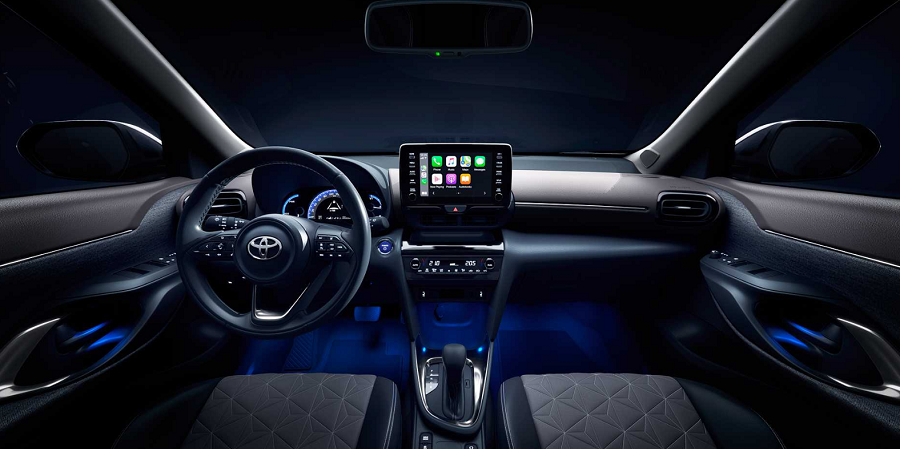
Toyota’s reputation for build quality played a significant role. The Yaris had already established itself as an exceptionally dependable vehicle, with customer satisfaction surveys consistently highlighting its absence of common faults. The hybrid system, despite its technical complexity, proved equally robust. By 2017, the Yaris had become a familiar sight across Italy—not just in major cities but in smaller towns and rural areas where hybrid cars had once been regarded with suspicion.
Fuel economy estimates added to the appeal. Official figures of up to 80.7mpg (approximately 3.5L/100km) might have seemed optimistic in everyday driving, but owners consistently reported real‑world returns that dramatically undercut those of comparable petrol and diesel superminis. For a country where fuel prices have historically been among the highest in Europe, this mattered enormously.
The C–HR Arrives: A New Competitor Emerges
By 2017, the hybrid landscape in Europe had changed significantly. Toyota introduced the C‑HR, a striking compact crossover that shared the Yaris Hybrid’s powertrain technology in a more fashionable, SUV‑styled package. During the first seven months of 2017, the C‑HR overtook the Yaris as Europe’s best‑selling hybrid, with 47,500 units compared to the Yaris’s 44,500.
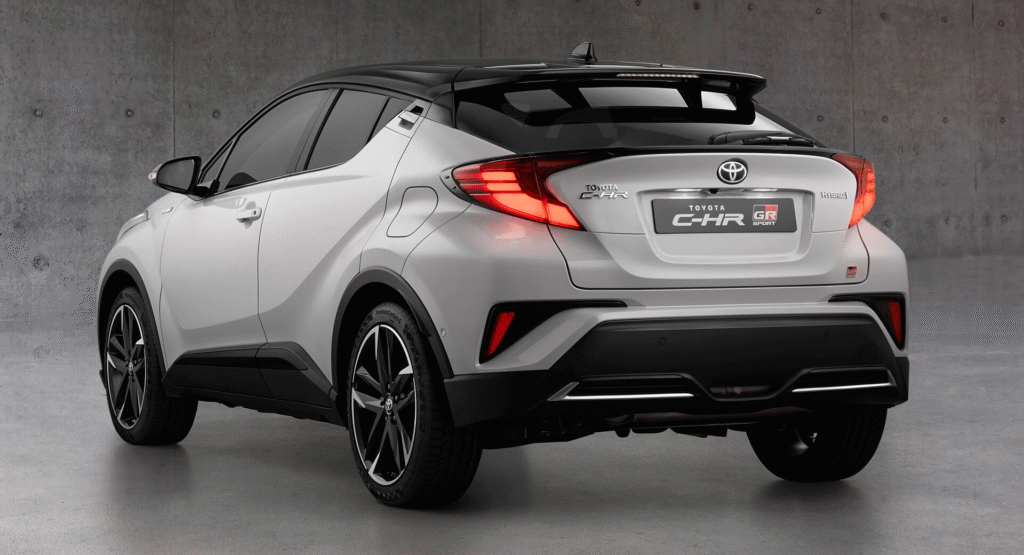
This development was not a failure for the Yaris Hybrid—far from it. The Yaris remained Toyota’s second best‑selling hybrid in Europe, demonstrating that the small hatchback still commanded a loyal following even as new models appeared. The C‑HR’s success also reinforced Toyota’s broader hybrid strategy, showing that customers were willing to embrace electrified powertrains across different body styles.
But the Yaris Hybrid’s place in Italian hearts remained secure. For drivers who valued simplicity, affordability, and classic supermini dimensions, the Yaris was still the superior choice. The C‑HR was taller, heavier, and more expensive. The Yaris Hybrid—especially in its appealing special editions—remained the everyday hero for Italian families.
A Cultural Shift: Hybrid No Longer a Compromise
Perhaps the Yaris Hybrid’s greatest achievement was normalising hybrid technology in a market that had once been sceptical. Before 2012, hybrid cars in Italy were seen as expensive, complicated, and unnecessary—the preserve of environmental activists or early‑adopter technophiles. The Yaris Hybrid changed all of that.
By packaging advanced hybrid technology in an affordable, practical, and genuinely likeable small car, Toyota proved that fuel efficiency and everyday usability could coexist without compromise. The hybrid was no longer a sacrifice drivers made for the sake of the environment. It was simply a smarter choice—lower taxes, lower fuel bills, access to city centres, and a smoother, quieter driving experience.
Italian motorists, famously passionate about their cars, recognised quality and value when they saw it. By the end of the third‑generation Yaris’s production run in 2017, the hybrid variant was not just an option—for many Italian buyers, it was the only option worth considering.
Looking Ahead
This story of success, however, creates a new set of opportunities. The Yaris Hybrids sold between 2011 and 2017 are now ageing vehicles, and their high‑voltage batteries—like all batteries—will eventually need replacement. This opens an enormous potential market for battery refurbishment, replacement, and recycling, particularly in a country like Italy where these cars remain beloved and owners are eager to keep them on the road.