
The world of full-size luxury SUVs has never been known for environmental consciousness. For decades, these towering monuments to automotive excess cruised through city streets and suburban driveways with a quiet, unapologetic arrogance — and fuel economy ratings that made environmentalists weep. The Cadillac Escalade, in particular, stood as perhaps the most visible symbol of this uncompromising philosophy. With its massive chrome grille, imposing stance, and celebrity-studded cultural cachet, the Escalade wasn’t just a vehicle — it was a statement. And that statement was unmistakably loud, proud, and thirsty.
But in the summer of 2008, as gasoline prices hovered near record highs and the global financial crisis loomed on the horizon, Cadillac did something that few in the automotive world saw coming. The luxury brand took its most iconic, most excessive, most unapologetically fuel-hungry vehicle and gave it a hybrid powertrain. The result was the 2009 Cadillac Escalade Hybrid — a vehicle that would become one of the most remarkable and misunderstood engineering achievements of its era.
The Escalade Hybrid wasn’t just another hybrid vehicle. It wasn’t a small, lightweight economy car draped in green credentials. It was a three-ton luxury SUV that seated eight passengers, could tow nearly 6,000 pounds, and somehow still managed to deliver fuel economy that rivaled much smaller vehicles. It was, in many ways, the automotive equivalent of having your cake and eating it too — and then taking the cake for a joyride through Beverly Hills.
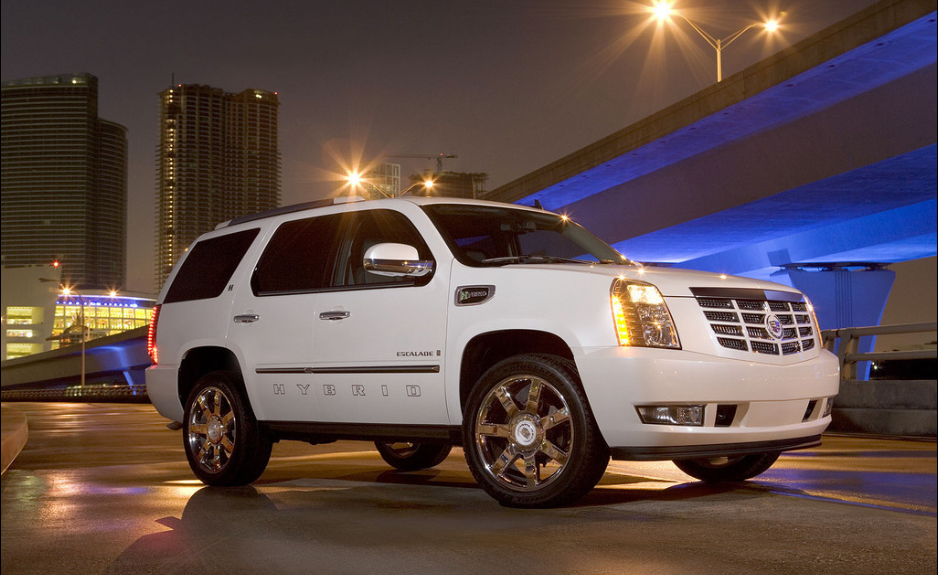
This two-part exploration celebrates the Escalade Hybrid’s most brilliant moments, from its groundbreaking debut to its quiet disappearance, and dives deep into the technology that made it all possible. In Part One, we will revisit the vehicle’s triumphant arrival, its undeniable impact on the luxury SUV market, and the key milestones that cemented its legacy. In Part Two, we will explore the vehicle’s evolution through the Platinum edition, its untimely discontinuation, and — most importantly — the intricate battery and hybrid technology that allowed this magnificent beast to sip fuel rather than guzzle it.
The World’s First Hybrid Full-Size Luxury SUV
When Cadillac announced the Escalade Hybrid at the 2008 South Florida International Auto Show in Miami, the response from automotive journalists and industry analysts ranged from genuine curiosity to outright skepticism. Could a vehicle that weighed more than 6,000 pounds truly benefit from hybrid technology? Would buyers of a vehicle that had become synonymous with excess care about fuel economy? And perhaps most critically — would the hybrid system compromise the Escalade’s legendary performance and capability?
The skepticism was understandable. The conventional 2009 Escalade, equipped with a 403-horsepower 6.2-liter V8 engine, delivered an EPA-rated 12 miles per gallon in city driving — a figure so low that it had become a punchline for environmental advocates and a badge of honor for owners who couldn’t care less. The idea that a hybrid version of this vehicle could deliver meaningful fuel savings while maintaining the luxury and capability that defined the Escalade brand seemed almost too good to be true.
But Cadillac’s engineers had been working on precisely this challenge for years, collaborating with General Motors’ powertrain division and even partnering with BMW and DaimlerChrysler on the development of what would become the Two-Mode hybrid system. The result was nothing short of revolutionary: a hybrid system specifically designed for large vehicles that needed to maintain towing capacity, cargo space, and passenger comfort while still delivering real-world fuel economy improvements.
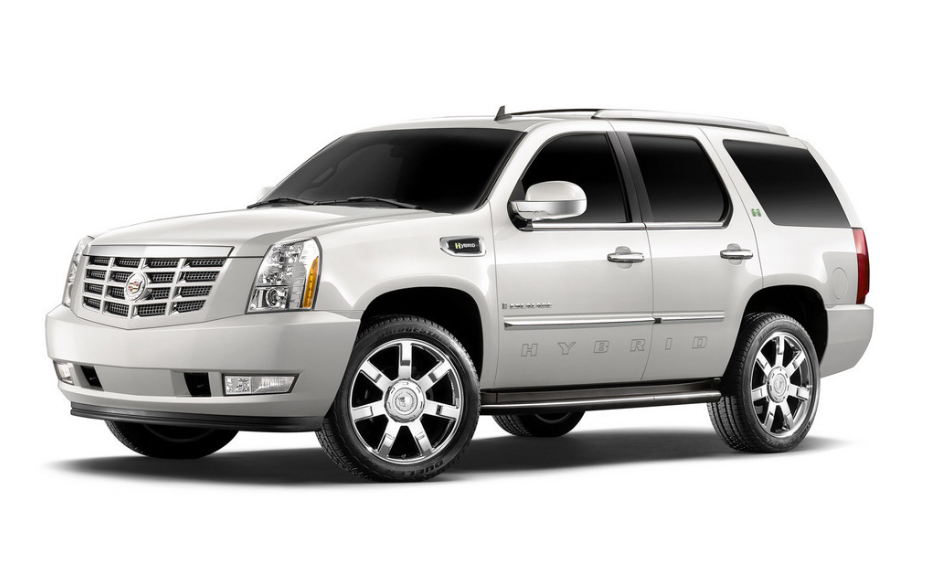
The Escalade Hybrid achieved an EPA-rated 20 miles per gallon in the city and 21 miles per gallon on the highway for rear-wheel-drive models — a 50 percent improvement in city fuel economy over the non-hybrid Escalade. That meant that a vehicle the size of a small apartment could now achieve the same city fuel economy as a mid-size sedan. In fact, as one journalist pointed out, the Escalade Hybrid’s city mileage actually exceeded that of a 2008 Mini Cooper S convertible, which managed only 19 miles per gallon. The comparison was equal parts astonishing and absurd — but it made the point perfectly.
The timing of the launch was equally significant. August 2008 was a tumultuous month for the American automotive industry. Gasoline prices had soared above $4 per gallon in many parts of the country, and consumer demand for large SUVs had plummeted. Escalade sales through July of that year had fallen between 28 and 42 percent depending on the model, reflecting broader market trends that favored smaller, more fuel-efficient vehicles. In this challenging environment, Cadillac’s decision to launch a hybrid version of its flagship SUV seemed not just ambitious but almost desperate.
Yet there was genuine wisdom in the approach. Unlike non-luxury buyers who were highly sensitive to price premiums, Escalade customers had already demonstrated their willingness to pay for premium features and status symbols. The hybrid model carried a $71,685 starting price — just $3,600 more than a comparably-equipped conventional Escalade — and Cadillac executives projected that the fuel savings would allow buyers to recoup that premium in just 3.8 years. As David Schiavone, Escalade’s global product manager, explained to journalists at the time: “Money is not the problem. If they want to help the environment, they have the money to do it”.
The Escalade Hybrid wasn’t designed to convert hardcore environmentalists. It was designed to appeal to luxury buyers who wanted to feel slightly less guilty about their vehicle choices — and perhaps more importantly, to help Cadillac meet increasingly stringent corporate average fuel economy standards without completely abandoning the large SUV segment that generated significant profits.
Breaking Down the Two-Mode Hybrid System
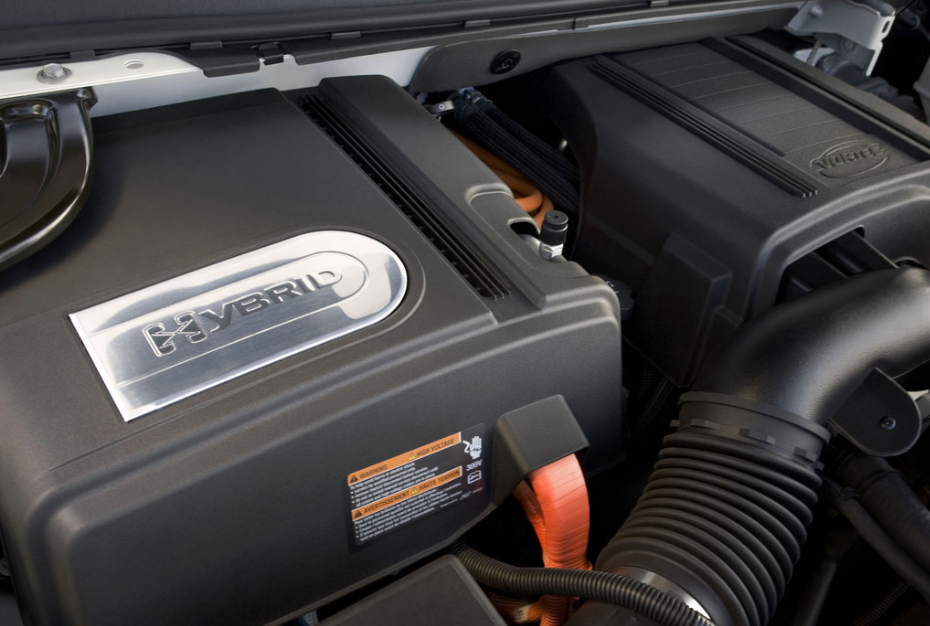
At the heart of the Escalade Hybrid was General Motors’ patented Two-Mode hybrid system — a sophisticated powertrain that was named Automobile Magazine’s Technology of the Year in 2008, with editors declaring it “the most significant gasoline-electric propulsion advancement since the original Toyota Prius”. The system consisted of an advanced electrically variable transmission (EVT) and a 300-volt nickel-metal hydride Energy Storage System, which worked in concert with a standard 6.0-liter V8 Gen IV gasoline engine.
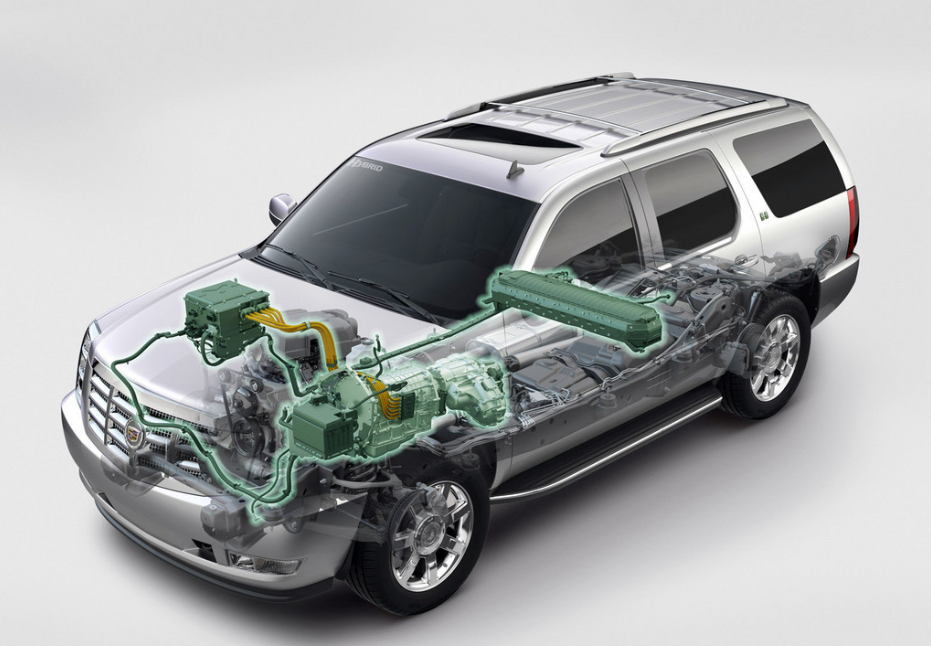
The Two-Mode system derived its name from the fact that it provided two distinct operating modes. In the first mode, designed for low-speed and city driving, the vehicle could launch and operate entirely on electric power at speeds up to 30 miles per hour, as long as the driver maintained gentle pressure on the accelerator pedal. This allowed the massive SUV to navigate stop-and-go traffic without consuming a single drop of gasoline — a truly remarkable achievement for a vehicle that tipped the scales at over three tons.
When additional power was demanded — whether for accelerating onto a highway, climbing a steep grade, or merging into fast-moving traffic — the system seamlessly blended output from the battery and the gasoline engine. The transition was so smooth that drivers often couldn’t tell when the system had switched between power sources. The second mode, designed for highway cruising, engaged the gasoline engine more frequently but also allowed the 6.0-liter V8 to operate on just four cylinders during light-load conditions, thanks to Active Fuel Management technology. The engine could also use late-intake valve closing to further reduce pumping losses and improve overall efficiency.
The Two-Mode system was fundamentally different from the single-mode hybrid systems popularized by Toyota and Honda. While those systems focused primarily on improving city fuel economy at the expense of highway performance and towing capability, GM’s approach was designed from the ground up to accommodate the unique demands of large vehicles. The EVT housed two 80-horsepower AC motors, three planetary gear sets, four multiplate clutches, and two hydraulic oil pumps within a transmission case that looked deceptively conventional.
This complexity allowed the Escalade Hybrid to achieve something that single-mode systems could not: the ability to maintain full towing capacity while still delivering significant fuel economy improvements. The Two-Mode hybrid could tow up to 5,800 pounds on two-wheel-drive models and 5,600 pounds on four-wheel-drive models — virtually identical to the conventional Escalade’s capabilities. For customers who used their SUVs for towing boats, trailers, or other heavy loads, this capability was non-negotiable.
The regenerative braking system represented another crucial piece of the puzzle. When the driver applied the brakes or the vehicle coasted, the electric motors within the EVT reversed their function, acting as generators that converted kinetic energy into electricity. This captured energy was then stored in the 300-volt nickel-metal hydride battery pack, where it could be used to power the vehicle during subsequent acceleration cycles. The transitions between regenerative braking and the physical braking system were so seamlessly blended that drivers never noticed the shift — a testament to the countless hours of engineering calibration that went into the system’s development.
Critics who drove the Escalade Hybrid were nearly unanimous in their admiration for the system’s sophistication. One reviewer at Automobile Magazine noted: “The fault is not with the hybrid technology. I am extremely impressed by the electric motor’s ability to propel the Escalade’s 6000 pounds at speeds up to 20 mph — something difficult to do even in the Toyota Camry Hybrid”. Another observed that while the hybrid wasn’t as quick as the standard Escalade, with 0-to-60 mph times in the mid-eight second range, “it’s no eco slouch”. The hybrid’s 6.0-liter V8 produced 332 horsepower and 367 pound-feet of torque — down 71 horsepower from the 6.2-liter V8 in the conventional model, but still more than adequate for daily driving duties.
Immediate Market Reception and Early Milestones
The Escalade Hybrid’s launch in August 2008 was accompanied by considerable fanfare from Cadillac, which positioned the vehicle as proof that luxury and environmental responsibility need not be mutually exclusive. Jim Taylor, Cadillac’s general manager at the time, proclaimed: “No other manufacturer offers a hybrid that can seat eight luxuriously while simultaneously carrying or trailering lots of cargo comfortably. And no hybrid delivers the dramatic presence that is synonymous with Escalade”.
The initial sales figures exceeded even Cadillac’s own expectations. By August of its first year on the market — just 12 months after launch — an astonishing 20 percent of all Escalades sold were Hybrid models. This was particularly remarkable given that the hybrid was only available with the short-wheelbase body configuration, limiting its availability compared to the broader Escalade lineup. Cadillac executives had initially projected annual sales of approximately 6,000 hybrid units — representing about 20 percent of the mix — and those projections proved remarkably accurate.
The cultural impact of the Escalade Hybrid extended far beyond sales figures. In one of the most memorable moments in the vehicle’s history, after the New York Giants defeated the New England Patriots in Super Bowl XLII — preventing what would have been only the second perfect season in NFL history — quarterback Eli Manning was awarded the first-ever production Cadillac Escalade Hybrid for his Most Valuable Player performance. The image of Manning, fresh off one of the greatest upsets in sports history, accepting keys to a hybrid luxury SUV sent an unmistakable message: hybrid technology had arrived in the mainstream, and it was no longer just for compact hatchbacks and environmental purists.
The Escalade Hybrid also made significant inroads internationally. At the 2009 Shanghai International Auto Show, Shanghai General Motors officially announced the import of the Cadillac Escalade Hybrid to the Chinese market, marking the vehicle’s official debut in the world’s largest automotive market. For Cadillac, which was working to establish itself as a genuine global luxury brand, this expansion was critical. Chinese luxury buyers, who were increasingly sophisticated and environmentally conscious, represented a new frontier for the Escalade brand.
Throughout this period, Cadillac continued to refine and improve the Escalade Hybrid. The 2011 model year brought several enhancements, including standard Cadillac Premium Care Maintenance covering scheduled oil changes, tire rotations, and multi-point vehicle inspections for four years or 50,000 miles. Noise reduction measures were also improved, with laminated front windshields, laminated front-row side glass, modified door weather strips, and redesigned outside rearview mirrors all contributing to a quieter cabin environment. The navigation radio system was enhanced, and new exterior colors — including Carbon Flash Metallic and Mocha Steel Metallic — refreshed the vehicle’s appearance.
The EPA fuel economy estimates for the 2011 Escalade Hybrid stood at 20 miles per gallon in city driving and 23 miles per gallon on the highway for both rear-wheel and all-wheel drive models — a modest improvement over the 2009 model’s 21 mpg highway rating, and significantly better than the gasoline-only Escalade’s 14 city and 18 highway ratings. The hybrid system’s nickel-metal hydride battery also came with an eight-year, 100,000-mile warranty, providing buyers with long-term peace of mind regarding hybrid component durability.
Cadillac knew that the Escalade Hybrid would never become a volume leader in the same way that the Toyota Prius had. The vehicle’s $71,685 starting price — which could climb well above $80,000 with options — placed it firmly in the luxury stratosphere. But that wasn’t the point. The Escalade Hybrid was a halo vehicle — a technological showcase designed to demonstrate that Cadillac could innovate, that General Motors could compete with the best hybrid technologies from Japan and Europe, and that large luxury SUVs need not be environmental pariahs.
The Platinum Elevation and Ultimate Recognition
In March 2009, just seven months after the Escalade Hybrid’s initial launch, Cadillac announced an even more exclusive version: the 2009 Escalade Platinum Hybrid. This model combined the fuel-saving powertrain of the hybrid with the luxurious features of the Platinum trim level, creating what Cadillac called “the most technically advanced large luxury SUV yet”. The Platinum Hybrid arrived with standard 22-inch chrome wheels, Magnetic Ride Control suspension, a power liftgate, remote start, Bluetooth compatibility, and a rear-view camera — features that pushed the vehicle’s already substantial price tag even higher.
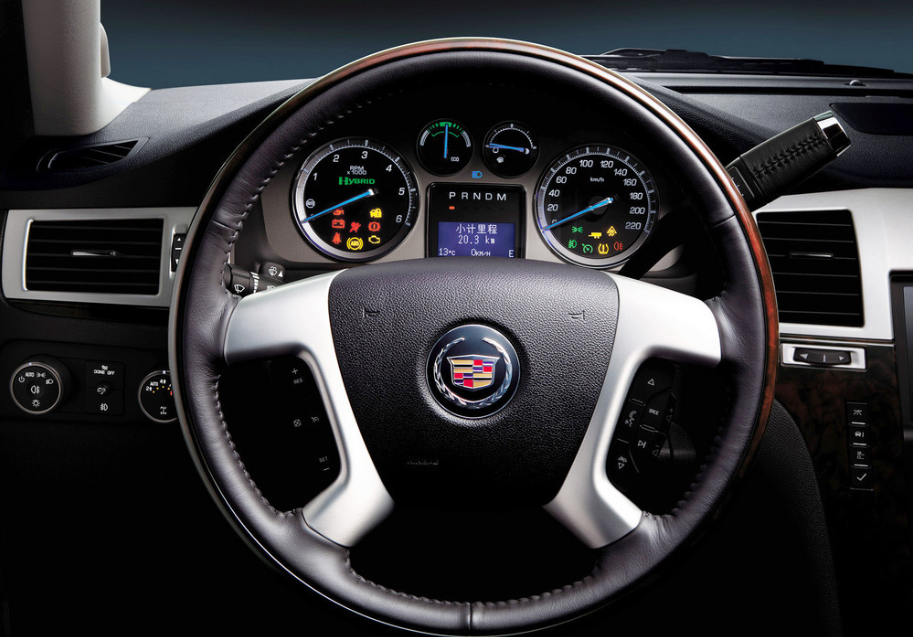
The Platinum Hybrid represented Cadillac’s recognition that hybrid buyers in the luxury segment expected no compromises whatsoever. These were customers who had the financial resources to purchase virtually any vehicle on the market, and they demanded the best of everything — the best fuel economy, the best luxury features, the best technology, and the best driving experience. The Platinum Hybrid delivered on all fronts.
The 2011 model year brought the Platinum Hybrid to even greater prominence. In a review at the time, Automotive Addicts described the vehicle as offering “higher levels of luxury, style and technology” than any other full-size luxury SUV on the market. The review noted that the Escalade Hybrid had become the best-selling full-size luxury SUV worldwide — a remarkable achievement given the vehicle’s relatively high price and the challenging economic conditions of the post-recession era.
One of the most compelling endorsements of the Escalade Hybrid came not from automotive journalists or industry analysts but from the United States government. The vehicle’s hybrid technology was so advanced that it attracted attention from the U.S. Department of Energy, which recognized the Two-Mode system as a significant contribution to the nation’s energy diversity efforts. The system was developed using technology originally deployed in hybrid transit buses operating in dozens of major North American cities, scaled down for use in full-size SUVs where fuel savings were needed most.
By 2011, the Escalade Hybrid had firmly established itself as the only hybrid full-size luxury SUV on the market — a position it would maintain for several years as competitors struggled to develop viable alternatives. The vehicle’s combination of luxury, capability, and fuel efficiency remained unmatched, even as other manufacturers introduced hybrid versions of their own large SUVs. For Cadillac, the Escalade Hybrid was proof that American engineering could compete with — and in many cases exceed — the best that the global automotive industry had to offer.