
—A Deep Journey into the Nickel Metal Hydride Soul of the Avalon Hybrid
A Prologue from the Trunk – Continuing the Voyage
In Part One, we watched the 2013–2016 Toyota Avalon Hybrid rise from the ashes of its conservative past. We saw how a sleek new body and a revolutionary hybrid powertrain brought the flagship back to life. And we met the battery — that modest, 244.8 volt nickel metal hydride pack hidden behind the rear seat — without truly understanding its inner world.
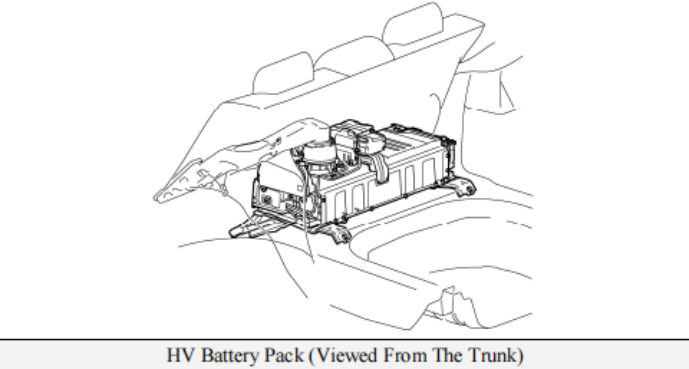
Now it is time to open the metal case. To trace the paths of electrons. To understand why, in an era of lithium ion fervour, Toyota chose the older chemistry — and why that choice looks more brilliant with every passing year. This is not merely a technical dissection; it is an exploration of a philosophy. The philosophy that durability matters more than specifications, that safety is not negotiable, and that a hybrid battery should outlast the car that carries it.
The Dance of Nickel and Hydrogen—An Electrochemical Ballad
At its simplest, a nickel metal hydride (NiMH) cell is a conversation between two electrodes. The positive electrode is made of nickel oxyhydroxide (NiOOH); the negative electrode is a hydrogen absorbing alloy — a finely ground mixture of metals such as lanthanum, cerium, nickel, cobalt, and others. Between them flows an alkaline electrolyte, typically potassium hydroxide (KOH), which acts as the medium for ion exchange.
When the battery discharges, the nickel oxyhydroxide at the positive side is reduced to nickel hydroxide (Ni(OH)₂). Meanwhile, hydrogen atoms are released from the metal alloy and combine with hydroxide ions (OH⁻) from the electrolyte to form harmless water. Electrons travel through the external circuit — powering the Avalon’s electric motor — completing the dance.
When the battery charges (through regenerative braking or the gasoline engine spinning MG1), the process reverses. Nickel hydroxide is oxidized back to nickel oxyhydroxide. Water molecules are split, releasing hydrogen that is reabsorbed into the metal alloy. Electrons flow the other way. The music starts again.
Each cell produces a nominal voltage of just 1.2 volts — modest compared to lithium ion’s 3.6–3.7 volts. But voltage is not everything. The NiMH cell’s true gift is its grace under pressure. It tolerates overcharging remarkably well; the excess energy simply dissociates water into oxygen and hydrogen, which recombine safely inside the cell (thanks to a catalyst). It tolerates deep discharging without catastrophic breakdown. And it operates efficiently across a temperature range from -20°C to +45°C without needing complex liquid heating or cooling.
The Assembly of 204 Souls – Anatomy of the Pack
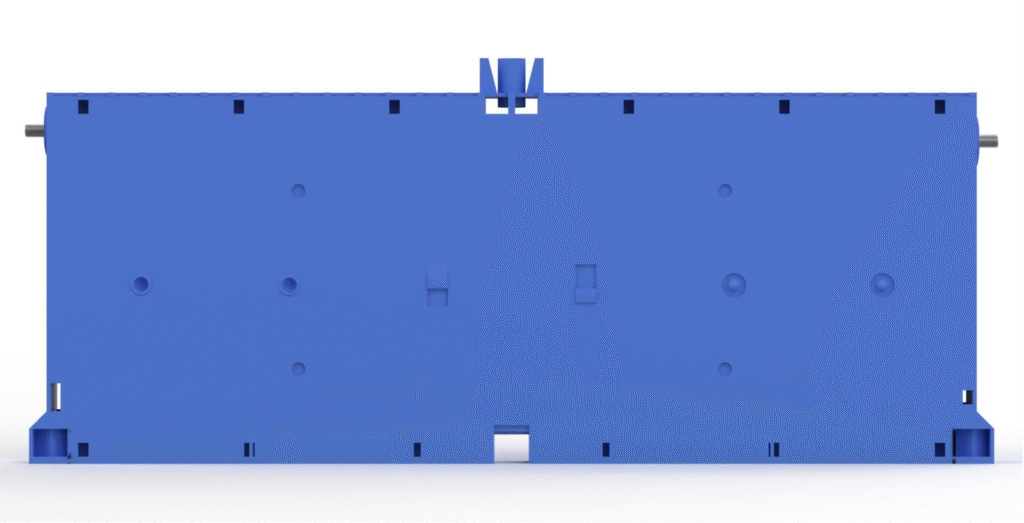
Now lift the trunk floor cover. There, behind the rear seat, sits the battery assembly — a rectangular metal box that contains 34 individual modules. Each module is itself a miniature battery: six 1.2 volt cells wired in series to produce 7.2 volts. Therefore, the entire pack contains 34 × 6 = 204 individual NiMH cells.
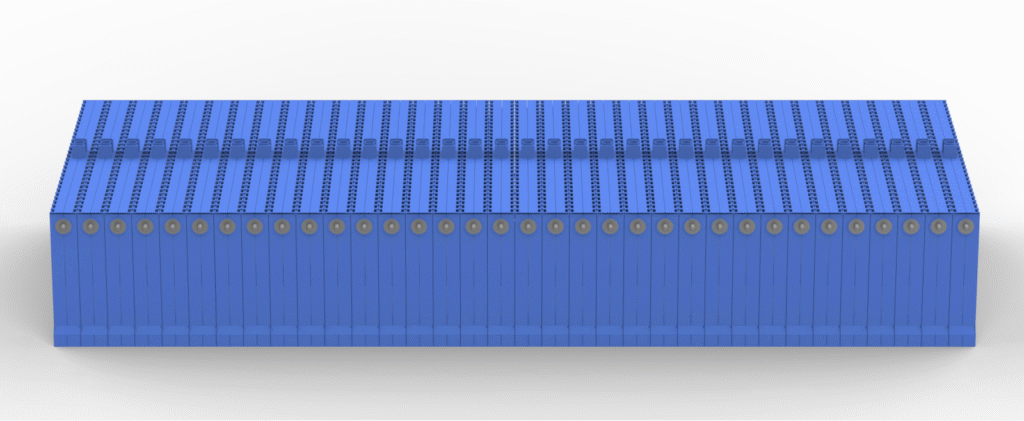
These 34 modules are not randomly assembled. Toyota’s quality control matches them so that their internal resistances and capacities are nearly identical. This balancing act ensures that no single module is overworked or undercharged, maximizing the life of the whole pack.
Nominal voltage of the full pack: 34 × 7.2 V = 244.8 volts. When fully charged (cells at about 1.4 V each), the pack can reach 285.6 volts, but the battery management system (BMS) typically keeps it in a conservative range — roughly 40–60% state of charge — to preserve longevity.
Rated capacity: 6.5 ampere hours (Ah) measured at the 3 hour rate. In plain English, the battery can theoretically deliver 6.5 amperes for three hours before falling to its minimum safe voltage. But hybrids rarely need steady discharge; they need bursts. The pack can deliver continuous discharge currents of up to 25C — that is, 25 × 6.5 A = 162.5 amperes. For brief surges (like hard acceleration from a stop), it can go even higher.
Convert those numbers into energy: 244.8 V × 6.5 Ah = 1,591 watt hours, or about 1.6 kWh. However, the usable window is only about 40–60% of that — roughly 0.64 to 0.96 kWh. That small usable window explains why the Avalon can only travel about one mile on electric power alone. But it also explains why the battery lasts for hundreds of thousands of miles: shallow cycling is the secret to NiMH longevity.
The Old Road Chosen – Why Toyota Refused Lithium-ion
By 2013, the automotive world was abuzz with lithium ion. The Chevrolet Volt (2011) used a large Li ion pack. The Ford Fusion Hybrid (2013) switched to Li ion and achieved 47 mpg — better than the Avalon’s 40. So why did Toyota stubbornly stick with NiMH?
The answer lies in three words: safety, durability, and real world experience.
Safety first: NiMH cells use a water based alkaline electrolyte that is non flammable. Even if you crush, overheat, or overcharge a NiMH cell, it will not burst into flames. Early lithium ion packs, by contrast, suffered from thermal runaway — a self sustaining chain reaction that caused fires in everything from laptops to electric cars. Toyota had sold millions of hybrids by 2013 with NiMH and had never experienced a single fire caused by the traction battery. That track record was worth more than a few extra mpg.
Durability second: Under the shallow charge discharge cycles typical of non plug in hybrids, NiMH degrades more slowly than lithium ion. Toyota’s own testing showed that a NiMH pack could exceed 6,000 cycles before falling to 80% of original capacity. At one cycle per mile (a rough estimate for hybrid operation), that is over 150,000 miles. In reality, many Avalon Hybrids have surpassed 200,000 miles on the original battery. Try that with a first generation Li ion hybrid.
Third, wisdom from the road: Toyota had been building hybrids since 1997. They knew that the average owner keeps a car for about six years and drives 12,000–15,000 miles annually. A NiMH pack would comfortably outlast that ownership period. The extra cost, complexity, and fire risk of lithium ion were not justified for a non plug in hybrid. It was a classic engineering trade off — and Toyota chose proven reliability over marketing flash.
Where the Air Flows – The Cooling Path’s Silent Poetry
We touched on thermal management in Part One. Now let us go deeper. The Avalon Hybrid’s forced air cooling system is a model of elegant simplicity. Air enters through a vent on the left side of the rear seatback — the same vent that owners are warned never to block. It flows through a duct into the battery enclosure, passes over the 34 modules (picking up their waste heat), then exits through another duct to the outside of the car.
The fan is not always on. The hybrid computer monitors battery temperature via several thermistors (tiny temperature sensors) embedded among the modules. If the pack stays below a threshold (about 35°C or 95°F), the fan remains off. As temperature rises, the fan spins faster, modulating airflow precisely. In very hot climates or under aggressive driving, the fan may run continuously — but it is a whisper quiet device, barely audible inside the cabin.
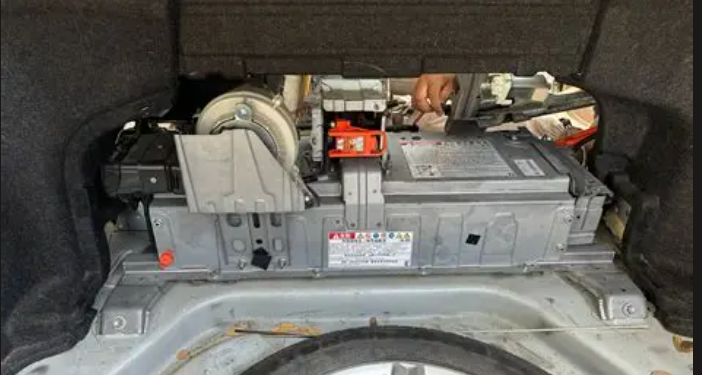
This system has only one real vulnerability: the intake vent. If it is blocked by a child’s toy, a blanket, or accumulated dust, airflow stops. The battery heats up. The computer reduces hybrid power to protect the cells. Eventually, a warning light appears. Owners who clear the vent see the problem vanish immediately. It is a small price to pay for a cooling system that has no pumps, no refrigerant, and no complex controls.
Safety Woven into Every Wire – A Fortress for the High Voltage Heart
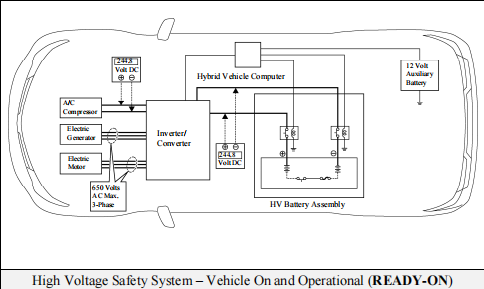
The Avalon Hybrid’s high voltage system is designed with layers of protection that border on the paranoid — and that paranoia is precisely why the car is so safe.
Orange sheathing: Every high voltage cable is wrapped in bright orange. Firefighters and rescue workers are trained to recognise this colour and to avoid cutting those cables.
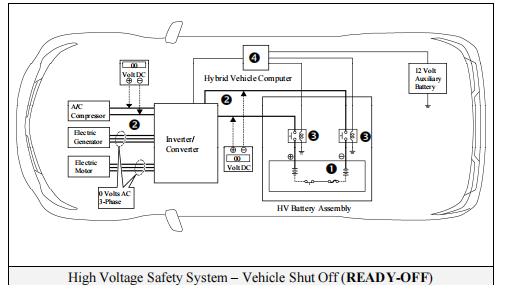
Emergency disconnect: Impact sensors in the front, sides, and rear detect a collision. If the severity exceeds a threshold, the system fires a pyrotechnic fuse (or opens relays) to isolate the battery from the rest of the car. Simultaneously, it signals the fuel pump to stop.
Insulation monitoring: The hybrid computer constantly measures the insulation resistance between the high voltage system and the car’s metal chassis. If that resistance drops (indicating a possible short circuit), the computer shuts down the system and lights a warning.
Physical barriers: The metal battery enclosure is not just a box; it is a structural element designed to contain the cells even in a severe rear end crash. The high voltage components are positioned away from deformation zones.
Add to this the inherent safety of NiMH chemistry, and the result is a car that passed the strictest crash tests of its era. The 2016 Avalon — mechanically identical to the 2013–2015 models in all hybrid respects — earned the IIHS Top Safety Pick+ award. Not a single Avalon Hybrid has ever been recalled for a battery fire.
The Life of the Pack – What 200,000 Miles Really Looks Like
Let us speak directly to the owner who plans to keep an Avalon Hybrid for a decade or more. What will happen to that NiMH battery?
The short answer: very little. The battery management system is exceptionally conservative. It never allows the pack to fully charge or fully discharge. It balances the 34 modules automatically. It controls temperature. For the first 100,000 miles, you will likely notice no change whatsoever in fuel economy or electric range.
Between 100,000 and 150,000 miles, some owners report a very slight drop in mpg — perhaps 2–3 miles per gallon. This is not battery failure; it is gradual degradation, no different from a gasoline engine losing a few horsepower over time. The car remains perfectly usable.
At 150,000 to 200,000 miles, a small percentage of packs may develop a weak module. When that happens, the car will display a “Check Hybrid System” warning. Fuel economy will drop more noticeably, and EV mode may become unavailable. However, you do not need to replace the entire pack. Specialised shops can open the pack, test each module, and replace only the weak ones — a repair costing a few hundred dollars, not thousands.
For the vast majority of owners, the original NiMH battery outlasts the rest of the car. Many Avalon Hybrids have surpassed 250,000 miles on the original pack. There are verified reports of Toyota hybrids (Prius, Camry, and Avalon) exceeding 300,000 miles with no battery work. That is the quiet triumph of nickel metal hydride.
One final note: do not confuse the main traction battery with the ordinary 12 volt auxiliary battery. The 12 volt battery (a conventional lead acid unit located in the trunk) will need replacement every 4–6 years, just like any other car. A failing 12 volt battery can trigger false hybrid warnings, so always check that first before assuming the main pack is dead.
An Epilogue in the Rearview Mirror – The Legacy of the Silent Heart
The 2013–2016 Toyota Avalon Hybrid is now a chapter in automotive history. Toyota discontinued the Avalon entirely after 2022, as SUVs conquered the American landscape. But the engineering decisions made for that fourth generation flagship echo into the present.
Today, Toyota still uses nickel metal hydride batteries in most of its non plug in hybrids — the Camry Hybrid, the RAV4 Hybrid, the Sienna Hybrid. Lithium ion is reserved for plug in hybrids and performance models where higher energy density is essential. The lessons learned from the Avalon’s 244.8 volt pack — modular design, forced air cooling, conservative state of charge management — are now standard across the industry.
What makes the Avalon Hybrid’s battery story so compelling is not technological wizardry but wisdom. In an age of hype and spec sheet racing, Toyota chose the path of proven reliability. They accepted a modest reduction in fuel economy (40 mpg vs. a competitor’s 47) in exchange for a battery that would not catch fire, would not degrade quickly, and would give owners a decade or more of silent, faithful service.
When you slide behind the wheel of a 2013–2016 Avalon Hybrid today, you are driving a time capsule of that philosophy. The leather may soften with age. The suspension may develop a gentle squeak. But the battery — that silent silver box in the trunk — will almost certainly still be doing its quiet dance of nickel and hydrogen. It will still be capturing energy from every stoplight. It will still be delivering smooth, seamless power. And it will still be whispering the same promise that Toyota made a decade ago: You do not have to choose between a big, comfortable sedan and a small, efficient one. You can have both.
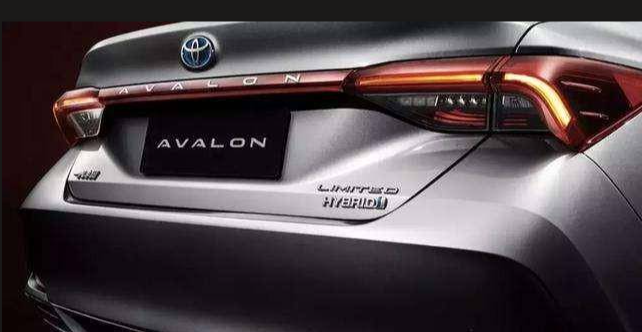
That is the true story of the Avalon’s hybrid battery. Not a revolution, but an evolution — patient, deliberate, and enduring. And as the car industry lurches toward an all electric future, we would do well to remember that sometimes the most advanced technology is the one that simply refuses to fail.