
All good things come to an end—including the nickel‑metal hydride battery’s reign in Honda’s Civic lineup. When the ninth‑generation Civic Hybrid arrived for the 2012 model year, Honda quietly retired NiMH in favor of lithium‑ion. The decision was driven by the relentless pursuit of higher energy density, lower weight, and better packaging.
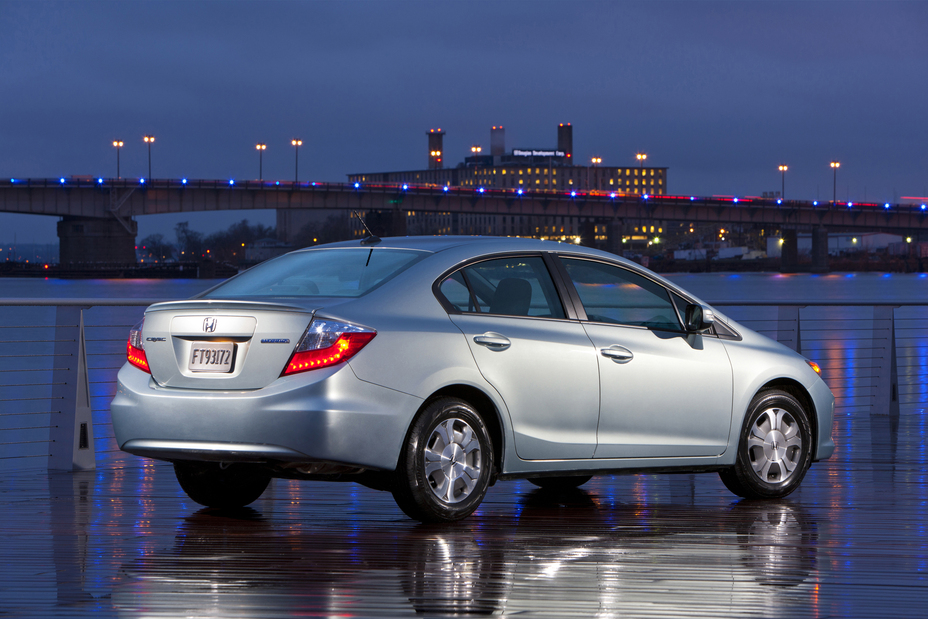
Yet the legacy of the 2003‑2011 NiMH‑powered Civics endures far beyond their production years. Those cars taught engineers how to manage heat, balance cells, and integrate batteries seamlessly into unibody structures. They also taught owners what to expect from a hybrid: normal driving, exceptional range, and minimal fuss. This final part examines why Honda made the switch, what NiMH did better than lithium‑ion, and how those humble nickel‑metal hydride packs fundamentally accelerated the electrification of the automobile.
The Dawn of the Ninth Generation (2011 2015)
When Honda unveiled the ninth-generation Civic at the New York Auto Show in April 2011, the headlines focused on evolutionary styling, improved aerodynamics, and updated interior features. But the most significant news occurred where few casual observers looked: inside the hybrid’s battery compartment. The 2012 Civic Hybrid—based on the ninth-generation platform—marked Honda‘s first mass production deployment of lithium ion batteries in a hybrid vehicle, replacing the nickel metal hydride packs that had powered every previous IMA vehicle. The decision to abandon NiMH for the ninth generation was not taken lightly. Honda had spent nearly a decade refining NiMH technology, accumulating vast datasets on cell degradation, thermal behavior, and real world performance across diverse climates and driving patterns. Yet the advantages of lithium ion proved too compelling to ignore.
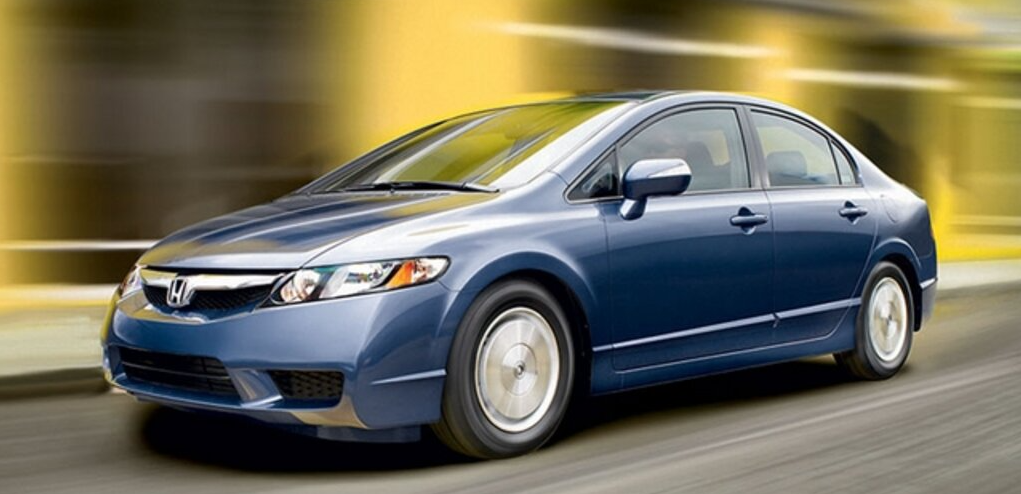
The numbers tell the story clearly. The new lithium ion battery pack, manufactured by Blue Energy Co.—a joint venture between Honda and GS Yuasa Corp.—weighed just 48.5 pounds, compared to 69 pounds for the preceding nickel metal hydride pack. A 20 pound weight reduction in the battery alone improved overall vehicle efficiency and handling. The lithium ion pack also occupied less physical volume, freeing up valuable cabin and trunk space. Output increased by an impressive 33 percent, enabling the electric motor to provide stronger assistance during acceleration and to sustain electric only operation for longer periods. The battery cell design itself was sophisticated: a prismatic unit with an aluminum alloy outer shell and a Li(Co Ni Mn)O₂ ternary material for the positive electrode, achieving higher energy density than any NiMH pack Honda had ever produced. Despite these improvements, the new hybrid‘s gasoline engine grew from 1.3 liters to 1.5 liters, but power output paradoxically dropped by 3 kW (from 85 kW to 82 kW) while torque rose only slightly from 170 Nm to 172 Nm. Fuel economy improved modestly, with combined cycle consumption falling from 4.6 L/100 km to 4.4 L/100 km. The trade offs of switching battery chemistries were real and measurable. The lithium ion transition was not a magic bullet; it required careful re engineering of the entire IMA system to optimize performance around the new pack’s electrical characteristics.
Why Lithium-Ion Won
Lithium ion batteries offered three fundamental advantages over NiMH that ultimately sealed the latter‘s fate in automotive applications. The first and most obvious is energy density. Where NiMH packs typically deliver 60 120 Wh/kg, modern lithium ion cells achieve 150 265 Wh/kg—more than double the energy storage per unit weight. This disparity translates directly into real world benefits: lighter battery packs, better vehicle efficiency, and either longer electric only range or the same range from a smaller, cheaper pack. The second advantage is self discharge rate. A NiMH battery left idle loses 20 30 percent of its charge per month, a characteristic that forced Honda to recommend driving the Civic Hybrid at least once every 30 days to prevent deep discharge damage. Lithium ion packs lose only 2 3 percent per month, dramatically improving suitability for vehicles that sit unused for extended periods—a non trivial consideration for a family‘s second car. The third advantage is cell voltage: a lithium ion cell operates at 3.6 3.7 volts nominally, compared to just 1.2 volts for NiMH. A hybrid’s traction system requires roughly 200 300 volts; achieving this with NiMH requires approximately two to three times as many cells wired in series as a lithium ion pack would need. Fewer cells means simpler manufacturing, lower internal resistance, less heat generation, and ultimately, lower system cost when scaled to high volumes.
However, lithium-ion is not superior in every dimension. NiMH remains unmatched in certain technical and economic metrics. The safety profile of NiMH chemistry is significantly better than lithium ion: NiMH cells are essentially incapable of thermal runaway under normal operating conditions, whereas lithium ion packs can ignite if the electrolyte (which is flammable) is ruptured in a severe crash. NiMH also tolerates overcharging and deep discharging better, making it more forgiving of imperfect battery management systems. The cycle life of NiMH under partial state of charge operation (the typical hybrid duty cycle) is extraordinary, with some packs exceeding 300,000 cycles before significant degradation. Most importantly, NiMH batteries are cheaper to manufacture. The raw materials are less expensive, the supply chain is mature, and the manufacturing processes are well understood. For cost sensitive applications—particularly non plug in hybrids where the battery size is limited—NiMH still makes compelling economic sense. That is why Toyota continues to use NiMH packs in entry level Prius models to this day, reserving lithium ion for higher trim vehicles.
The Legacy of the IMA System
The IMA system itself, regardless of battery chemistry, deserves recognition as one of the most elegant hybrid architectures ever devised. Simple, lightweight, and cheap to manufacture, IMA transformed ordinary Civics into hybrids without requiring expensive retooling or wholesale platform redesigns. The thin DC brushless motor, sandwiched between engine and transmission, added only modest weight and complexity while delivering meaningful fuel economy improvements.
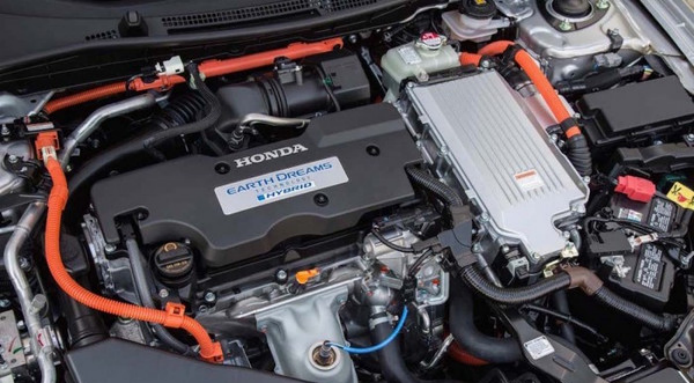
Drivers who never thought about battery chemistry still benefited from the seamless assistance Idle stop, regenerative braking, and torque fill. Unlike some rival systems that prioritized electric only operation and felt unnatural to conventional drivers, IMA behaved like a traditional car—until you noticed you were filling the gas tank half as often. Honda‘s approach was the automotive equivalent of bamboo: flexible, resilient, and perfectly adapted to an environment that demanded efficiency without sacrifice. The IMA system powered not only the Civic Hybrid but also the Insight, the CR Z sport hybrid, and the Accord Hybrid, accumulating millions of real world miles across multiple generations before Honda finally retired the architecture in favor of a new two motor hybrid system.
What the NiMH Years Taught Us
The 2003 2011 Civic Hybrid generations—powered by nickel metal hydride batteries—represent a critical transitional period in automotive history. These cars proved that hybrid technology could be normalized, that batteries could be packaged discreetly, that consumers would buy hybrids that looked and drove like ordinary cars, and that electrification could coexist with excellent driving dynamics. The lessons learned from NiMH deployment directly informed the lithium ion transition. Field data on thermal management, state of charge optimization, cell balancing, and degradation modeling enabled Honda to design lithium ion battery management systems that were far more sophisticated than would have been possible without the NiMH experience. The failures—premature pack degradation in the first generation Civic Hybrid—were as instructive as the successes. Honda’s response, including the software updates that reduced assist frequency to protect battery health, demonstrated that mature battery management matters more than chemistry. Even the best NiMH cells will fail if the control algorithm overworks them; conversely, even older NiMH packs can last a decade or more if operated within their comfort zone.
The Nickel-Metal Hydride Legacy
Nickel metal hydride batteries rarely receive the recognition they deserve. In the popular imagination, lithium ion represents the future and NiMH represents the past—a stepping stone technology to be discarded once something better arrives. This narrative, while directionally correct, overlooks the profound contributions NiMH made to the hybrid vehicle revolution. For more than a decade, NiMH was the only viable rechargeable battery technology capable of meeting the demanding power, cycle life, and safety requirements of mass market hybrid vehicles.
NiMH packs powered the first Prius, the first Insight, and the first Civic Hybrid. They survived millions of charge discharge cycles in fleets of taxis. They operated reliably in Death Valley heat and Alaskan cold. They were recycled, refurbished, and rebuilt, often outlasting the cars they originally powered. The nickel metal hydride battery was not a compromise. It was, for its era, the optimal solution to a difficult engineering problem: how to store and deliver meaningful amounts of electrical energy in a moving vehicle without excessive weight, cost, or fire risk. Honda‘s 2003 2011 Civic Hybrids demonstrated that solution in millions of production vehicles, earning the company’s engineers a permanent place in the history of automotive electrification.
Looking Forward
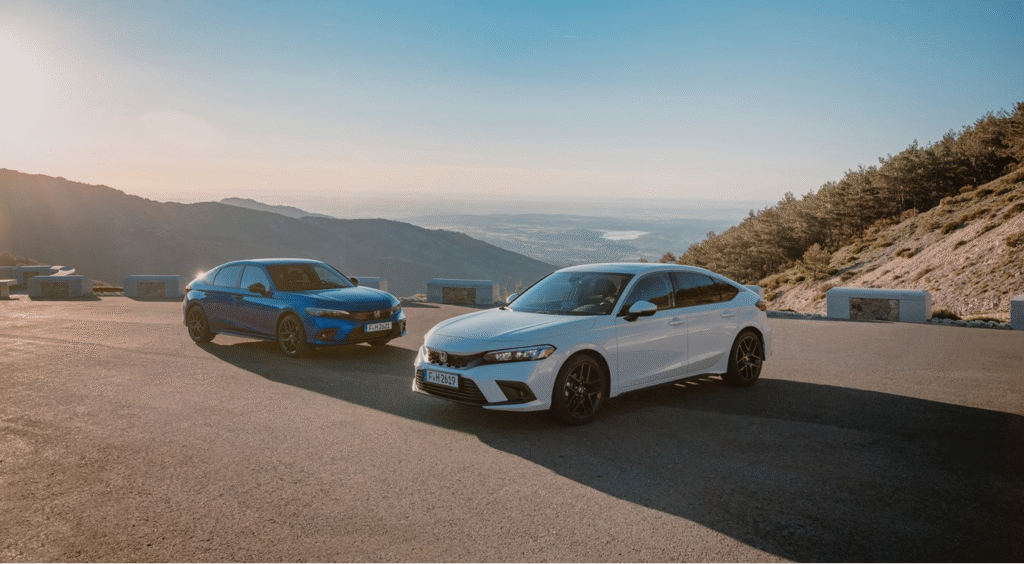
As of 2026, the landscape looks completely different. The eleventh generation Civic is available with a two motor hybrid system (not IMA) that delivers substantially better fuel economy and more refined electric driving. Lithium ion batteries have become cheaper, safer, and more energy dense, enabling plug in hybrids and battery electric vehicles that seem to advance by quantum leaps every year. Yet the fundamental challenge remains unchanged: how to store electrical energy safely, efficiently, and affordably in a passenger vehicle. The lessons learned from NiMH still matter. The thermal management strategies, the state of charge optimisation algorithms, the cell balancing techniques, and the manufacturing processes refined during the NiMH years all carry forward into lithium ion production lines today. The engineers who learned their craft on nickel metal hydride cells now design the lithium ion packs of the future. Their accumulated wisdom ensures that every new hybrid and electric vehicle is safer, more reliable, and more efficient than the last.
The 2003 2011 Civic Hybrid was more than just a car with a NiMH battery in the trunk. It was a bold experiment in mainstreaming electrification, a proving ground for battery management technology, and a testament to the power of incremental engineering improvement. That the Civic Hybrid’s NiMH packs eventually gave way to lithium ion does not diminish their achievement. On the contrary, it validates their legacy: without the foundation NiMH built, the lithium ion hybrid era might never have arrived at all. The humble nickel metal hydride battery—often dismissed, rarely celebrated—deserves its proper place in automotive history. And for anyone who drove a 2004 Civic Hybrid to work every day, who appreciated its 500 mile range and seamless electric assist, who never worried about thermal runaway or plugging in at night, the NiMH years were not a compromise. They were just common sense engineering of the highest order.