
Few nameplates in automotive history have achieved the universal recognition of Honda’s Civic. What began as a modest, fuel‑sipping answer to the 1970s oil crisis evolved into a global icon beloved by commuters and driving enthusiasts alike. The Civic’s first four generations established a reputation for engineering cleverness, reliability, and surprising driving joy—long before the word “hybrid” entered the mainstream vocabulary.
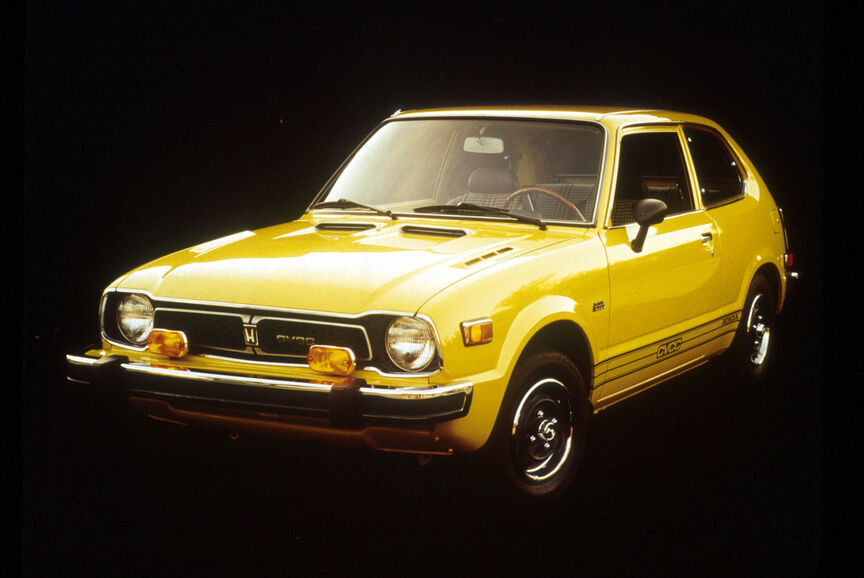
From the revolutionary CVCC engine that bypassed catalytic converters to the double‑wishbone suspension that embarrassed luxury sedans, the early Civic quietly rewrote the rules for compact cars. Yet underneath that sensible sheet metal, a quiet revolution was brewing. The seeds of electrification were being planted in Honda’s R&D centers. To understand why the Civic would eventually embrace nickel‑metal hydride batteries, we must first appreciate the engineering culture that made such a leap possible.
The Birth of a Legend
When Honda launched the first-generation Civic on July 11, 1972, nobody could have predicted that this small hatchback would go on to sell more than 27 million units and become one of the most influential compact cars in automotive history. The timing could not have been more perfect. Just months before the 1973 oil crisis sent fuel prices skyrocketing, Honda introduced a vehicle that embodied the very essence of what its name suggested—a car “created for citizens and cities,” small, efficient, and eminently practical. At a time when gas-guzzling Detroit iron dominated American roads, the Civic offered a refreshing alternative: a 1,169 cc four-cylinder engine, remarkable fuel economy, and a sticker price of around $2,200.
But the first-generation Civic was far more than just the right car at the right time. It represented a technological breakthrough that would define Honda‘s engineering philosophy for decades to come.
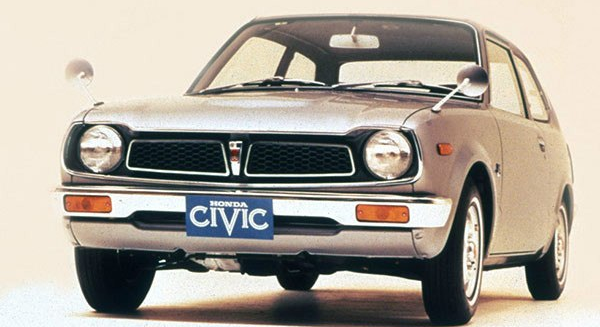
In 1975, Honda introduced its revolutionary CVCC (Compound Vortex Controlled Combustion) engine technology, arguably one of the most significant innovations in engine design of the era. The genius of CVCC lay in its simplicity: a small auxiliary combustion chamber pre-mixed an ultra-rich fuel-air mixture before igniting it into the main chamber, ensuring complete combustion and dramatically reducing emissions. While other manufacturers scrambled to bolt catalytic converters onto essentially unchanged engines—adding cost and complexity—Honda solved the problem where it mattered most: inside the engine itself. The CVCC-powered Civic became the first vehicle to meet the stringent 1975 EPA emissions standards for hydrocarbons and carbon monoxide without requiring a catalytic converter or unleaded fuel, a feat that stunned competitors worldwide.
Growing Up, Refinement and Sport
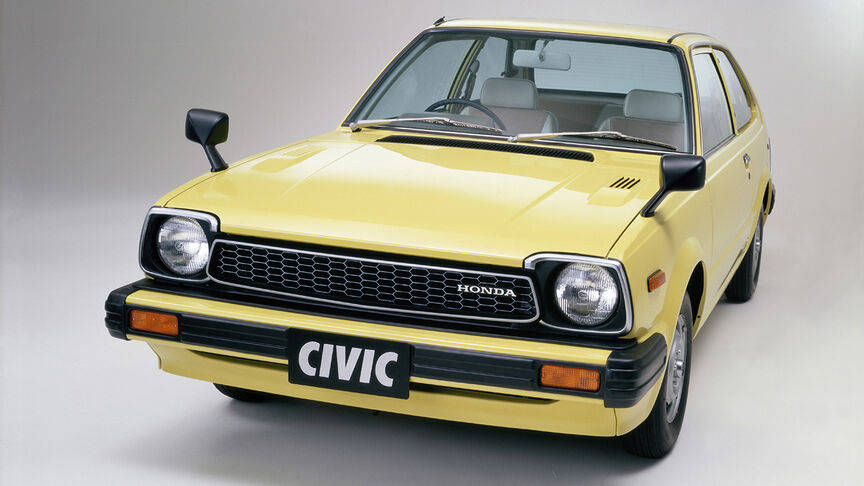
The second-generation Civic, arriving in June 1979 under the “Super Civic” name, took everything that worked about the first car and made it better—and bigger. The body grew in every dimension to address complaints about cramped interiors, riding on two wheelbase options of 2,250 mm or 2,320 mm. Every engine in the lineup now incorporated CVCC technology, which added a third valve per cylinder and introduced lean-burn swirl technology, further improving efficiency. Buyers could choose from three transmission options including a four-speed manual, a five-speed manual, and the two- speed “Hondamatic” semi-automatic. Perhaps most significantly, this generation marked the first time Honda offered a five-door hatchback in Europe, signaling the Civic’s ambition to become a truly global nameplate.
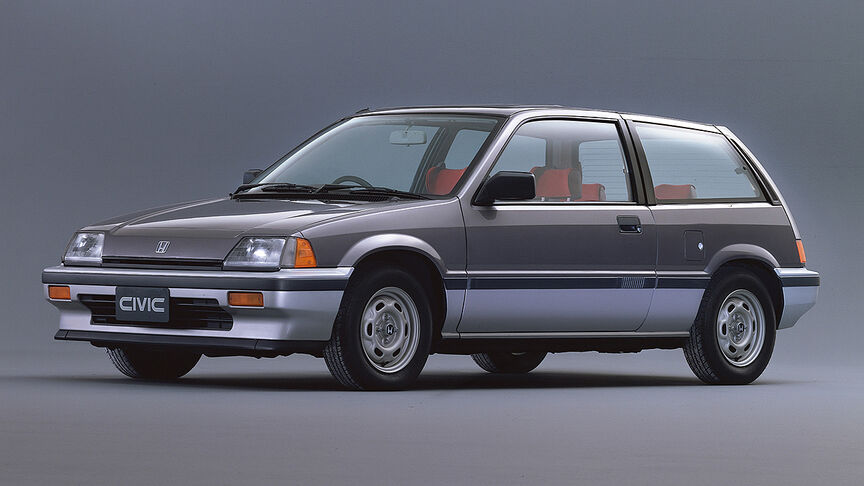
By the time of the third-generation “Wonder Civic” in September 1983, the Civic had evolved into a car of surprising sophistication. The leap from eight valves to twelve valves across the entire engine lineup represented a dramatic step forward in combustion chamber design, improving low-end torque while reducing emissions. While the 1.3-liter and 1.5-liter engines continued as the mainstays, performance-minded buyers could now opt for the new CRX, a lightweight two-seater derived from the three-door Civic hatchback. With European-spec cars producing 86 horsepower from the 1.5-liter and Japanese domestic models reaching as high as 100 horses, the CRX became an instant cult classic. For the first time, Civic buyers could also specify four-wheel drive on the wagon version, a feature that would become a signature of the lineup in select markets.
The Golden Era: Fourth and Fifth Generations
If earlier Civics had built a reputation for efficiency, the fourth-generation Grand Civic (1987–1991) established a reputation for engineering excellence that persists to this day. Two changes fundamentally altered the character of the car: the adoption of double-wishbone suspension at all four corners, and the introduction of DOHC VTEC engines in the Japanese market SiR. The double-wishbone layout provided handling characteristics that rivaled cars costing three times as much, with an unprecedented combination of ride compliance and cornering grip. Honda would retain this sophisticated suspension design for thirteen model years before eventually switching to more cost-effective MacPherson struts. Under the hood, the B16A engine—a 1.6-liter DOHC unit producing 160 horsepower—became the stuff of legend, laying the foundation for the VTEC revolution that would define Honda‘s performance identity throughout the 1990s. Across the entire lineup, all engines now featured four valves per cylinder and fuel injection, a level of technological advancement that left competitors scrambling to catch up.
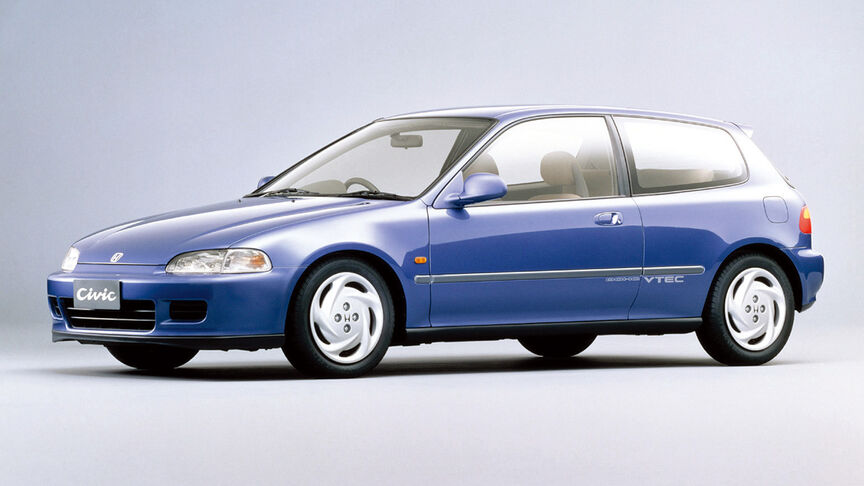
The fifth-generation EG Civic (1991–1995) took the formula and wrapped it in a dramatically more aerodynamic shell. Inspired by the Carnival in Rio de Janeiro, Honda‘s designers swept away the boxy lines of earlier generations in favor of a rounded, wind-cheating shape that reduced the coefficient of drag by ten percent compared to its predecessor. The VTEC engine family reached new heights, with the 1.6-liter B16A now capable of revving nearly to 8,000 rpm and producing 170 horsepower in the SiR II—an astonishing 100 horsepower per liter from a naturally aspirated engine in an economy car. The suspension received subtle refinements as well, with the cowl raised to allow more suspension travel, striking a fine balance between ride comfort and handling precision. The Civic had officially transcended its economy car origins. It was now a driver‘s car, a tuner’s canvas, and a global sales phenomenon, with millions of units finding homes across every major automotive market. With each successive generation, Honda had carefully refined the Civic without ever losing sight of what made it special: the relentless pursuit of engineering excellence wrapped in an affordable, practical package.
But the real revolution—the one that would fundamentally reshape the Civic‘s relationship with energy and propulsion—was still a decade away, waiting in a quiet development lab where Honda engineers were quietly reimagining what a small car could be in an era of tightening environmental regulations. That revolution would begin with the seventh-generation Civic and a new kind of powertrain that would forever change the way we think about batteries in cars, and more specifically, how nickel-metal hydride chemistry would power one of the most consequential transitions in modern automotive history.