
By the time Toyota’s third-generation Prius was released in 2009, the hybrid vehicle landscape had matured, and so had the technology behind Toyota’s hybrid powertrain. The 7.2V nickel-metal hydride (NiMH) battery, once the flagship of Toyota’s hybrid systems, had proven its worth over a decade of use in the first and second-generation Prius models. However, as the automotive industry moved toward more advanced hybrid and fully electric vehicles, it became clear that NiMH technology was no longer the best option for the future.
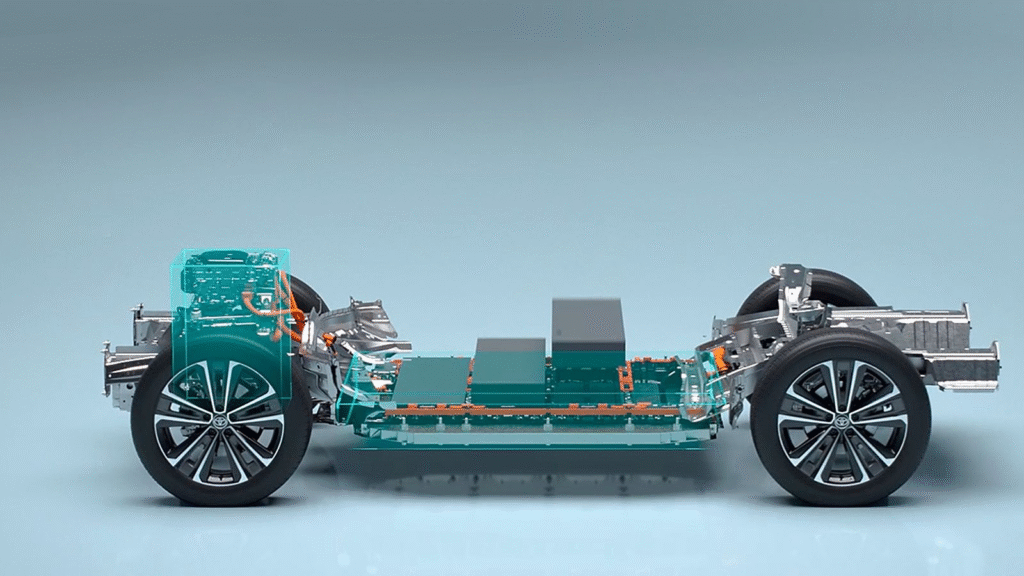
The shift from the 7.2V NiMH battery to lithium-ion (Li-ion) batteries was inevitable. This transition marked the beginning of a new era for Toyota and the automotive industry at large. In this section, we explore the factors that led to this significant change, the advantages of lithium-ion batteries, and how this shift influenced Toyota’s approach to hybrid and electric vehicles.
Why the Shift to Lithium-Ion Batteries?
Lithium-ion batteries had been used in consumer electronics like laptops and smartphones for years before they made their way into vehicles. Compared to NiMH batteries, Li-ion batteries offered several key advantages:
- Higher Energy Density: Lithium-ion batteries have a significantly higher energy density than NiMH batteries, meaning they can store more energy in a smaller and lighter package. This was crucial for hybrid and electric vehicles that needed to balance performance with range.
- Better Performance: Lithium-ion batteries offer faster charging times and can handle higher charge/discharge cycles than NiMH batteries, making them more suitable for modern vehicles that require quick bursts of power for acceleration and regeneration during braking.
- Lighter and Smaller: Because of their higher energy density, lithium-ion batteries are smaller and lighter than NiMH batteries for the same energy output. This translates into less weight for the vehicle, which can improve fuel efficiency and handling.
- Longer Lifespan: Li-ion batteries generally have a longer lifespan than NiMH batteries. They can endure more charge cycles before their capacity degrades, providing better long-term value for consumers.

In the late 2000s, these advantages became especially important as automakers sought to improve the electric-only range of hybrid vehicles and develop more fuel-efficient vehicles. The 7.2V NiMH battery, despite being a revolutionary technology at its inception, was simply not capable of delivering the performance required by modern hybrid and electric vehicles.
Toyota’s Transition to Lithium-Ion Batteries
While Toyota had pioneered hybrid technology with its 7.2V NiMH battery, the company was not immune to the pressure of innovation in the automotive market. As competitors like Chevrolet, Nissan, and Tesla began developing fully electric and next-generation hybrid vehicles, Toyota realized that it needed to step up its game.
The first significant move in this direction was the development of the Toyota Prius Plug-in Hybrid (PHEV), which launched in 2012. Unlike the standard Prius, the PHEV was equipped with a larger lithium-ion battery, allowing it to travel longer distances on electric power alone. This battery provided a glimpse into the future of Toyota’s hybrid and electric vehicles, as it combined the strengths of both the traditional hybrid system and the new, cutting-edge lithium-ion technology.
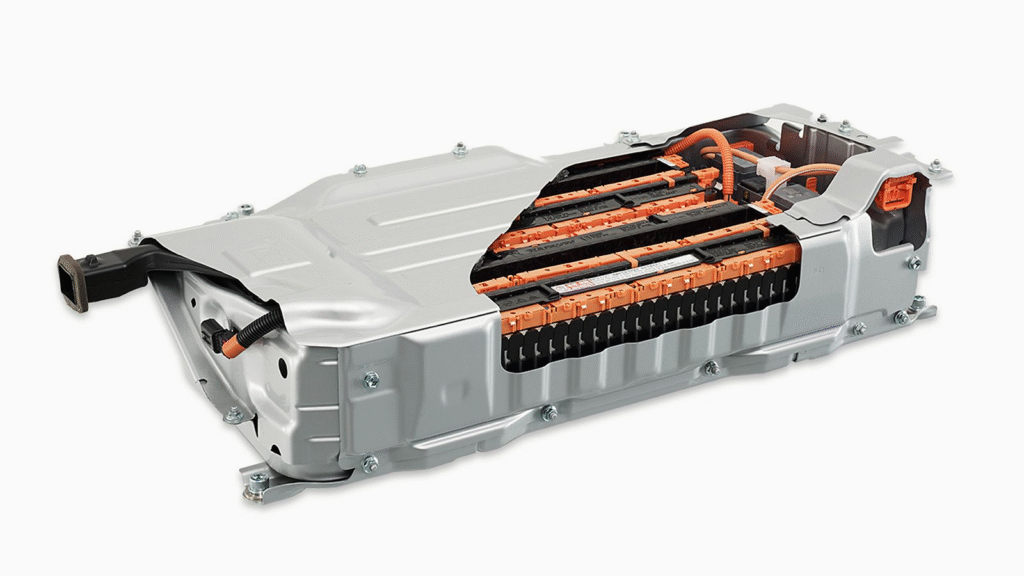
With the Prius Plug-in Hybrid, Toyota sought to offer consumers the best of both worlds: the ability to drive longer distances on electricity without sacrificing the reliability and convenience of the gasoline engine. The use of a lithium-ion battery made it possible to achieve this goal, and Toyota’s decision to embrace this new technology was a major milestone in the company’s pursuit of cleaner, more efficient vehicles.
The End of the 7.2V NiMH Battery in Toyota’s Lineup
By 2015, the transition to lithium-ion batteries had begun in earnest, and the 7.2V NiMH battery was gradually phased out across Toyota’s hybrid lineup. The Prius, once the flagship of Toyota’s hybrid offerings, was now equipped with a lithium-ion battery in its fourth generation. This new battery not only allowed the Prius to offer a longer electric-only range but also made the vehicle more efficient overall, thanks to the improved energy density of Li-ion technology.
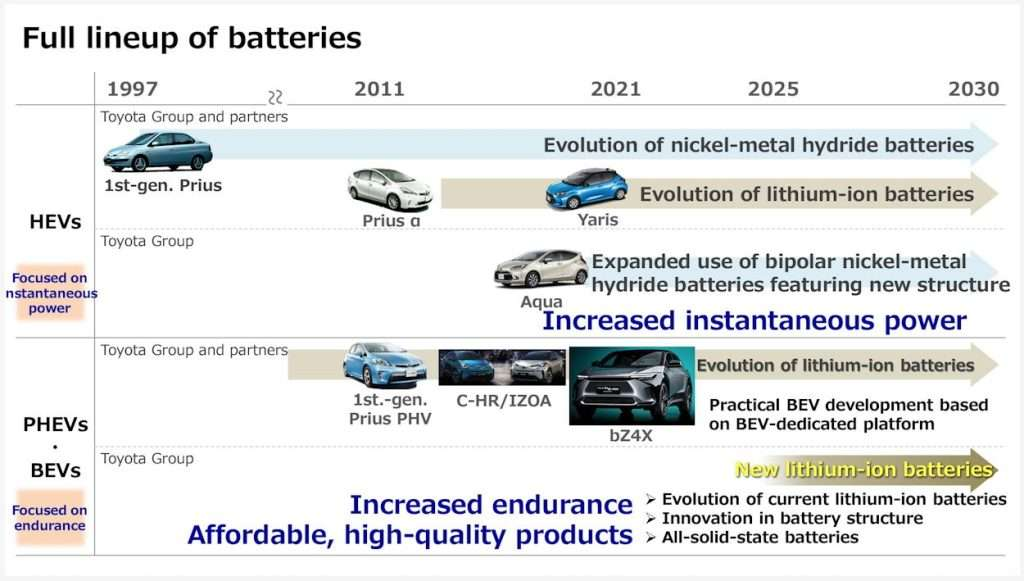
While the shift from NiMH to lithium-ion batteries marked the end of the 7.2V battery’s reign, it was not a sudden or unexpected change. The 7.2V NiMH battery had served its purpose, playing a key role in the early success of the Prius and Toyota’s hybrid strategy. However, as technology advanced and the demands of the market shifted, the time had come for Toyota to embrace new battery technologies.
Challenges in Adapting to Lithium-Ion Batteries
Although lithium-ion batteries offered clear advantages, the transition was not without its challenges. Lithium-ion batteries, while lighter and more efficient, are also more sensitive to temperature changes and require more complex management systems. Toyota had to invest heavily in research and development to ensure that its new lithium-ion batteries were reliable, safe, and efficient in the context of a hybrid vehicle.
Moreover, there were concerns about the environmental impact of lithium-ion battery production, as well as the sustainability of raw materials like lithium, cobalt, and nickel, which are used in these batteries. These challenges prompted Toyota to explore alternative battery technologies and recycling methods to ensure that its vehicles remained as eco-friendly as possible.
Despite these challenges, the move to lithium-ion batteries was a necessary step for Toyota. It allowed the company to stay competitive in the growing hybrid and electric vehicle market, while also improving the performance and range of its vehicles. The Prius, equipped with a lithium-ion battery, was more efficient, lighter, and capable of longer electric-only ranges, marking a significant improvement over its predecessor.
The Legacy of the 7.2V Battery
Though the 7.2V NiMH battery was eventually phased out, its legacy continues to influence Toyota’s approach to hybrid and electric vehicles. The innovations and lessons learned from the development of the 7.2V battery laid the foundation for Toyota’s continued leadership in hybrid technology and its ongoing commitment to sustainability.
The success of the Prius and the adoption of hybrid technology worldwide can be traced back to the 7.2V battery’s pivotal role in the vehicle’s early years. It proved that hybrid vehicles were not just a novelty—they were a viable alternative to traditional gasoline-powered cars. Today, Toyota continues to refine its hybrid systems, incorporating more advanced battery technologies such as lithium-ion and, in the future, solid-state batteries.
The 7.2V battery, while no longer in use, remains a symbol of Toyota’s pioneering spirit in the automotive world. Without it, the hybrid revolution might have taken longer to take root, and Toyota’s reputation as a leader in eco-friendly vehicles might not have been as firmly established.
To be continued in Pt. 4…
 Email: info@yaste.tech WA: +86 131 4993 5641